
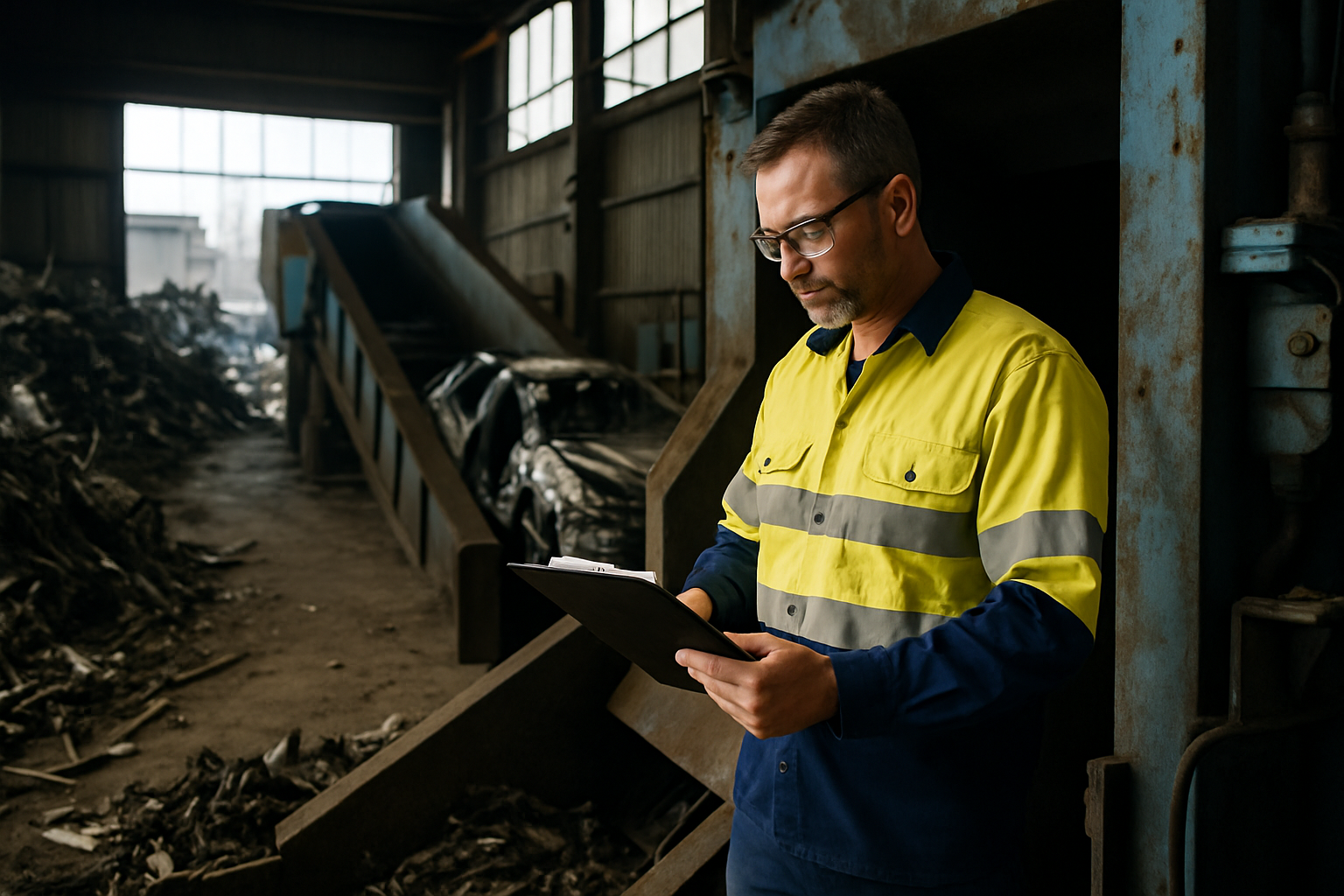
When a metal recycler collects your old car in Melbourne, the visit itself is short: the driver checks the car against its description, you sign the transfer paperwork, you are paid by bank transfer or cheque, and the car is loaded and taken away. After that, the car is depolluted, any reusable parts are recovered, and the body is processed so its metal can be melted down and used again. This guide covers both halves: how to get ready for collection, and where your car goes next.
It is written by the operations team at Johny Metal Recycling, a Melbourne metal recycler trading since 2021 from our yard in Braeside.
Why a dead car is worth moving sooner
A car that no longer runs keeps costing you while it sits:
- Space. It takes up a driveway, garage or yard you could be using.
- Registration and insurance. If they are still current, you are paying for a car you cannot drive. Cancelling the registration may get you a refund for the unused period.
- Deterioration. Rust, flat tyres and leaking fluids get worse with time, and a car left for years is harder to collect and worth less.
- Council attention. Councils can act on unregistered cars left on the street, so a car parked outside is better dealt with before that happens.
Removing it costs you nothing. Towing for vehicles is free with Johny Metal Recycling, and you are paid for the car.
Before collection: a checklist
Book the pickup
Call 0449 894 456 with the make, model, year, condition and location of the car. Mention anything that affects loading, such as flat tyres, missing wheels, no keys or a tight driveway. The quote is based on what you tell us, so be accurate. An honest description, especially about whether the engine runs, gives you a price that holds on the day.
Get your documents ready
- Photo ID
- Proof of ownership, such as registration papers
- Any insurer paperwork, if the car was written off
Registered dealers in Victoria must record who they buy from, so these are needed on the day.
Clear out the car
Check the glovebox, centre console, door pockets, boot, spare wheel well and under the seats. People regularly leave behind sunglasses, toll tags, garage remotes, documents and car seats. Remove any accessories you want to keep, such as a dash camera or phone mount.
Deal with plates, registration and insurance
VicRoads asks owners to remove the number plates and cancel the registration before disposing of a vehicle. You may get a refund for the unused period, less processing and TAC fees. Their page on how to dispose of a vehicle has the current steps. Cancel or adjust your insurance once the car has gone.
Should you drain fluids or remove parts yourself?
Generally, no. Draining fuel, oil or coolant at home creates a disposal problem, and a recycler handles it as part of processing. Removing parts only pays if you know what they are worth and already have a buyer, because missing parts lower the offer for the car.
On the day of collection
- The driver arrives with the lifting gear and vehicle needed to load the car, including cars that do not run.
- The car is checked against your description, and the vehicle identification number is confirmed.
- Paperwork is signed to transfer the car.
- You are paid the same day by bank transfer or cheque.
- The car is loaded and taken away.
If the car does not match its description, the driver explains the difference before anything is signed, and you can decline.
What happens to your car after collection
Stage 1: Recording the vehicle
The car’s details and identification number are recorded. This links the vehicle to its sale and is part of what Victoria’s scrap metal laws require of registered dealers.
Stage 2: Depollution
Before anything is cut or crushed, the hazardous parts and fluids come out:
- Fluids. Fuel, engine oil, gearbox oil, coolant and brake fluid are drained, because they would contaminate soil and water if left in a crushed car.
- The battery. Car batteries contain lead and acid and are recycled separately.
- Air conditioning gas. Refrigerant is recovered rather than released.
- Airbags. Undeployed airbags are dealt with safely before the car is processed further.
Stage 3: Recovering reusable parts
If the car has parts still in good order, such as wheels, panels, lights or mechanical parts, they may be removed and resold. A reused part saves the cost and material of making a new one. On an older or badly damaged car, few parts are worth recovering, and the value sits in the metal.
Stage 4: Separating the metal
The remaining body is crushed and then shredded into small pieces. Magnets pull out the steel and iron, which make up most of a car’s weight. Other methods separate the non ferrous metals, such as aluminium and copper, from each other and from the plastics and glass.
Stage 5: Melting and reuse
The sorted metal is sent to be melted down and made into new products. Steel and aluminium can be recycled again and again without losing their properties, which is why the metal in an old car is worth recovering.
Stage 6: What is left over
Plastics, glass, rubber, foam and fabric are separated as far as practical. Some of this material can be recovered, and the rest goes to disposal.
Records to keep after the car has gone
Once the car has been collected, keep these together:
- The payment record. Your bank transfer confirmation or the cheque details.
- The transfer paperwork you signed, or a receipt showing the date, the vehicle and the buyer.
- Your VicRoads cancellation confirmation, and any registration refund.
- Your insurer’s confirmation that the policy has been cancelled or changed.
If a toll notice, fine or registration reminder arrives later, these show exactly when the car left your ownership.
How much of a car is recycled
Most of a car’s weight is metal, mainly steel, and that metal is recovered and melted down. Batteries and some fluids are recycled through their own channels. Plastics, glass and fabric are harder to recover, and part of that material still goes to disposal. A recycler working properly recovers as much as is practical, but no honest operator recycles every last part of a car.
Why the buyer you choose matters
A licensed metal recycler working under Victoria’s scrap metal laws has to record the seller and check the vehicle’s identification. That protects you, because there is a clear record that the car left your ownership on a given date. It also means the car is depolluted and recycled rather than stripped and dumped.
Be cautious with any buyer who does not ask for ID, adds fees at pickup or will not put the price in writing.
Removing several vehicles
Businesses clearing fleet vehicles, workshops with unclaimed cars and property managers dealing with old vehicles can book several pickups together. Tell us how many vehicles there are and where they are. Keep a record of each vehicle’s identification number, the date it was collected and the payment received, which is useful for your own accounts.
Frequently asked questions
Does the car need to run to be collected?
No. Our crew brings the equipment to load a car that will not start or cannot be driven.
Is car removal free?
Yes. Towing for vehicles is free, and the price we quote is what you receive, with no hidden fees.
How will I be paid?
By bank transfer or cheque on the day of collection.
Do I need to be there when the car is collected?
Someone needs to be there to show ID, sign the paperwork and hand over the keys. Tell us if that is difficult when you book.
What should I do with the number plates?
Remove them and cancel the registration with VicRoads, following their current instructions for disposing of a vehicle.
What happens to the fluids and battery?
They are removed during depollution before the car is processed, and the battery is recycled separately.
Book a car removal
Call Johny Metal Recycling on 0449 894 456, or see our scrap car removal and free car removal pages. If the car is damaged or unregistered, our guide to selling a written off, unregistered or non running car explains the extra rules, and our guide to how much your scrap car is worth explains how the price is worked out.
About this guide. Written by the operations team at Johny Metal Recycling, a Melbourne metal recycler trading since 2021 from 1/9 Braeside Drive, Braeside VIC 3195 (ABN 48 654 008 572). Updated October 2026.
Sources: Consumer Affairs Victoria, Scrap metal laws. VicRoads, How to dispose of a vehicle.