
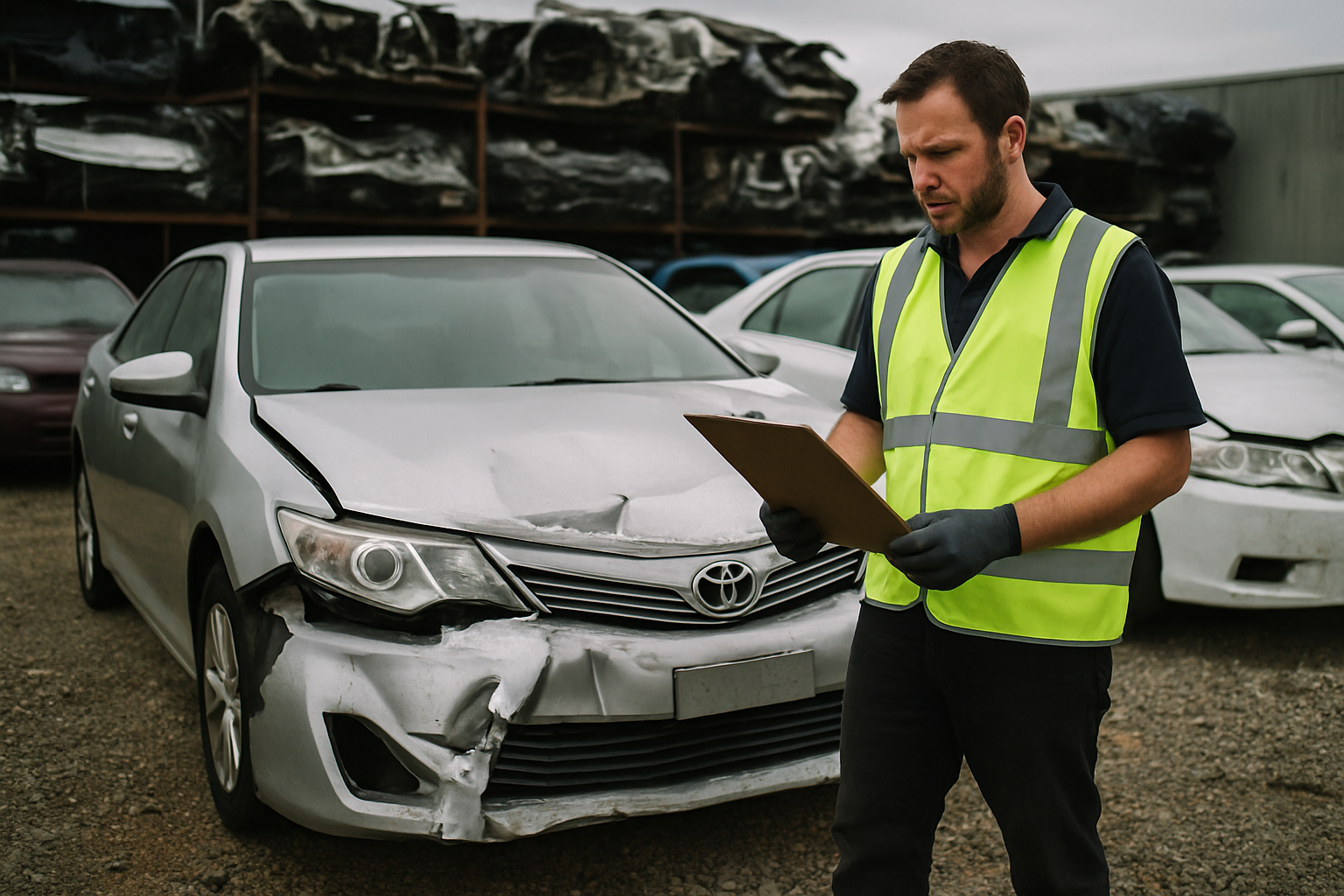
You’ve got an old car sitting in the driveway. Maybe it hasn’t moved in months. You search “how much is my scrap car worth Melbourne” and get figures ranging from a couple of hundred dollars to $20,000. Naturally, you have no idea what to believe.
That confusion is fair. The Melbourne scrap car market is active, competitive, and genuinely variable in ways that aren’t obvious from the outside. What one wrecker offers for a 2008 Toyota Corolla with a blown engine can differ substantially from what another quotes, and both figures can be entirely reasonable.
This guide cuts through the noise. We’ve pulled together real 2026 figures, explained exactly what wreckers use to value your vehicle, and laid out how to get the best possible price without falling into common traps. Whether you’re offloading a flood-damaged sedan, a tired ute, or a written-off SUV, you’ll go in with your eyes open.
At Johny Metal Recycling, we’ve collected and processed hundreds of end-of-life vehicles right across Melbourne, from Frankston to Sunbury, and out to Pakenham and Melton. The patterns in this guide come from that hands-on experience, not guesswork.
Why Scrap Car Prices in Melbourne Vary So Much
A scrap car isn’t just scrap. It’s a combination of steel, aluminium, reusable parts, fluids, and labour, and each element carries a different value depending on the vehicle, the buyer, and the state of the market at any given time.
A wrecker isn’t simply melting your car down and weighing it. They’re assessing the whole package: which parts can be resold, how much metal the vehicle contains, whether towing from your location is cost-effective, and what current commodity prices look like. All of that feeds into the quote you receive.
Melbourne has dozens of cash-for-cars operators. From large wrecking yards to smaller suburban buyers, the same vehicle can attract meaningfully different offers depending on who you call. Understanding why prices vary is the first step toward walking away with a fair deal.
What Do Melbourne Wreckers Actually Pay for a Scrap Car?
The Realistic Price Range in 2026
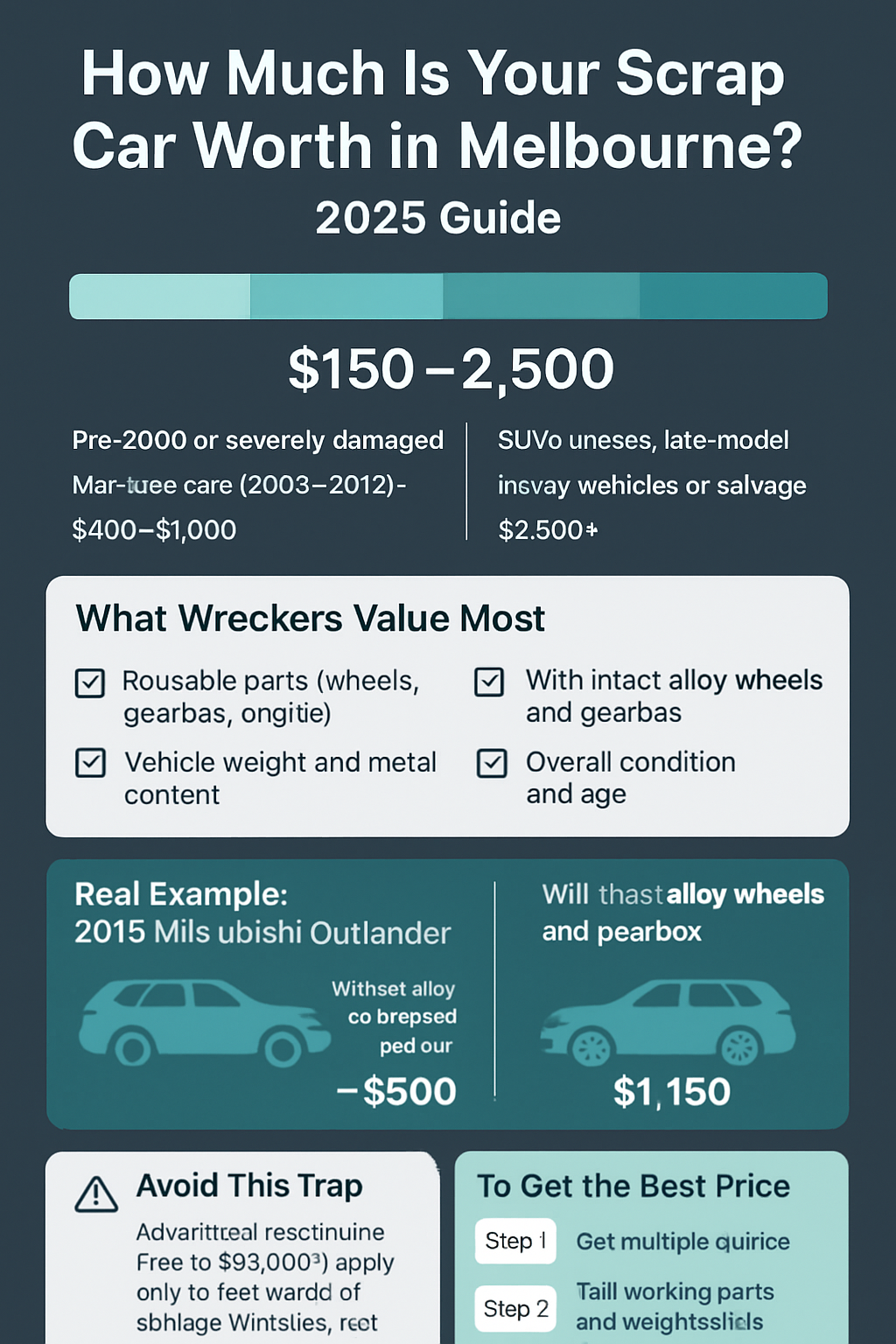
Let’s talk real numbers. For most scrap cars in Melbourne, expect somewhere between $150 and $2,500. That’s the honest, everyday range covering most passenger vehicles in poor to average condition: non-running, high-kilometre, or simply end-of-life cars with little value as working vehicles.
Where your car lands within that range depends on several factors covered below. Here’s a rough breakdown to orient yourself:
- $150 to $400: Very old vehicles (pre-2000), severely damaged cars, vehicles stripped of parts, or lightweight small hatchbacks with minimal metal content.
- $400 to $1,000: Mid-sized passenger cars in scrap condition. Think a 2005 to 2012 Holden Commodore, Ford Falcon, or Toyota Camry with a damaged engine or transmission.
- $1,000 to $2,500: Heavier vehicles with more metal content, or those with parts still in reasonable demand: SUVs, 4WDs, utes, or late-model cars with reusable components.
- $2,500 and above: Typically reserved for heavier commercial vehicles, late-model cars with significant salvageable parts, or vehicles in better-than-scrap condition overall.
Here’s a concrete example. We recently collected a 2013 Mitsubishi Outlander from a customer in Dandenong. The car hadn’t run in 18 months. It still had its original alloy wheels and an intact gearbox, so it came in at $1,150. Those two components alone shifted it from a sub-$500 quote into a much stronger bracket. That’s a solid illustration of how reusable parts push a vehicle well above the base metal price.
Why Advertised “Up To” Figures Aren’t the Full Story
You’ll see Melbourne operators advertising up to $20,000, $15,999, or $9,999 for scrap and unwanted vehicles. Those figures are real, but they don’t apply to most cars sitting in a suburban driveway.
An advertised maximum of $20,000 might apply to a late-model luxury SUV or a 2024 dual-cab ute written off in a collision but still with a functioning engine and most parts intact. That’s not a typical scrap car. It’s closer to a salvage vehicle. Similarly, a ceiling figure like $9,999 generally applies to heavier, relatively intact vehicles rather than the average worn-out runabout most people want to offload.
This isn’t misleading. It’s simply the top end of a genuinely wide range. Don’t anchor your expectations to the maximum and then feel shortchanged. Focus instead on what pushes your specific vehicle toward the higher end, and make sure the quote you receive reflects what you actually have.
The Key Factors That Determine Your Scrap Car’s Value
Vehicle Make, Model, and Age
Make and model matter enormously, though not for sentimental reasons. It comes down to parts demand and availability. A Toyota Hilux or LandCruiser, for example, has components in constant demand across Australia. Wreckers know they can move those parts quickly at solid prices, so they’ll pay more to acquire the vehicle even in scrap condition.
By contrast, a less popular European model from 2004 with a thin domestic parts market may only be worth its weight in steel, because that’s essentially all a wrecker can recover from it. Age plays into this too. A 2015 car carries newer, more relevant parts than a 2003 equivalent. Wreckers are assessing what’s actually sellable, not what the car was once worth.
Weight and Scrap Metal Content
A significant portion of your car’s scrap value is tied directly to its weight. Steel and aluminium are the primary metals recovered from end-of-life vehicles. Heavier vehicles simply contain more of them. A full-size ute or large SUV might weigh 2,000 kilograms or more, while a small hatchback may come in under 1,000 kilograms. Even at an identical per-tonne scrap rate, the heavier vehicle is worth more on metal content alone.
This is why vans, trucks, and 4WDs tend to attract notably better scrap prices than small passenger cars. For more on how metal content affects recycling value, see our guide on how scrap metal recycling works and what affects pricing.
Condition of the Vehicle
Condition affects value in two distinct ways: how much of the vehicle is usable for parts resale, and how much it costs the wrecker to process it.
A car that’s mostly intact, even if it won’t start, is worth more than one that’s been stripped, burned, or crushed. A flooded car with mould damage might still have a functioning alternator, a good set of alloy wheels, or a reusable gearbox. Water damage, broken sunroofs, and light mould are well within the scope of what the Melbourne market handles regularly.
Demand for Used Parts
Parts demand is one of the biggest variables in scrap car pricing, and it’s one most sellers overlook entirely. Wreckers aren’t just scrappers. They’re parts resellers, and the more demand there is for the components in your car, the more they’re willing to pay to acquire it.
High-demand parts include engines, gearboxes, doors, bonnets, tail lights, alloy wheels, and electronic modules. If your car has any of these in reasonable condition, it’s worth more than a vehicle where those same parts are damaged or missing.
Location Within Greater Melbourne
Location affects the logistics side of the equation. If you’re in the inner suburbs or a well-serviced corridor, pickup is easy and cost-efficient for the wrecker. Further out on the fringe, say beyond Werribee, Pakenham, or Craigieburn, there may be a modest adjustment in the offer to account for towing distance. That said, most reputable Melbourne operators cover the wider metro area as standard, so this factor is rarely a major issue.
Current Scrap Metal Prices
Global steel and aluminium prices fluctuate, and those movements flow through to what wreckers offer for vehicles where metal is the primary value driver. When steel prices are strong, base scrap car values tend to rise. When they soften, the floor price dips accordingly.
According to the Motor Trades Association of Australia, scrap metal commodity movements continue to influence end-of-life vehicle pricing across the Australian market. In 2026, Australian scrap steel prices have tracked broader global commodity movements, shifting across quarters based on demand from China and domestic manufacturing activity. Wreckers who process and resell parts separately from bulk metal often provide more consistent pricing, since their returns aren’t entirely tied to spot prices.
Types of Vehicles Melbourne Wreckers Will Buy
Passenger Cars and Sedans
Sedans, hatchbacks, and wagons in any condition are the bread and butter of the Melbourne scrap car market. Even cars that haven’t moved in years, sitting on flat tyres with significant body damage, are routinely purchased. Condition determines the price, not whether a buyer exists.
SUVs, 4WDs, and Utes
These are among the most valuable scrap vehicles in Melbourne. The combination of higher weight (more metal) and strong parts demand, particularly for popular models like the Toyota Prado, Ford Ranger, Mitsubishi Triton, and Nissan Patrol, means wreckers actively compete for these vehicles. If you have a larger 4WD or ute to sell, you’re in a relatively strong negotiating position.
Vans and Light Commercial Vehicles
Vans, minibuses, and light commercial vehicles are absolutely accepted by Melbourne wreckers. Their higher weight and the commercial parts market make them attractive acquisitions. Johny Metal Recycling’s cash for cars and vehicle removal service covers commercial vehicles as part of the standard offering, including same-day removal and on-the-spot payment.
Flood-Damaged, Written-Off, and Accident Vehicles
Many sellers assume a written-off or severely damaged vehicle is worthless. It isn’t. Melbourne wreckers regularly purchase:
- Flood-damaged and water-affected vehicles
- WOVR (Written-Off Vehicle Register) entries, meaning vehicles formally recorded as written off with VicRoads
- Cars with major structural damage from accidents
- Fire-affected vehicles, depending on the extent of damage
- Cars with engine or transmission failure
The salvageable metal and parts retain real value even when the vehicle is beyond economical repair. Being upfront about the damage means you’ll get an accurate quote the first time, with no surprises at pickup.
How the Scrap Car Valuation Process Works
What Information You Need Ready
Before you contact a wrecker for a quote, it helps to have a few things to hand:
- Make, model, and year of manufacture
- Current odometer reading, if known
- Registration status: is it currently registered?
- A straightforward condition description: does it run, is there major damage, are parts missing?
- Your suburb and postcode for pickup logistics
- The Vehicle Identification Number (VIN), usually found on the dashboard or door frame
The more accurate the information you provide, the more reliable your quote will be. Vague descriptions tend to produce vague offers, and occasionally lead to last-minute price adjustments at pickup that could have been avoided with a more honest description upfront.
How Wreckers Inspect and Quote Your Vehicle
Most Melbourne operators give quotes over the phone or via an online form based on what you tell them. The quote is typically conditional on the vehicle matching your description when the driver arrives. For higher-value vehicles, or where there’s genuine uncertainty about condition, some operators prefer to inspect before committing to a final price. That’s entirely reasonable and isn’t a red flag in itself.
The red flag is when the price drops significantly at pickup without a legitimate reason tied to something you didn’t disclose.
Same-Day and Next-Day Pickup: What to Expect
Same-day or next-day pickup is now the standard expectation across the Melbourne market. Many operators commit to removal within 24 hours, and some offer same-day service for morning bookings.
When you accept a quote, confirm the exact pickup window, whether payment is made on the spot (it should be), what form that payment takes (cash or bank transfer), and whether the driver handles all paperwork on your behalf.
How to Get the Best Price for Your Scrap Car in Melbourne
Get Multiple Quotes Before You Commit
This is the single most impactful step you can take. Contact at least two or three buyers before agreeing to a sale. The Melbourne market is competitive enough that quotes can vary by hundreds of dollars for identical vehicles. Ten minutes on the phone can make a real difference to what lands in your pocket.
Be Honest and Accurate About Your Vehicle’s Condition
It might be tempting to gloss over the rust, the missing catalytic converter, or the fact that the engine seized two years ago. Resist the urge. Inaccurate descriptions lead to reduced offers at pickup, sometimes by a significant margin, and they waste everyone’s time. An honest description gets you a realistic quote you can actually rely on when the driver arrives.
Remove Personal Belongings and Sort the Registration
Before pickup, go through the car properly. Check under the seats, in the boot, the glovebox, and any storage pockets. Once the car leaves, recovering anything left behind is very difficult.
You should also cancel or transfer the vehicle registration through VicRoads before or at the time of sale, to make sure you’re not carrying ongoing liability for a vehicle you no longer own. VicRoads provides a clear process for cancelling or transferring vehicle registration that you can complete online or in person.
Understand What’s Included: Free Towing vs Hidden Fees
Free towing is standard across the Melbourne market. Reputable buyers build it into the quoted price, so what they quote is what you receive, with no deductions at pickup for towing, fuel, or handling. Always confirm this before booking. Ask plainly: “Is the price you’ve quoted the final amount I’ll receive, towing included?” A clear yes from a reputable operator is what you’re looking for.
Red Flags to Watch Out for When Selling a Scrap Car
The Melbourne cash-for-cars market is mostly well-run, but a small number of operators use tactics that can cost you money or create unnecessary stress. Keep an eye out for these warning signs:
Last-minute price drops at pickup. The driver arrives and suddenly the offer is $200 less than quoted due to “damage not mentioned.” If you described your car accurately, this shouldn’t happen. Legitimate operators honour the price they quoted.
No paperwork provided. Any proper transaction should come with documentation confirming the sale and transfer. If the buyer won’t provide anything in writing, walk away.
Pressure to sign quickly. Reputable buyers don’t rush you. If you’re being pushed to sign without time to read what you’re agreeing to, treat that as a serious warning sign.
No ABN or business registration. A legitimate recycling business will have an ABN and should provide it on request. Unregistered cash operators may leave you with no recourse if something goes wrong.
Vague answers about payment. Cash on the spot or same-day bank transfer are both standard. If a buyer can’t confirm clearly how and when you’ll be paid, be cautious about proceeding.
Why Choose Johny Metal Recycling for Your Scrap Car in Melbourne
Johny Metal Recycling is a professional, Melbourne-based scrap metal and vehicle recycling business with hands-on experience across all types of end-of-life vehicles. Our team collects and processes cars, utes, vans, and commercial vehicles right across the metro area, from Frankston to Sunbury, and out to Pakenham and Melton.
We hold a 4.8-star rating across verified Google reviews. Customers consistently highlight accurate quotes, punctual pickups, and payment on the spot, exactly as agreed. We operate under all applicable Victorian regulatory requirements for vehicle recycling and scrap metal handling.
Here’s what two of our recent customers had to say:
“Called in the morning, car was gone by lunch, and the payment matched the quote exactly. No dramas at all.” (Google review, 5 stars)
“Honest quote, turned up on time, paid cash straight away. Couldn’t ask for more.” (Google review, 5 stars)
You can read more reviews directly on our Google Business profile. That’s the standard we hold every job to.
Here’s what you can count on when you sell through Johny Metal Recycling:
- Honest, upfront quotes based on an accurate assessment of your vehicle, with no inflated figures followed by last-minute reductions
- Free car removal included in the quoted price, no hidden fees
- Same-day and next-day pickup across Melbourne and surrounding areas
- Payment on the spot, cash or bank transfer, your choice
- Vehicles accepted in any condition: running, non-running, damaged, flood-affected, or written-off
- Responsible recycling practices that recover and reuse metal and parts rather than sending material to landfill
If you’d like to understand what actually happens to your vehicle after it’s collected, our blog post on what happens to your car after it’s scrapped covers the full recycling process and why responsible disposal matters.
To get a fast, obligation-free quote for your scrap car, get in touch with Johny Metal Recycling at jmrecycling.com.au.
Conclusion: Know Your Car’s Worth Before You Sell
Selling a scrap car in Melbourne doesn’t have to be a guessing game. Most vehicles fetch somewhere between $150 and $2,500, with larger or higher-demand vehicles pushing well beyond that. Weight, make, condition, parts demand, and current commodity prices all play a role.
Get multiple quotes before you commit. Be accurate when you describe your car’s condition. Confirm that towing is included in the quoted price. Deal with a business that has a genuine track record and is prepared to stand behind its offer.
There’s no good reason to leave money in the driveway. Get in touch with the team at Johny Metal Recycling for a straightforward, fair quote and same-day removal across Melbourne.
Ready to find out what your scrap car is actually worth? Contact Johny Metal Recycling today at jmrecycling.com.au for a fast, free quote.
Frequently Asked Questions
How much will a wrecker pay for a scrap car in Melbourne in 2026?
Most scrap cars in Melbourne fetch between $150 and $2,500 depending on condition, make, model, and weight. Vehicles with high-demand parts or greater metal content can reach higher figures. Advertised maximums like $9,999 to $20,000 apply only to specific late-model, heavier, or more complete vehicles, not the average scrap car. Getting multiple quotes is the most reliable way to find out what your vehicle is genuinely worth in the current market.
Do Melbourne wreckers buy cars that don’t run?
Yes, and it’s entirely standard practice. The vast majority of Melbourne wreckers and cash-for-cars operators accept non-running vehicles without hesitation, with free towing included so you don’t need to arrange transport. Vehicles that are mechanically dead, written off, flood-damaged, or accident-damaged are all typically accepted. The price will reflect the condition and what it costs to process the vehicle, but a buyer exists for almost every car regardless of its state.
What documents do I need to sell my scrap car in Melbourne?
You’ll generally need proof of identity and proof of ownership, most commonly your vehicle registration papers or certificate of title. Having these ready speeds up the process. VicRoads transfer of registration paperwork may be required when handing over the vehicle, and it’s worth cancelling or transferring the registration through VicRoads before or at the time of sale to avoid any ongoing costs or liability.
Does the current scrap metal price affect what I get for my car?
Yes, directly. Scrap steel and aluminium prices influence what wreckers offer for vehicles where metal content is the primary value driver. When global steel prices are running higher, base scrap car values tend to follow. Vehicles with more aluminium or copper content may attract better pricing when those metals are performing well. Wreckers who process and resell parts separately from bulk metal often provide more consistent pricing, since their income isn’t entirely dependent on spot commodity prices.
Is free car removal actually free, or are there hidden costs?
With reputable Melbourne operators, free car removal means exactly that. The towing cost is factored into the quoted price, and no deduction is made at pickup. Before confirming a booking, ask specifically: “Is this an all-inclusive price with no additional charges?” A clear, direct yes is what you want to hear. Some operators reduce the offer at pickup citing undisclosed damage, which is a red flag if you described the vehicle accurately from the outset.
Can I sell a flood-damaged or mould-affected car in Melbourne?
Absolutely. Flood-damaged, water-affected, and mould-affected vehicles are purchased regularly by Melbourne wreckers. Even a car that’s been sitting with water damage for months can carry salvageable parts and meaningful scrap metal value. Melbourne buyers are well accustomed to handling vehicles with significant damage, not just mechanically worn cars. Being upfront about the extent of the damage ensures you get an accurate quote and avoids any adjustments on the day of pickup. Johny Metal Recycling accepts vehicles across a wide range of conditions, including flood and accident-damaged cars.