
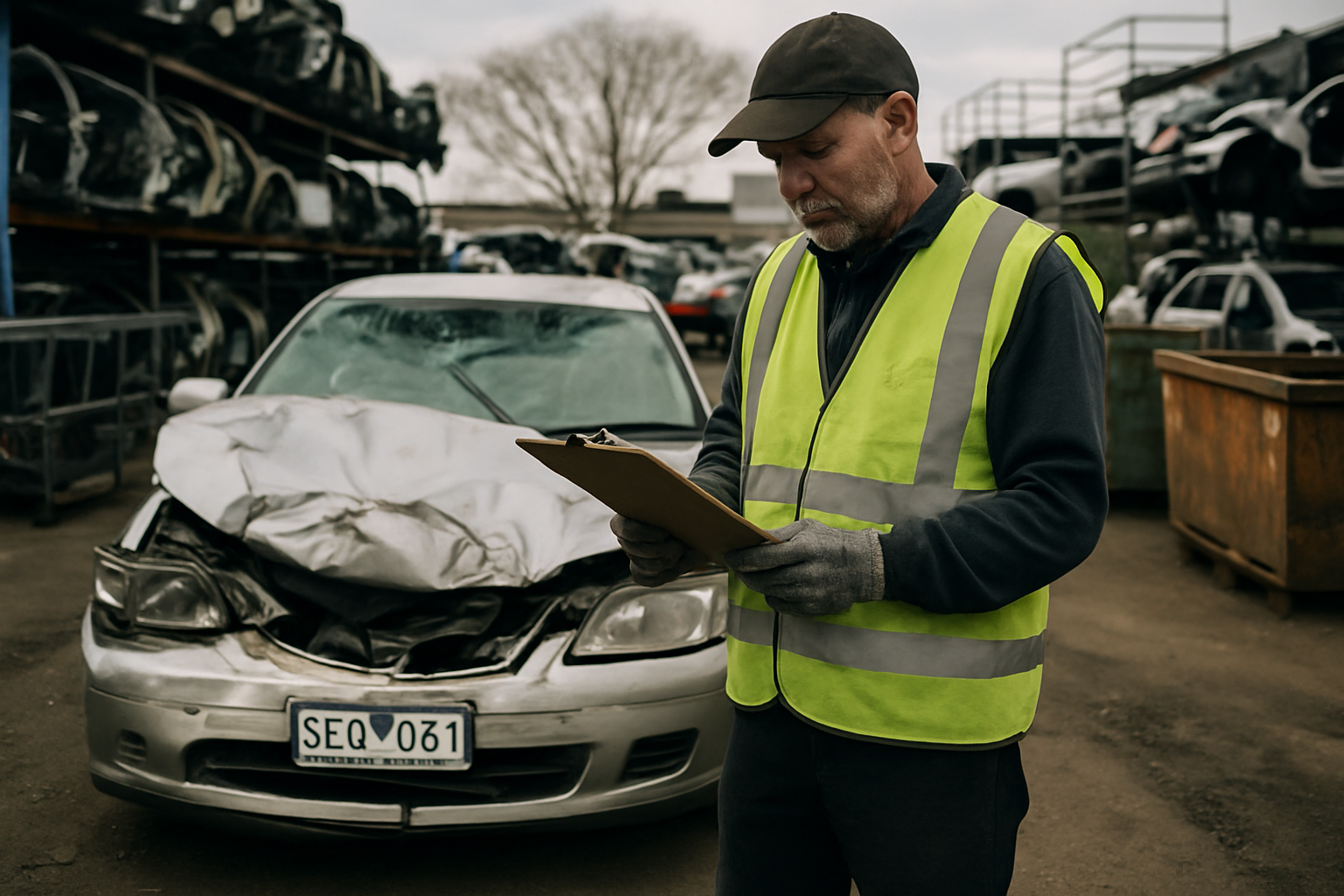
Got an old, damaged, or unwanted vehicle taking up space in your driveway? You’re probably wondering whether a cash for cars service will actually put decent money in your pocket, or whether it’s more hassle than it’s worth. The short answer is yes, you can get a fair payout, but only if you go in knowing how the process works and what your car is realistically worth before you pick up the phone.
Melbourne has no shortage of car removal and scrap car buying services, and that competition is genuinely good news for sellers. The flip side is that offers can vary significantly from one buyer to the next, and without a bit of preparation, it’s easy to leave a few hundred dollars on the table. This guide covers everything you need to know: how the process works from quote to pickup, what drives your payout, how to spot a fair offer, and what to sort out before the buyer arrives. Whether you’re selling a rusted-out hatchback, a written-off ute, or a flood-damaged SUV, read this before you commit to anything.
At Johny Metal Recycling, we’ve been buying and processing end-of-life vehicles across Melbourne for over a decade. We hold a current ABN, operate a licensed metal recycling yard, and follow Victorian EPA requirements for hazardous waste handling. That hands-on experience shapes every piece of advice in this guide.
Written by the Johny Metal Recycling team. Learn more about us.
Why So Many Melbourne Car Owners Are Turning to Cash for Cars Services
Selling a car privately takes real time and effort. You’ll need a roadworthy certificate, which costs money and isn’t always achievable on an older or damaged vehicle. For a car that’s unregistered, high in kilometres, or simply not worth putting money into, the private sale route rarely makes financial sense.
Cash for cars services cut through all of that. They buy vehicles in any condition, handle the towing, and pay you on the spot. There’s no advertising, no tyre-kickers, and no roadworthy inspection required.
What Types of Vehicles Qualify?
Pretty much anything with a reasonable amount of metal in it. Licensed metal recyclers and cash for cars buyers in Melbourne typically purchase:
- Passenger cars, sedans, and hatchbacks
- SUVs, 4WDs, and station wagons
- Utes, vans, and light commercial vehicles
- Trucks and larger commercial vehicles
- Motorcycles and machinery (worth checking with the specific buyer)
Condition doesn’t disqualify a vehicle. Non-roadworthy, unregistered, written-off, fire-damaged, flood-damaged, hail-damaged, and high-kilometre vehicles are all accepted. According to the Australian Bureau of Statistics, there are more than 20 million registered motor vehicles in Australia, and a significant share reach end-of-life each year, making this one of the most active recycling streams in the country. End-of-life vehicles are consistently among the most common categories we handle at our Melbourne yard.
Common Reasons People Sell Through Cash for Cars
The reasons vary widely. Repair costs that exceed the car’s value are probably the most common trigger we see, followed closely by a failed roadworthy inspection where the fixes simply aren’t worth the money. People upgrading to a new vehicle often want a quick, clean exit from the old one without the hassle of private negotiations. Cars that have been sitting undriven for months or years are another frequent category, along with insurer write-offs and vehicles carrying storm, flood, or fire damage. In all of these situations, cash for cars offers a practical, fast exit without the usual private sale headaches.
How the Cash for Cars Process Actually Works, Step by Step
The process is fairly straightforward, but understanding each stage helps you avoid surprises and makes sure you’re prepared when the buyer shows up.
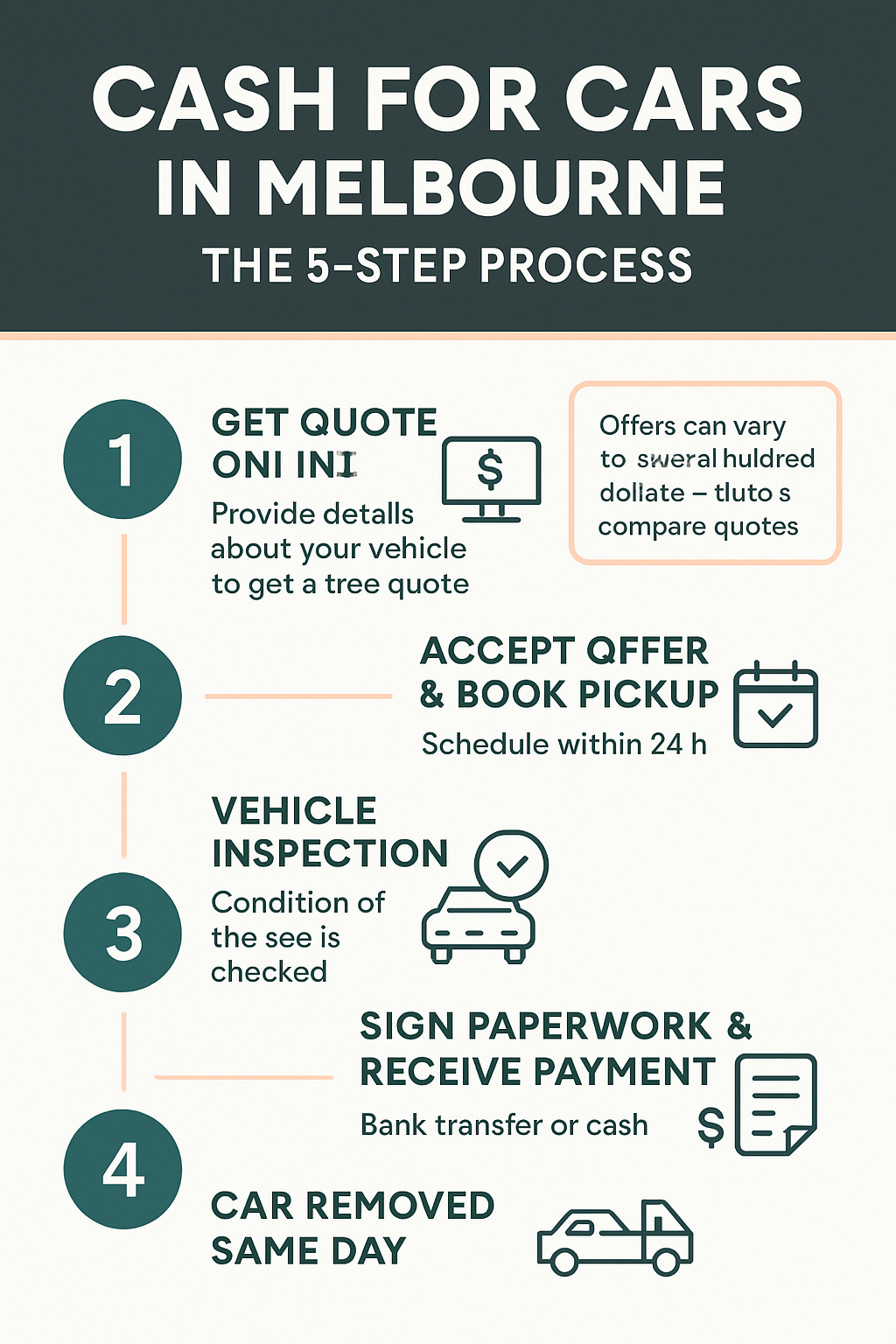
Step 1: Get a Quote Online or Over the Phone
Most buyers offer quotes online via a form or over the phone. You’ll be asked for the vehicle’s make, model, year, approximate kilometres, and a description of its condition. Be honest about the condition here, because inflating the description upfront usually results in a revised lower offer when the buyer actually inspects the car in person.
At this stage, getting multiple quotes is strongly recommended. The Melbourne market is competitive enough that offers can differ by several hundred dollars for the same vehicle, so shopping around takes very little time and can make a real difference to your final payout.
Step 2: Accept the Offer and Book a Pickup Time
Once you’ve compared quotes and accepted one, you’ll lock in a pickup time. Most reputable Melbourne car removal services offer same-day or next-day pickup, and some provide flexible weekend or evening slots depending on where you are in the metro area. Make sure the agreed offer is confirmed in writing before the buyer arrives. A text message or email is fine, because it protects you if there’s any dispute about the price on the day.
Step 3: Vehicle Inspection and Final Offer Confirmation
When the buyer arrives, they’ll do a quick visual inspection to confirm the vehicle matches what was described. If the car is in the condition you stated, the offer stands. If there are discrepancies, say you forgot to mention major structural damage or a missing engine, the offer may be revised. This is why accuracy upfront matters.
A legitimate buyer won’t significantly drop an offer over minor wear and tear, but they will revisit the price if something material was left out of the original description.
Step 4: Paperwork, Payment, and Car Removal
Once the inspection is done and the offer is confirmed, you sign over the relevant paperwork (more on that below), receive payment either as cash in hand or an instant bank transfer, and the vehicle is loaded up and removed. The whole process on the day usually wraps up in under an hour.
What Determines How Much Your Car Is Worth?
This is where many sellers get caught off guard. Payouts for scrap cars aren’t arbitrary. They’re based on a few specific factors, and understanding them gives you realistic expectations before you start chasing quotes.
Make, Model, and Year
Some makes and models carry higher demand for spare parts, which pushes their value beyond just raw scrap weight. Japanese and Korean vehicles tend to have strong parts demand in Australia. Older European vehicles may carry more scrap metal by weight but lower parts demand overall. The year matters too, because newer vehicles typically have more salvageable components in working condition.
Vehicle Condition and Damage
A car that still runs and drives will generally attract a higher offer than one that’s seized, stripped, or partially crushed. That said, even a vehicle in very poor condition still has value in its metal weight and usable components. Don’t write off a quote just because the car looks rough on the outside.
Current Scrap Metal Prices
Scrap metal prices move with global commodity markets, and steel, aluminium, and copper all fluctuate, which directly affects what a recycler can offer for your vehicle. As a general guide, scrap steel prices in Australia have ranged from roughly $150 to $300 per tonne over recent years depending on market conditions, with aluminium and copper commanding significantly higher rates per kilogram. The National Association of Recycling Industries (NARI) and various commodity price indices track these movements, and it’s worth checking current benchmarks before you start collecting quotes. When metal prices are strong, payouts tend to be higher. When prices are down, offers reflect that reality. Keeping an eye on current scrap metal prices in Melbourne gives you a useful reference point when comparing what you’re being offered.
Salvageable Parts and Components
A licensed recycler will assess which parts can be resold: engines, gearboxes, doors, bonnets, bumpers, wheels, and electronic components all have potential resale value. A vehicle with a functioning engine and gearbox will command a noticeably better offer than one that’s already been stripped.
Location Within Melbourne
Location can influence an offer slightly, mainly because of transport and towing costs. Buyers servicing outer suburbs like Werribee, Dandenong, or Frankston may factor in travel distances. That said, most metro-area pickups are included at no charge from reputable buyers, so always confirm this before accepting.
How to Make Sure You Get a Fair Price for Your Car
Knowing the process is one thing. Getting a fair price requires a bit more strategy on your part.
Get Multiple Quotes Before You Commit
This is the single most important step you can take. Melbourne’s cash for cars market is active, and buyers set their own rates, so offers genuinely vary. Collecting two or three quotes before committing gives you a real-world benchmark and some negotiating leverage if you want to push back on a low offer.
Know What Your Car Weighs
For scrap vehicles, weight is a primary pricing factor. Heavier vehicles like utes, vans, and trucks generally return more money than smaller passenger cars simply because of the volume of recyclable metal involved. You can find your vehicle’s kerb weight in the owner’s manual or through the manufacturer’s specifications online.
Check What Parts Might Be Valuable
Before accepting a scrap-only offer, do a quick search to see whether any components on your vehicle have strong secondhand demand. Alloy wheels, tow bars, roof racks, newer tyres, and functioning electronics can all add meaningful value. Some buyers will factor these in automatically; others won’t unless you specifically ask.
Understand the Difference Between Scrap Value and Whole-Car Value
A car might have a scrap metal value of a few hundred dollars based on weight alone, but the same car could be worth significantly more if it has working parts that can be resold. This is why licensed recyclers who both wreck and recycle vehicles often pay more than pure scrap dealers. Understanding how vehicles are processed and recycled can help you ask the right questions when comparing quotes.
Watch Out for These Common Traps
A few things to keep in mind when dealing with cash for cars buyers:
Hidden removal fees are one of the most common issues. Some operators advertise a cash offer but then deduct a towing fee from the final payout. Always confirm the offer is all-inclusive before agreeing to anything.
Last-minute price drops are a red flag. A legitimate buyer will confirm the offer after a brief inspection, not dramatically lower it with vague excuses once they’re already on-site with your car loaded.
No written confirmation is another warning sign. Always get the agreed price confirmed in writing before the buyer shows up.
No ABN or business registration is a serious concern. Dealing with an unlicensed operator carries real legal and environmental risks, so only deal with registered businesses you can verify.
What to Do Before the Buyer Arrives
A little preparation on your end makes the whole process faster and avoids complications on the day.
Documents You Need to Have Ready
You’ll need to prove you’re the legal owner of the vehicle. Have the following ready:
- Your current or most recent registration certificate with your name listed as the registered owner
- Photo ID (a driver’s licence is fine)
- Finance clearance paperwork if the vehicle was previously under a loan, which must be fully paid out before you can legally sell
If the registration is in someone else’s name, speak to the buyer beforehand. There are ways to handle this, but you’ll need the right documentation in place.
Remove Personal Belongings and Accessories
It sounds obvious, but it’s easy to forget things stashed under seats, in the boot, or in the glovebox. Check everywhere before the buyer arrives. Also think about aftermarket accessories you’ve installed and want to keep, such as dash cams, premium audio systems, or roof racks. Once the car leaves, recovering items becomes a lot harder.
Cancel Your Registration and Insurance
After the vehicle is sold, notify VicRoads to cancel or transfer the registration. This stops you being liable for the vehicle after it leaves your property and may entitle you to a partial registration refund depending on how much time is left on the current period. Contact your insurer at the same time to cancel the policy, since there’s no point paying for cover on a car you no longer own.
Why Choosing a Licensed Metal Recycler Matters
Not every cash for cars operator handles vehicles responsibly, and the difference matters more than you might expect.
Environmental Responsibilities Around Vehicle Disposal
End-of-life vehicles contain a range of hazardous materials: engine oil, coolant, brake fluid, transmission fluid, refrigerant from air conditioning systems, and lead-acid batteries. The Victorian EPA sets clear requirements around how these materials must be handled and disposed of. A licensed recycler will drain and dispose of all fluids in line with those regulations before processing the remaining metal.
Choosing an unlicensed operator risks having your old car illegally dumped, which can create legal complications for you as the previous owner if the disposal isn’t handled correctly.
What to Look for in a Reputable Cash for Cars Buyer in Melbourne
When assessing a buyer, look for:
- A current ABN and verifiable business registration
- Clear, confirmed pricing with no hidden fees
- Free car removal included as standard
- A transparent paperwork process
- Positive reviews from Melbourne customers
- Evidence of licensed metal recycling operations and EPA-compliant hazardous waste handling
A reputable car removal service in Melbourne will have no problem answering direct questions about their licensing, how they handle hazardous fluids, and what happens to the vehicle after it leaves your property. If a buyer hesitates on any of those questions, that’s a signal to look elsewhere.
What Our Customers Tell Us
One of the most common things we hear after completing a car removal is that sellers wish they’d done it sooner. A recent customer in Dandenong contacted us about a 2009 Toyota Camry that had been sitting in their driveway for nearly two years after a failed roadworthy inspection. The repair quotes they’d received ranged from $2,800 to $3,400, which simply didn’t make sense given the car’s market value. We collected it the following morning, paid on the spot, and handled all the paperwork. The customer told us afterwards that the whole process, from first call to the car being removed, took less than 24 hours.
That kind of outcome is typical when sellers come prepared with their documents ready, an accurate description of the vehicle, and a realistic understanding of what the car is worth. It’s not always the dollar amount that matters most. Often it’s the speed, the certainty, and not having to deal with a parade of lowball offers from private buyers.
Frequently Asked Questions About Cash for Cars in Melbourne
How quickly can I get cash for my car in Melbourne?
Most reputable buyers offer same-day or next-day pickup across the Melbourne metro area. Payment is typically made on the spot at the time of pickup, either as cash or a bank transfer. Having your paperwork ready beforehand speeds the process up considerably.
Does my car need to be registered or roadworthy to sell it?
No. Cash for cars buyers purchase vehicles in any condition, including unregistered, non-roadworthy, and written-off cars. End-of-life and damaged vehicles are among the most common types sold through these services. You will still need to provide proof of ownership, such as having your name on the registration papers.
How much can I expect to get for a scrap car in Melbourne?
Payouts vary widely depending on the vehicle’s weight, make, model, condition, and current scrap metal prices. As a rough guide, a standard passenger car might return anywhere from $150 to $500 as scrap, while heavier vehicles like utes, vans, and trucks can fetch significantly more, particularly when metal prices are strong. Getting at least two or three quotes is the most reliable way to benchmark a fair offer.
Is free car removal included with cash for cars services?
Most Melbourne cash for cars buyers include free towing as part of the service. Always confirm this upfront before accepting an offer, as some operators deduct a removal fee from the final payout. Reputable recyclers will not charge hidden fees after the agreed price has been set.
What happens to my car after it is sold to a cash for cars buyer?
Licensed metal recyclers dismantle the vehicle, salvage usable parts, and recycle the remaining materials including steel, aluminium, and copper. Hazardous fluids such as oil, coolant, and fuel are safely drained and disposed of in accordance with Victorian EPA regulations. Choosing a licensed recycler ensures the vehicle is disposed of responsibly and not illegally dumped.
Do I need to cancel my car registration before the buyer picks it up?
Yes. You should notify VicRoads and cancel the registration after the sale to stop paying registration fees and avoid any future liability. You may also be entitled to a partial registration refund depending on how much time is left on your current period. Notify your insurer at the same time to cancel the policy once the vehicle has been collected.
Ready to Get Cash for Your Car in Melbourne?
Selling an unwanted car doesn’t need to be a drawn-out process. With accurate vehicle details, a few competing quotes, your paperwork sorted, and a licensed buyer confirmed, you can have cash in hand and the car gone in as little as one day.
At Johny Metal Recycling, we’ve spent over a decade buying and recycling vehicles across Melbourne. We hold a current ABN, operate a licensed metal recycling facility, and follow Victorian EPA requirements at every step. We keep the process straightforward and transparent: we buy vehicles in all conditions, offer free car removal, and pay on the spot with no hidden fees. If you’re ready to sell your scrap car and want a fair, no-nonsense offer, get in touch with our team today for a free quote.
Published by Johny Metal Recycling, July 2025
