
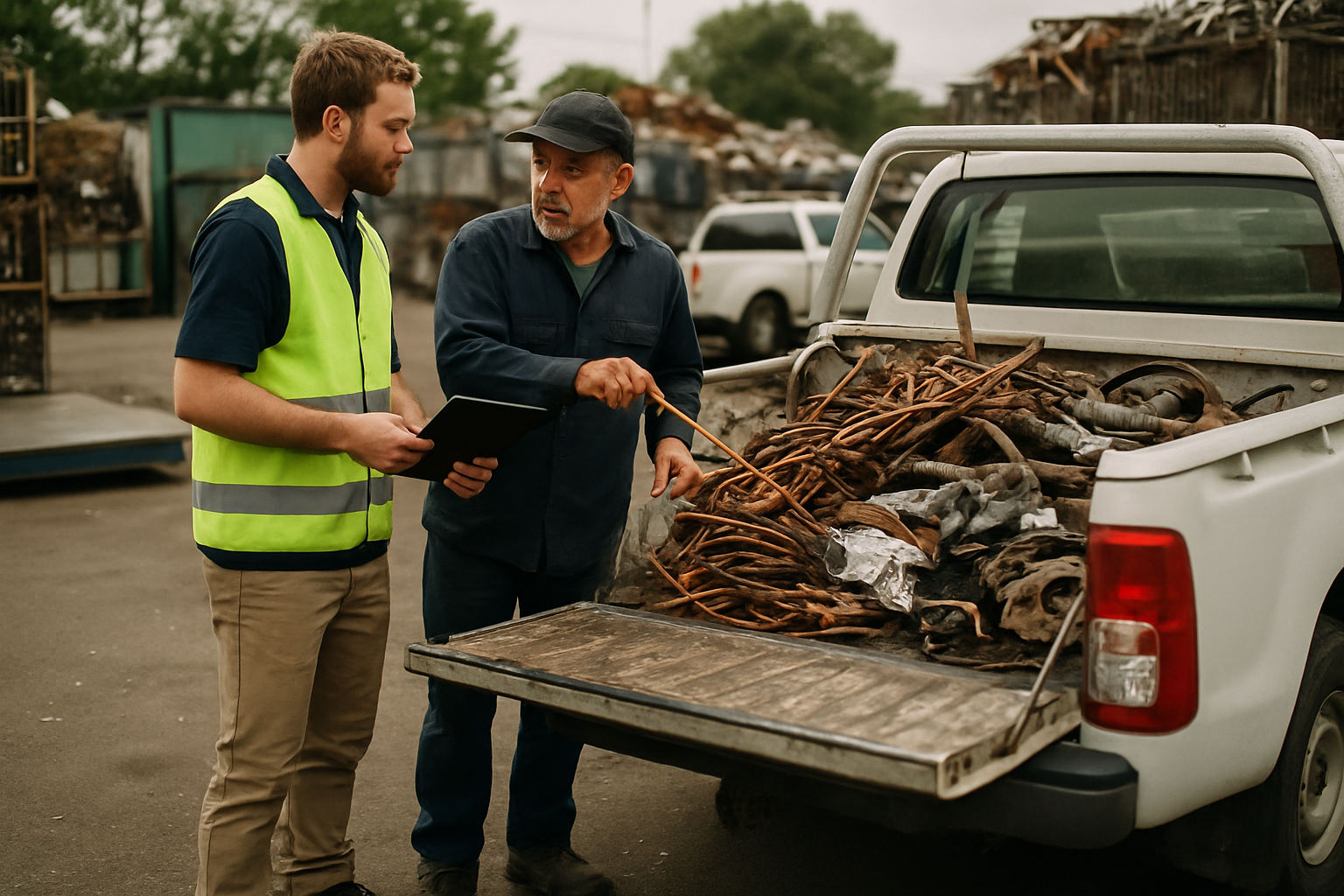
Published by Johny Metal Recycling | September 2026
If you’ve got a pile of scrap metal sitting in your shed, yard, or worksite, you’ve probably already searched “free scrap metal pickup Melbourne” and found a long list of recyclers all claiming to be the best option. What most of those pages don’t tell you is when pickup actually makes sense versus when you’d be better off loading it into a ute and dropping it off yourself.
The decision isn’t complicated, but it does matter. Get it wrong and you could be waiting days for a scheduled collection when you could have been paid the same afternoon. Or you could be loading heavy, awkward steel onto a trailer when a recycler would have come and taken it for free. This guide breaks down both options honestly: how free pickup works in Melbourne, what triggers it, when drop-off puts more money in your pocket, and how to decide based on your actual situation.
At Johny Metal Recycling, we’ve spent years working with Melbourne households, tradies, and businesses across both options. We see this decision play out every week, and the right answer genuinely depends on what you’ve got, how much of it there is, and what outcome matters most to you. Our team holds current industry accreditation, and we operate as a licensed metal recycler in Victoria, committed to compliant and transparent recycling across all our Melbourne operations.
How Free Scrap Metal Pickup Actually Works in Melbourne
Free pickup sounds straightforward, but there’s a bit more to it than booking a truck and waiting at the gate.
What Scrap Metal Recyclers Typically Collect for Free
Most Melbourne scrap metal recyclers offer free pickup for a broad range of materials. That usually includes aluminium (cans, extrusions, castings, wheels), copper, steel, cast iron, stainless steel, and automotive scrap. Some services also collect batteries as part of a pickup run, which is genuinely useful given that batteries are a regulated material in Victoria and aren’t always easy to transport or dispose of safely on your own.
Mixed loads from site cleanouts and shed clearances are commonly accepted too. You don’t usually need to have everything sorted by type before collection. A general mixed load from a construction site or a farm shed full of old equipment is exactly the kind of thing we’re set up to handle.
Volume and Material Thresholds That Usually Trigger a Free Pickup
Here’s the part most guides skip over: free pickup isn’t unconditional. Recyclers need the collection run to be commercially worthwhile, which means there’s usually a minimum threshold, either by weight or by the estimated value of the load.
As a general guide, a ute or trailer load of mixed metals is typically enough to qualify at most Melbourne facilities. Below that, some recyclers may decline the pickup or charge a collection fee. The exact threshold varies between businesses, so calling ahead with a rough description of what you have and an estimate of the quantity is the fastest way to get a straight answer.
Higher-value metals like copper can lower the minimum volume needed, since the load is worth more per kilogram. A modest amount of quality copper might justify a pickup that a much larger pile of low-grade steel wouldn’t. According to the Department of Climate Change, Energy, the Environment and Water, Australia recovers over 90% of its ferrous scrap metal, making metal recycling one of the country’s most active resource recovery sectors. That kind of national volume means recyclers are motivated to make collection work wherever they reasonably can.
How the Booking Process Generally Works
The process is usually simple. You call or submit an enquiry online, describe what you have and roughly how much of it there is, and agree on a collection time. The recycler sends a truck, loads your scrap, weighs it at their facility, and pays you out, either on the day or within an agreed timeframe.
Some recyclers, particularly those handling large commercial or industrial loads, coordinate pickups for volumes that wouldn’t be practical to transport via a standard drop-off. If you’re a business with regular scrap output, you can often arrange ongoing collection runs rather than booking case by case, which saves real time once you’ve established the relationship.
When Free Pickup Is the Right Call
You Have a Large or Heavy Load You Can’t Transport Safely
This is the most obvious scenario. If you’ve got a tonne of structural steel, a pile of cast iron machinery parts, or heavy industrial offcuts, getting that onto a trailer safely isn’t straightforward, and you may not have the vehicle or equipment to manage it. A pickup means we bring the right truck and handle the heavy lifting, which removes both a logistical headache and a genuine safety risk.
You’re Clearing a Site, Shed, or Property
A full shed or site cleanout almost always involves a mix of metals: old aluminium roofing, steel pipe, copper wire, cast fittings. Sorting all of that and hauling it yourself takes time and resources most people simply don’t have. Booking a scrap metal collection makes the whole process cleaner and faster, and a good recycler will handle the lot in a single run.
We recently completed a property clearance in Melbourne’s outer east for a residential customer whose block had been accumulating scrap for well over a decade. The load came to roughly two tonnes and included structural steel beams, old copper piping, aluminium window frames, and a non-running vehicle. A single scheduled pickup cleared the site in under three hours. Doing it via multiple trailer runs would have taken several days, with the added challenge of moving a vehicle that couldn’t be driven under its own power.
You’re Dealing With Bulky Automotive or Industrial Scrap
Old vehicles, car bodies, and large machinery frames are bulky and difficult to self-transport without a flatbed or tow capability. Pickup is the practical option here, and many Melbourne recyclers specifically handle this kind of automotive scrap. The process is usually book-and-done: they come, collect, and settle payment.
You Can’t Get to a Drop-Off Yard During Business Hours
If you work during the day and the nearest recycler closes at 5pm, a scheduled pickup may be your only realistic option. Some facilities offer 24-hour drop-off, which is useful for tradespeople operating outside standard hours, but not every yard has that setup. If after-hours drop-off isn’t available and you can’t make it during the day, a pickup that suits your timetable is the sensible alternative.
When Dropping Off Scrap Metal Makes More Sense
You Want to Be Present During Weighing and Pricing
Drop-off gives you something pickup doesn’t: you’re there when your scrap is weighed and priced. That transparency matters, particularly for higher-value loads. You can see the scale reading, ask about the rate per kilogram, and confirm the total before you agree. With pickup, the weighing happens back at the yard after you’ve handed over the load.
Being present during the transaction removes any uncertainty about the final payout, and for a customer who hasn’t dealt with a particular yard before, that visibility is a real advantage worth the trip.
You Have High-Value Metals Like Copper
Copper is consistently one of the highest-value scrap metals per kilogram in Australia. Prices fluctuate with global commodity markets, but even at modest levels, a small difference in the per-kg rate adds up quickly across a meaningful quantity. If you’ve got copper wire, copper pipe, or copper fittings, it’s worth making the trip yourself so you can confirm the grade classification and rate on the spot.
Handing over copper in a pickup without knowing exactly what rate applies is a mistake worth avoiding. For a closer look at which metals fetch the best prices, see our guide to high-value scrap metals and what they’re actually worth.
You Have a Smaller Load That May Not Meet Pickup Thresholds
If your load is on the smaller side, say a few kilograms of copper, a handful of aluminium pieces, or a bag of mixed offcuts, it may not qualify for free pickup. Driving it in yourself is the practical solution. Most Melbourne recycling yards accept walk-in drop-offs, and you’ll still get paid fairly for what you bring.
You Need Same-Day Payment
Drop-off typically means same-day payment. You arrive, the metal is weighed, the rate is confirmed, and you walk away with payment in hand. Pickup involves a scheduled collection, transport back to the yard, weighing, and then payout, which may happen the same day but isn’t always guaranteed. If you need cash quickly, scrap metal drop-off in Melbourne is the more reliable route.
The Real Difference in Payout: Pickup vs Drop-Off
Why Drop-Off Gives You More Control Over the Transaction
The key distinction isn’t necessarily that drop-off pays more per kilogram. It’s that you have more visibility over the transaction itself. You weigh in, you see the rate board, and you can ask questions before agreeing. The process is transparent: your scrap is weighed, priced, and you’re paid on the spot without any back-and-forth.
With pickup, you’re trusting that the weight and grade assessment at the yard matches what you thought you had. Most reputable recyclers handle this straightforwardly, but if you’ve never dealt with a particular yard before, drop-off is a lower-risk way to start the relationship and get a feel for how they operate.
How Pickup Pricing Is Typically Handled
When you book a pickup, the recycler will usually give you an estimated rate based on your description of the load. The final price is confirmed after weighing at the yard, and payment follows, often on the same day for established customers and sometimes within a day or two for new accounts. For large commercial or industrial pickups, pricing may be agreed in advance based on market rates at the time of collection.
Questions to Ask Before You Book Either Option
Before you commit to pickup or drop-off, it’s worth getting clear answers to a few things:
- What is the current rate for my metal type?
- Is there a minimum weight or load value required for free pickup?
- When and how will payment be made?
- Will I be present for weighing, or does that happen at the yard after collection?
- Are there any fees that might apply to my load?
Getting these answers upfront saves time and avoids surprises at settlement.
Special Cases: Batteries, Regulated Materials, and Awkward Items
Batteries and Hazardous Materials
Batteries are a regulated material in Victoria under the state’s waste management framework, and many households and businesses aren’t sure how to handle them. Some Melbourne recyclers include batteries as part of a pickup run, which is useful precisely because they’re awkward and potentially hazardous to transport yourself. If you have batteries alongside a general scrap load, flag them when you book so the recycler can handle them appropriately.
Drop-off yards may have specific procedures for regulated materials, and not every facility accepts them over the counter without advance notice. Always check before you arrive. Sustainability Victoria maintains up-to-date guidance on compliant battery disposal and drop-off locations across the state, which is worth checking if you’re unsure about your obligations.
Old Vehicles and Automotive Scrap
A non-running vehicle or a stripped car body isn’t something most people can transport without specialist equipment, so pickup is the standard approach for automotive scrap. The recycler comes with the right vehicle, collects the car or parts, and settles payment. If the vehicle is whole and in reasonable condition, make sure you’re clear on what documentation is required, such as transfer of ownership, before the collection goes ahead.
Practical Tips for Getting the Best Outcome Either Way
Sort Your Metals Before Booking or Dropping Off
Separating metals by type, aluminium away from steel and copper on its own, means you’ll get a more accurate rate for each material. Mixed loads are priced at the lower end because the recycler has to account for sorting costs. Where possible, a bit of pre-sorting on your end translates directly into a better payout with no extra effort required on collection day.
For a practical breakdown of how to approach this, check out our guide on how to sort scrap metal before recycling.
Know What You’ve Got
Not everyone can tell aluminium from zinc alloy, or pure copper from copper-plated steel, and that’s fine. Knowing the basics helps, though. Pure copper, bright and clean, fetches a higher rate than insulated copper wire. Aluminium extrusion grades differently to cast aluminium. If you’re not sure, ask the recycler before you commit. They’ll usually help you identify what you’ve got, and it’s better to ask upfront than to be surprised by the grade assessment at settlement.
Understanding how grades and market conditions affect your payout is worth knowing before you book. Our breakdown of how scrap metal prices are determined in Melbourne covers this in detail.
Ask About Pricing Upfront
Market rates for scrap metal fluctuate, and copper prices in particular can move meaningfully week to week depending on global commodity markets and exchange rates. Always ask for the current rate before you commit, whether you’re booking a pickup or heading in for a drop-off. A reputable recycler will give you a clear answer without any fuss, and if they won’t, that tells you something worth knowing.
How Johny Metal Recycling Handles Both Options in Melbourne
At Johny Metal Recycling, we offer both scrap metal pickup and drop-off services for Melbourne customers across residential, commercial, and industrial accounts. We collect a wide range of metals including aluminium, copper, steel, cast iron, stainless steel, and automotive scrap, and we handle mixed loads from site cleanouts and property clearances regularly.
We’ve been operating in Melbourne long enough to know that most customers just want a straight answer and a fair price. That’s what we aim to deliver every time, whether you’re booking a collection for a two-tonne site clearance or dropping in a bag of copper offcuts. Our yard offers transparent weighing, clear rate confirmation, and same-day payment for drop-off customers. For businesses with regular scrap output, we can set up scheduled collection runs to keep things simple on your end.
If you’re not sure which option suits your situation, give us a call and describe what you’ve got. We’ll point you in the right direction.
Ready to get moving? Book a scrap metal collection in Melbourne or drop in during business hours and we’ll take care of the rest.
Conclusion: Make the Choice That Works for Your Situation
There’s no universal answer to pickup versus drop-off. The right choice depends on your load size, metal type, time constraints, and how much visibility you want over the transaction.
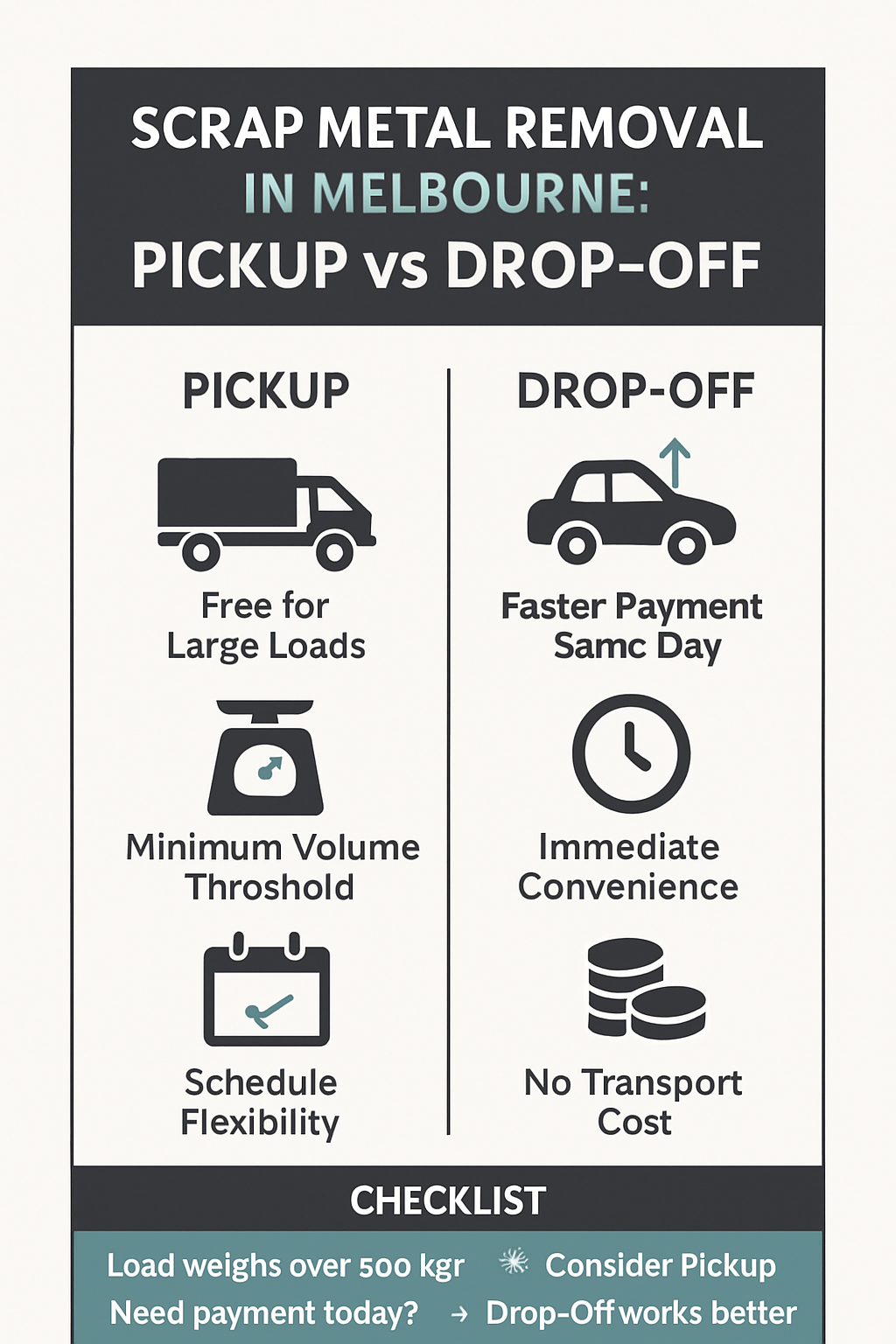
Book a pickup if you’ve got a large or heavy load, you’re doing a full site clearance, you’re dealing with automotive or industrial scrap, or you simply can’t get to a yard during business hours. Drop off if you have high-value metals like copper, you want to be present for weighing, your load is on the smaller side, or you need same-day payment.
Sort your metals where you can, ask about rates upfront, and don’t hand over a valuable load without understanding how it will be priced. A little preparation goes a long way toward getting a fair result.
If you’re in Melbourne and ready to move your scrap, Johny Metal Recycling makes both options straightforward. Get in touch at jmrecycling.com.au and we’ll sort out the details.
Frequently Asked Questions
Is free scrap metal pickup really free in Melbourne?
Yes, in most cases, but conditions usually apply around minimum volume or load value. Recyclers need the trip to be commercially worthwhile, so small loads may not qualify for a free collection. Always confirm whether any fees apply before booking, particularly for mixed or low-value loads.
Do I get paid more if I drop off scrap metal instead of having it collected?
Not always, but drop-off gives you more visibility over the weighing and pricing process. Being present means you can ask questions and verify the weight and rate on the spot. For high-value metals like copper, even a small difference in the per-kg rate can add up, making the trip worth it.
What types of scrap metal can be collected via free pickup in Melbourne?
Most Melbourne recyclers collect aluminium, copper, steel, cast iron, and automotive scrap. Some services also accept batteries as part of a pickup, which can be difficult to transport safely on your own. Mixed loads from site cleanouts or shed clearances are commonly eligible for free collection.
Can I drop off scrap metal outside business hours in Melbourne?
Some Melbourne facilities offer 24-hour drop-off for customers who can transport their own scrap, which is particularly useful for tradespeople or businesses operating outside standard hours. Check with your recycler whether after-hours drop-off is available and whether it affects payment timing.
How do I know if my load is big enough to qualify for a free pickup?
Thresholds vary between recyclers. Some focus on weight, others on the value of the metals involved. As a general guide, a ute or trailer load of mixed metals typically qualifies at most Melbourne facilities. Calling ahead with a rough description of what you have and the approximate quantity is the fastest way to find out.
What should I do to prepare my scrap metal before pickup or drop-off?
Separate metals by type where you can, aluminium apart from steel and copper on its own. Remove non-metal attachments like rubber, plastic, or insulation where it’s practical to do so. Have a rough estimate of the weight or quantity ready when you call, as it helps the recycler plan the pickup or give you an accurate rate before you commit.