
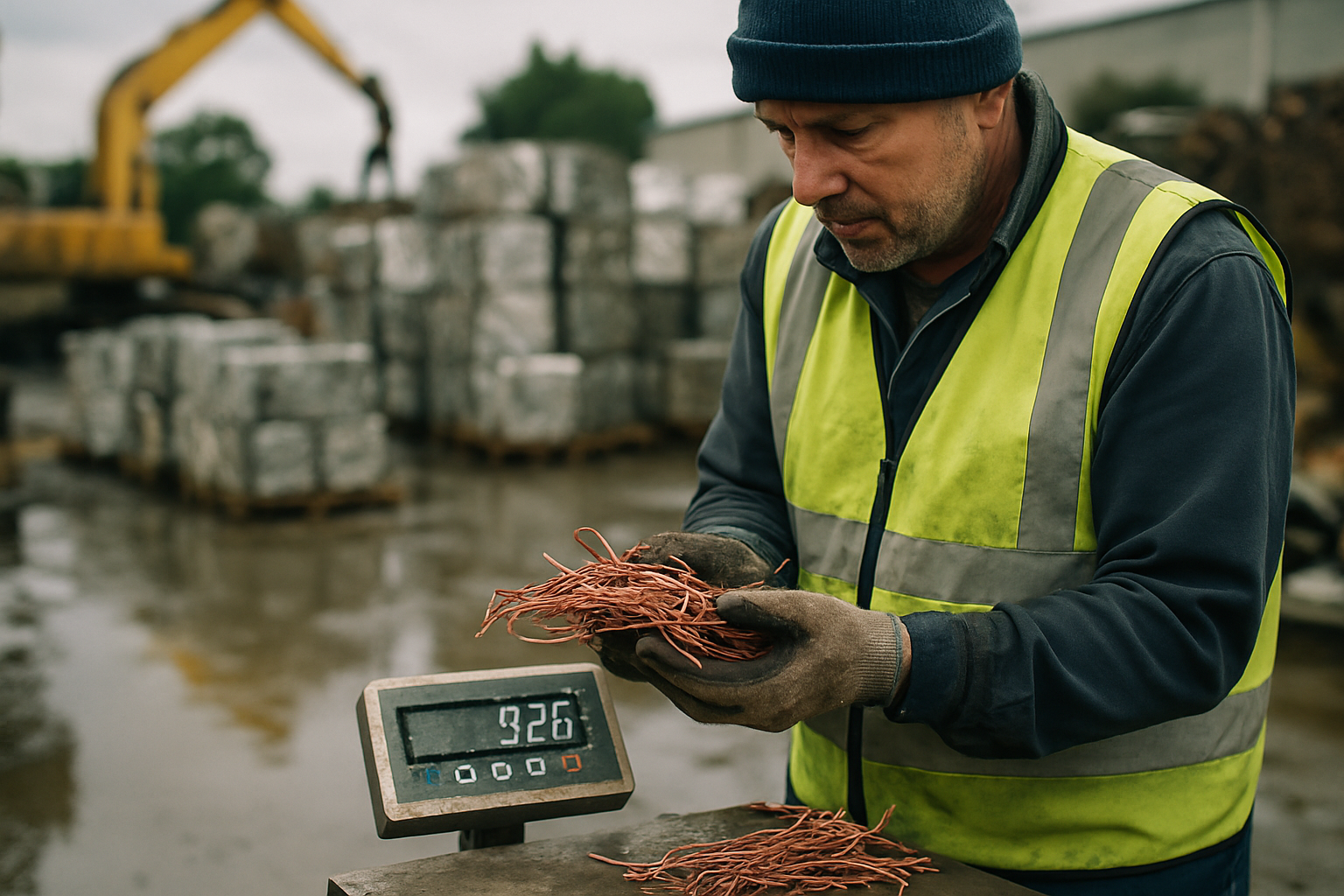
Prices last updated August 2026. Written by our yard operations team, with over 15 years in Melbourne scrap metal recycling. Pricing is based on our posted yard rates, cross-referenced with Melbourne spot prices tracked across multiple local yards throughout 2026. Our methodology draws on transaction data from our own yard, supplemented by publicly available market indicators including the London Metal Exchange. Where relevant, we reference ABS resource recovery data and Sustainability Victoria’s published guidance.
If you’ve ever pulled up at a scrap yard without a clear idea of what your metal is worth, you’ve probably driven away wondering whether you got a fair deal. It’s a common situation, and an entirely avoidable one. Scrap metal prices in Melbourne shift constantly, and the difference between selling a clean copper load versus a mixed, contaminated one can easily run into hundreds of dollars. On a larger commercial job, it can reach thousands.
This guide covers what Melbourne scrap yards are actually paying per kilo in 2026, why prices move around as much as they do, and what you can do to make sure you’re getting the best possible return on your material. Whether you’re a tradie clearing out after a renovation or a business generating scrap regularly, there’s something useful here.
Why Scrap Metal Prices Are So Hard to Pin Down
Ask five different people what scrap metal is worth in Melbourne right now and you’ll likely get five different answers. That’s not because anyone is being deliberately vague. It’s because scrap metal pricing genuinely doesn’t work like a fixed retail price.
Prices move with global commodity markets, change from yard to yard, and vary dramatically depending on the grade and condition of the metal you’re selling. A kilogram of clean, bright-stripped copper wire is worth an entirely different amount to a kilogram of burnt, painted, or mixed copper, even though both are technically still copper.
Understanding how this works before you sell is one of the most practical things you can do. It stops you from undervaluing what you have, helps you ask the right questions when you arrive, and means you’re not caught off guard when a quote comes in lower than expected.
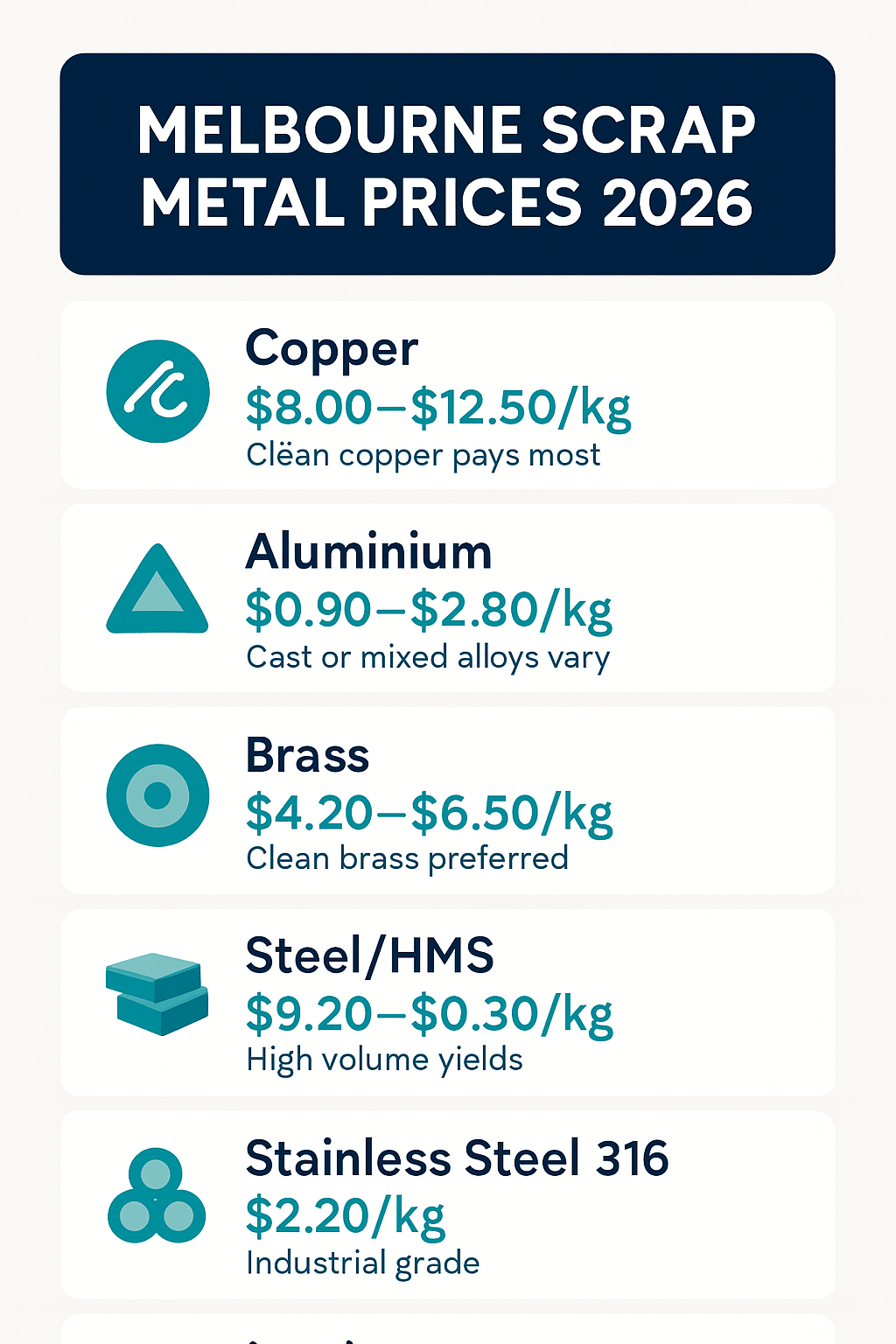
Current Scrap Metal Prices in Melbourne (August 2026)
The figures below reflect current pricing across Melbourne scrap yards as of August 2026, based on our own posted rates and cross-referenced spot checks with other Melbourne yards. Prices fluctuate daily based on market conditions, so treat these as a realistic working guide rather than a guaranteed quote. Always confirm current rates with your chosen recycler before bringing in your load.
Copper Scrap Prices Per Kilo
Copper is consistently the highest-paying metal at Melbourne scrap yards. Clean copper prices currently range from around $8.00 to $12.50 per kg, depending heavily on the grade.
- Bright stripped copper wire: $8.50 to $9.50 per kg
- Clean copper pipe, free from paint and welds: $8.00 per kg and above
- Burnt or tinned copper: around $10.60 per kg at some yards
- Domestic copper: approximately $9.60 per kg
- Dirty or mixed copper: generally $7.00 to $10.00 per kg
- Top-end clean copper at specialist yards: up to $13.00 per kg
The gap between clean and dirty copper is significant. If you’re bringing in mixed or contaminated loads, you’ll sit at the lower end of that range. Taking the time to separate and clean your copper before you arrive consistently pays off in dollar terms.
Aluminium Scrap Prices Per Kilo
Aluminium is one of the more commonly traded metals for construction businesses and manufacturers. Melbourne prices currently sit in the range of $0.90 to $2.80 per kg, depending on the type and condition.
- Cast aluminium: approximately $1.00 to $1.10 per kg
- Aluminium cuttings, clean: $1.30 to $1.60 per kg
- Clean sheet or extrusion aluminium: towards the higher end of that range
Mixed aluminium, or aluminium contaminated with steel inserts, rivets, or paint, will attract a lower price. The alloy type also matters here, because not all aluminium grades are equal in the recycling market. It’s worth knowing what you’ve got before you arrive.
Steel and HMS Scrap Prices Per Kilo
Steel is the lowest-paying metal by weight, but it’s also the most commonly available in large volumes. For businesses generating significant quantities, think demolition contractors, fabrication workshops, or manufacturers, it still represents meaningful income.
- Heavy Melting Steel (HMS): approximately $0.30 per kg
- Heavy steel, more than 5mm thick: $200 to $270 per tonne, or $0.20 to $0.27 per kg
- Light steel, less than 5mm thick: priced at a lower rate than HMS
- Alternator and starter motors: $0.60 to $0.90 per kg
With steel, volume is where the numbers start to work in your favour. At these rates, a single tonne of heavy steel returns $200 or more, which adds up quickly when you’re clearing a worksite or running a busy fabrication shed.
Brass Scrap Prices Per Kilo
Brass sits solidly in the mid-range. Clean brass currently fetches around $4.20 to $6.50 per kg across Melbourne, with some yards listing clean brass at $6.20 per kg. Like copper, condition matters a great deal. Mixed brass or brass with significant contamination will be priced lower than clean, well-sorted material.
Brass turns up regularly in plumbing fittings, valves, taps, and industrial components. If you’re in plumbing or HVAC, it’s worth keeping brass separate from your other metals from the start.
Lead, Stainless Steel and Other Metals
- Clean lead: approximately $1.80 per kg
- Stainless steel 316: approximately $2.20 per kg
- General scrap, depending on type and condition: $1.00 to $2.50 per kg
Stainless steel is worth significantly more than standard steel but requires correct identification. It gets confused with regular steel surprisingly often, and misidentifying it means leaving money on the table.
Why Prices Vary So Much Between Yards and Metal Grades
Metal Grade and Condition Is Everything
The single biggest factor affecting what you get paid is the grade of the metal you bring in. Take copper as a clear example: the difference between clean copper at $11.00 to $12.50 per kg and mixed or burnt copper at $7.00 to $9.00 per kg is $3.00 to $5.00 per kilo. On a 50 kg load, that’s $150 to $250 left on the table purely because of how the metal was sorted and prepared before arriving.
Grade classifications matter at every level: clean versus mixed, stripped versus insulated, free from contaminants versus painted or welded. Most yards apply their own internal grading standards, and it’s worth asking exactly what grade they’re assigning your material when you pull up.
Quantity Makes a Real Difference
Volume matters in scrap metal recycling, particularly for lower-value metals like steel and aluminium. Bringing in a tonne versus 50 kg often results in a better per-kilo rate, because larger loads reduce the handling cost per unit for the yard. If you’re a business generating scrap regularly, that’s a solid argument for accumulating material before making a run rather than doing multiple small trips throughout the month.
Daily Market Movements Drive Price Changes
Scrap metal prices track global commodity markets, including the London Metal Exchange (LME), which publishes official settlement prices for copper, aluminium, and other base metals each trading day. Exchange rates, international demand from China and Southeast Asia in particular, freight costs, and local supply and demand all feed into the daily price a Melbourne yard will pay.
This is why prices can shift meaningfully from week to week, and why a quote from a fortnight ago may not reflect what you’ll receive today. Some yards publish indicative price lists online, but these are typically updated daily and should always be confirmed before you arrive.
According to the ABS, metals account for a substantial share of Australia’s total resource recovery output by value, with copper and aluminium consistently commanding the strongest secondary market premiums because of the significant energy cost involved in producing them from raw ore. Sustainability Victoria similarly identifies aluminium and copper as high-priority recovered materials within Victoria’s resource recovery system, noting their strong secondary market demand and the environmental benefit of keeping them out of landfill. That broader context helps explain why the pricing gap between clean and contaminated metals is so wide: cleaner material feeds directly back into manufacturing supply chains, which is where its real value sits.
How the Yard Assesses Your Load
When you pull up at a scrap yard, your load goes through a weighing and grading process. Staff assess what you’ve brought in, classify the metals by grade, and calculate your payout accordingly. If your load is mixed, they’ll typically apply the lowest applicable rate to the dominant metal. If there’s contamination such as plastic, rubber insulation, concrete, or other non-metal material, that weight may be deducted or the grade may be downgraded.
Arriving with sorted, clearly separated material is almost always faster and more profitable.
How to Identify What You Have Before You Sell
The Magnet Test: Your Simplest Starting Point
A basic magnet is one of the most useful tools you can use before arriving at a yard. Ferrous metals, meaning iron and steel, will stick to a magnet. Non-ferrous metals like copper, aluminium, brass, lead, and stainless steel will not. This simple test immediately splits your pile into two major categories and tells you which materials are likely to attract the higher prices.
Worth noting: stainless steel is slightly magnetic in some grades, but far less so than regular steel. If you’re unsure, the yard staff can help you confirm it.
Colour and Weight Clues for Common Metals
Once you’ve done the magnet test, colour and weight help narrow things down:
- Copper: reddish-orange when clean, green when oxidised. Fairly heavy for its size.
- Brass: yellow-gold colour, harder than copper. Found in fittings and valves.
- Aluminium: silver-grey, noticeably lightweight. Soft enough to scratch with a fingernail.
- Lead: very heavy, dull grey, soft and bends easily.
- Stainless steel: bright silver, harder and more rigid than aluminium, and it doesn’t rust.
Getting identification right before you arrive means you can sort accordingly and avoid having an entire load downgraded because of a handful of contaminating pieces.
Why Getting This Right Can Mean 36 Times More Money
This isn’t an exaggeration. Clean copper at Melbourne yards can return around $11.00 per kg, while steel sits at approximately $0.30 per kg, which is roughly a 36-to-one ratio. If you’re selling what you believe is copper but it’s been assessed as contaminated mixed metal, or if you’ve accidentally left steel components mixed through your copper, the payout difference is dramatic. Knowing what you have before you sell is genuinely one of the most effective things you can do to improve your return.
For a detailed breakdown of the metals Melbourne businesses commonly deal with, our guide on types of scrap metal Melbourne businesses commonly sell is a practical starting point.
How to Get the Best Payout for Your Scrap Metal
Sort and Separate Your Metals Before Arriving
This is the single most effective thing you can do. Keep separate bins or bags for copper, aluminium, brass, and steel on-site, and get whoever handles your scrap into the habit of sorting as they go. The time spent sorting is almost always recovered in higher payments at the yard.
Our guide on how to sort and prepare scrap metal for better payouts walks through this in more detail if you want a practical system to follow on-site.
If you’re working in construction, plumbing, or electrical trades, you’re generating multiple metal types on every job. A bit of discipline around sorting on-site can make a measurable difference across a full year.
Clean Up Your Copper and Aluminium
Copper with paint, welds, or rubber insulation still attached is typically graded lower than clean, stripped copper. If you have the time, stripping insulation from copper wire before selling pushes you into a higher price bracket. The same principle applies to aluminium: removing steel rivets, bolts, or plastic components before your visit means the yard is assessing clean material rather than a mixed load.
Know the Difference Between Clean and Mixed Loads
In scrap metal terms, a “clean” load means a single metal type with minimal contamination. A “mixed” load contains multiple metals or significant non-metal material. The payout difference between the two can be substantial across every metal category. Even separating copper by grade within your own pile, clean pipe versus mixed wire versus burnt material, can result in noticeably different payments.
Ask About Pick-Up Services for Large Volumes
Some Melbourne scrap yards offer free pick-up services, particularly for larger loads or regular commercial customers. If you’re generating significant volumes of scrap through your business from a construction site, manufacturing facility, or trade operation, it’s worth asking about collection arrangements. Pick-up services save transport time and cost, and can often be structured around your schedule if you’re a regular customer.
What Melbourne Businesses Should Know About Selling Scrap Regularly
Setting Up a Regular Collection Arrangement
For businesses that generate scrap consistently, fabricators, plumbers, electricians, HVAC contractors, and builders, a regular collection arrangement with a local recycler generally makes more commercial sense than ad hoc drop-offs. Regular arrangements typically mean better service, faster turnaround, and the opportunity to discuss rates based on volume. It’s worth having a direct conversation with your recycler about what a commercial arrangement might look like for your situation.
Many Melbourne tradies and small business owners underestimate what their scrap output is actually worth over a 12-month period. Taking a more structured approach to collection and sale, rather than dealing with it reactively, can add meaningful revenue without much additional effort. Our post on how Melbourne tradies make money from scrap metal covers this in more detail and is worth reading if you’re in the trades.
Keeping Records for Tax and Compliance Purposes
If you’re selling scrap metal as part of a business operation, those payments are assessable income and need to be recorded and reported accordingly. Most reputable scrap yards provide receipts or transaction records, so hold onto those for your tax records. The Australian Taxation Office expects businesses to include all income from the sale of scrap materials, whether you’re operating as a sole trader, partnership, company, or trust.
From a compliance angle, Victorian scrap metal legislation also requires buyers to maintain records of purchases. Selling to a licensed, reputable recycler means you’re working with a yard that meets these obligations, which matters if you’re ever asked to verify a transaction.
Frequently Asked Questions About Scrap Metal Prices in Melbourne
What is scrap copper worth per kilo in Melbourne in 2026?
Clean copper, including bright stripped wire and clean copper pipe, typically pays between $8.00 and $12.50 per kg, depending on the grade and which yard you’re selling to. Dirty or mixed copper generally attracts $7.00 to $10.00 per kg, and burnt or tinned copper sits around $10.60 per kg at some Melbourne yards. The grade and cleanliness of the copper has the single biggest impact on your payout.
How much is scrap aluminium worth in Melbourne?
Aluminium prices in Melbourne currently range from around $0.90 to $2.80 per kg. Cast aluminium typically sits at the lower end, around $1.00 to $1.10 per kg. Clean aluminium cuttings can reach $1.30 to $1.60 per kg or higher. Condition, alloy type, and whether the aluminium is mixed with other materials all affect the rate you’ll receive.
Why does my scrap metal quote change between visits to the same yard?
Scrap metal prices move daily based on global commodity markets, including the London Metal Exchange. Local supply and demand, freight costs, and currency exchange rates all contribute to fluctuations. The condition or mix of your load may also be assessed slightly differently depending on the material presented that day. Asking for a current quote before you drop off, and confirming the grade classification your material has been assigned, helps reduce surprises.
Does it matter if I mix different metals together?
Yes, significantly. Mixed loads are typically paid at the lowest-grade rate for the dominant metal present. Separating copper, aluminium, and steel before arriving almost always results in a higher total payout. Even separating copper by grade within your own load can noticeably increase what you receive. An extra 20 to 30 minutes of sorting is usually well worth it in dollar terms.
How much is scrap steel worth per kilo in Melbourne?
Heavy steel over 5mm thick typically pays $200 to $270 per tonne, working out to roughly $0.20 to $0.27 per kg. Light steel under 5mm is priced at a lower rate, and HMS sits at approximately $0.30 per kg at some Melbourne yards. Steel is the lowest-paying metal by weight, but large volumes still return meaningful amounts for businesses clearing a worksite or running a fabrication operation.
Do scrap metal recyclers in Melbourne offer free pick-up?
Some do, particularly for larger loads. Pick-up availability usually depends on your location, minimum volume requirements, and the type of metal involved. It is worth contacting your local recycler directly to ask about collection arrangements, especially if you’re generating scrap regularly through your trade or business.
What metals are worth the most at a Melbourne scrap yard?
Copper consistently returns the highest price per kilo, ranging from $7.00 to $12.50 per kg depending on grade. Brass follows at around $4.20 to $6.50 per kg for clean material. Aluminium sits in the middle of the range, while steel sits at the lower end. Identifying your metals correctly before selling is critical, because clean copper can return up to 36 times more per kilo than steel, which makes accurate identification one of the most valuable things you can do before dropping off a load.
Know What You Have, and Where to Sell It
Scrap metal prices in Melbourne vary, and that’s simply how this market operates. But that variation doesn’t mean you can’t influence what you receive. The businesses and tradies who consistently get strong returns from their scrap are the ones who identify their metals correctly, sort them properly, arrive with clean loads, and choose a recycler they trust.
Whether you’re working through a one-off site clearance or generating scrap every week through your trade, the principles are the same: know what you have, understand the grades, and take the time to prepare your material before you sell.
At Johny Metal Recycling, we pay competitive prices for copper, aluminium, brass, steel, and a range of other metals across Melbourne. We’re straightforward about how we grade and price material, and we’re happy to answer questions before you arrive. You can learn more about how we operate on our About Our Yard page, or visit our copper recycling Melbourne service page to find out more about what we accept and how we price it. Get in touch directly to discuss your load and how we can help you get the best possible return.
