
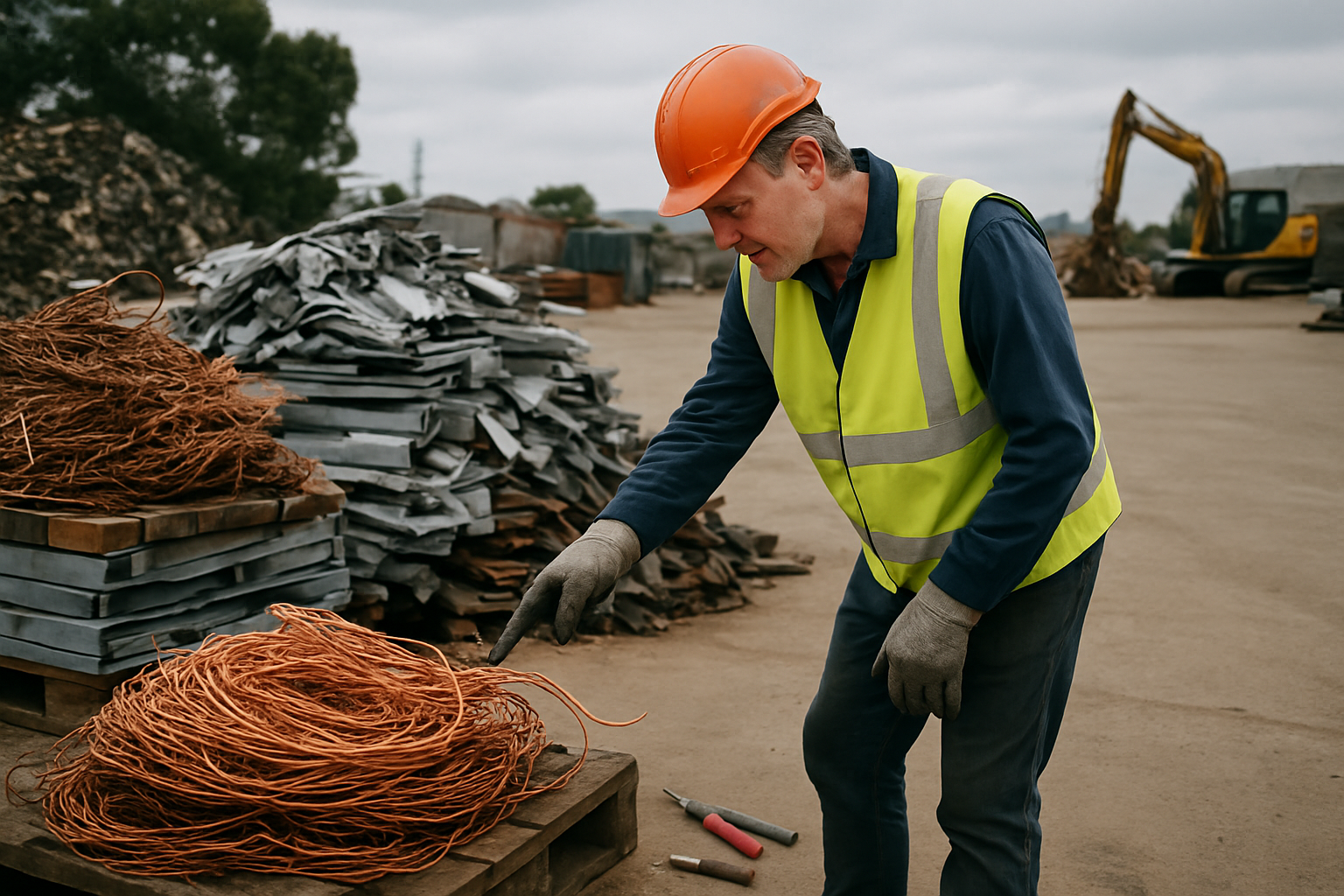
Published by Johny Metal Recycling | July 2026 | Our team has handled scrap metal collections across Melbourne for years, from single-skip residential clearances to multi-stage commercial demolitions involving tens of tonnes of mixed ferrous and non-ferrous material.
If you’ve got a significant pile of scrap metal sitting on your site, stacked in your shed, or left over after a renovation or demolition job, getting it collected sounds simple enough. Book a truck, hand it over, get paid. In practice, though, how you prepare that load has a direct impact on what you actually receive and on whether collection day runs smoothly or turns into a drawn-out headache.
A poorly prepared load can mean lower payouts, delayed pickups, or a truck that simply can’t get onto your property. A well-sorted, cleanly staged load gives the recycler everything they need to process efficiently, price accurately, and pay you fairly. Our team at Johny Metal Recycling sees that difference every single week, on jobs ranging from single-skip residential clearances through to multi-stage commercial demolitions across the Melbourne metro area.
This guide walks you through exactly how to prepare a large scrap metal load for pickup in Melbourne, step by step, and what to expect from the moment the truck arrives to when payment hits your account.
Why Preparation Makes or Breaks Your Scrap Metal Collection
Most people treat scrap metal collection as a pick-up-and-go service. And while it can be that simple, the effort you put in before collection day directly affects both your experience and your return.
The Real Cost of Arriving Unprepared
When a recycler arrives and finds a tangled pile of mixed metals, plastics, wire, and old fittings all lumped together, they face two choices: price the whole lot at a blended low rate, or refuse to collect parts of it entirely. Either way, you lose out.
Mixed, unsorted loads are routinely priced at the lowest common denominator. If your copper is sitting amongst steel and plastic fittings, you won’t get the copper price. You’ll get something much closer to a mixed scrap rate. Copper in 2026 is trading at a substantial premium over mild steel on Australian commodity markets, so that gap in preparation can represent hundreds of dollars on a larger load.
There’s also the access problem. If the truck can’t get through your gate, can’t complete a turn in your driveway, or your scrap is scattered across three different areas of a building site, you may be charged for extra labour time or the driver may need to reschedule entirely.
How a Well-Prepared Load Saves You Time and Money
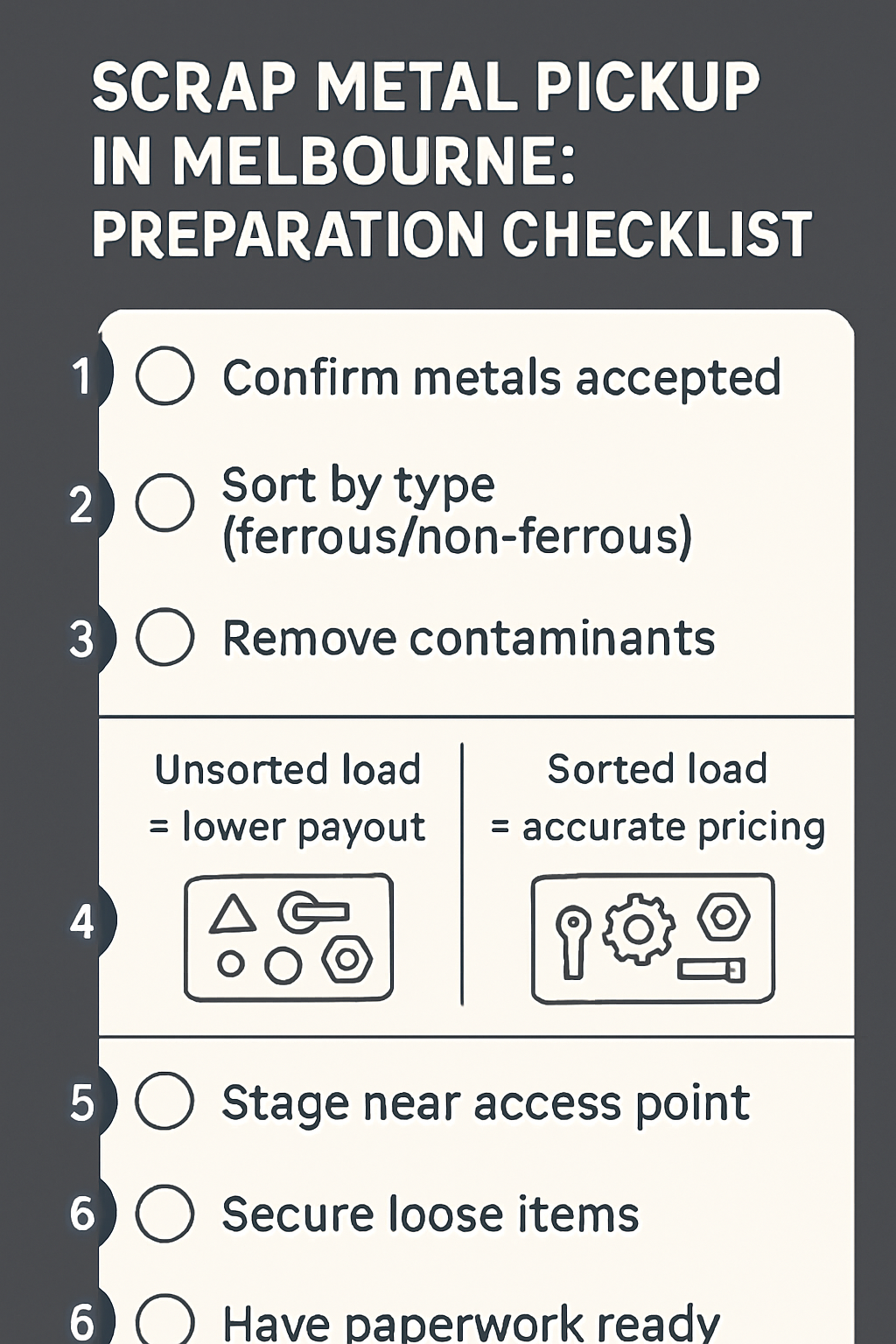
A load that’s sorted by metal type, staged near the access point, and free of obvious contaminants is faster to load, easier to weigh, and simpler to price. Recyclers can quote accurate per-kilogram rates for each metal type rather than blending everything down to a single low figure.
For commercial and industrial customers running regular collections, good preparation also builds a working relationship with your recycler. Consistent, well-prepared loads mean faster turnaround, priority scheduling, and often better ongoing rates over time.
Step 1: Know What Metals Are Accepted Before Collection Day
Not every recycler accepts every metal type, so confirming what’s collected before the truck arrives saves you from being stuck with materials you weren’t expecting to keep.
Ferrous vs Non-Ferrous: What’s the Difference and Why It Matters
Ferrous metals contain iron — think mild steel, cast iron, and structural steel. Non-ferrous metals include copper, aluminium, brass, lead, stainless steel, and zinc. The distinction matters because they’re priced very differently and processed separately.
Non-ferrous metals are worth significantly more per kilogram. Copper and aluminium in particular attract strong prices from Melbourne recyclers. Ferrous metals are lower in value per kilo but often collected in much larger volumes, particularly from demolition and construction sites.
The easiest way to tell the difference is a magnet. Ferrous metals stick to one; non-ferrous metals don’t. Our guide on how to identify ferrous and non-ferrous metals covers this in more detail if you’re not sure what you’re dealing with.
Commonly Accepted Metals for Pickup in Melbourne
Most Melbourne scrap metal recyclers will collect:
- Copper: cable, pipe, fittings, motors
- Aluminium: extrusions, cans, sheeting, alloy wheels
- Brass: taps, valves, fittings, castings
- Lead: sheet lead, old plumbing, counterweights
- Stainless steel: sinks, benchtops, industrial equipment
- Mild steel and cast iron: structural steel, machinery, pipes
- Mixed ferrous scrap: general steel and iron items
Recyclers offering scrap metal pickup across Melbourne typically accept this full range for larger loads, but it’s always worth confirming before collection day.
What Recyclers Generally Won’t Collect
Most recyclers won’t pick up asbestos-containing materials, which are regulated waste requiring specialist handling. E-waste mixed with metal — such as screens and circuit boards — is usually handled separately. Radioactive or hazardous materials, metal that can’t be safely loaded without specialist equipment unless pre-arranged, and very small quantities that don’t justify truck costs are also common exclusions.
Always check with your specific recycler. Requirements vary between providers, and some specialise in certain metals or load sizes.
Step 2: Sort and Separate Your Metals Properly
Sorting is the single most impactful thing you can do before collection day. It’s also the step most people skip, and they pay for it in lower payouts.
Why Mixed Loads Reduce Your Payout
When metals are mixed together, the recycler can’t accurately identify or price each type, so the entire load gets rated at a lower blended figure. To put a number on it: consider a load with 50 kg of copper pipe mixed in with 200 kg of steel. If that copper is unidentified within the mix, you could lose $3 to $5 per kilogram on it — a difference of $150 to $250 on that copper alone, based on the spread between copper and mixed scrap rates we see at our Melbourne yard in 2026. That’s a meaningful loss for what amounts to an hour or two of sorting before the truck arrives.
How to Separate Copper, Aluminium, Brass, Steel, and Lead
You don’t need industrial equipment to sort scrap at home or on a commercial site. A practical approach:
- Use separate bins or skips labelled by metal type. Colour-coding works well on active sites.
- Copper is usually reddish-brown and non-magnetic. Pipe, motor windings, and electrical cable are the most common forms.
- Aluminium is lightweight, silvery, and non-magnetic. Extrusions, sheeting, and alloy wheels are typical.
- Brass is yellowish and heavier than aluminium. Taps, fittings, and valves are common examples.
- Steel and iron are magnetic. Structural steel, machinery parts, and old appliances all fall here.
- Lead is dense, dark grey, and soft enough to scratch with a fingernail.
If you’re unsure what a piece is, start with the magnet test. Beyond that, weight is a useful indicator: lead and copper are both quite dense, while aluminium is noticeably light for its size.
Simple Tools and Methods for Sorting On-Site
You don’t need much: a strong handheld neodymium magnet, a few labelled wheelie bins or pallets, and basic safety gloves. On larger demolition or construction sites, a dedicated scrap staging area with separate bays for each metal type turns sorting into an ongoing process rather than a last-minute scramble before collection.
Step 3: Clean Your Scrap Metal Where Possible
Cleanliness directly affects the price you receive, and in the scrap industry the word “clean” has a specific meaning worth understanding.
What ‘Clean’ Metal Means in the Recycling Industry
Clean metal means the material is as close to pure as practically possible — free from attachments, coatings, insulation, and other non-metal materials. Clean copper pipe, for example, is priced considerably higher than copper pipe with brass fittings still attached or with insulation wrapped around it. Recyclers price contaminated metal lower because they need to account for the processing cost of removing those materials at the yard.
Removing Attachments, Insulation, and Contaminants
Some practical steps before collection day:
- Strip plastic fittings from copper pipe where possible
- Remove rubber seals and plastic valves from brass fittings
- Cut cable ties and plastic wrapping from aluminium extrusions
- Separate copper wire from its plastic insulation sheathing where practical
- Remove non-metal fasteners, bolts, and screws from steel components where it’s easy to do so
For electrical cable, stripping insulation by hand is time-consuming and may not always be worth the effort. See the next section for guidance on that.
When Cleaning Is Worth It and When It Isn’t
As a general rule, cleaning is worth the effort when the volume of metal is significant, when the metal type is high-value like copper or aluminium, and when the contaminants are quick and easy to remove. Even a small percentage price difference adds up on a large load, so the maths usually works in your favour.
It’s generally not worth it when stripping takes more time than the price improvement justifies, when the cleaning process itself is hazardous such as working around old lead paint on steel, or when the volume is small.
Copper cable with insulation still intact is accepted by most Melbourne recyclers, but it will be priced lower than bare bright copper. If you have a large volume of insulated cable, stripping it can make a real difference to your total payout. For a small amount, drop it as-is and let the recycler handle the processing.
Step 4: Stack and Stage Your Load for Safe, Efficient Collection
How your scrap is physically arranged on-site affects how quickly and safely it can be loaded, which matters for both your property and the driver’s time.
How to Stack and Bundle Scrap Metal Safely
Bundle long pieces — copper pipe, steel rods, aluminium extrusions — with strapping or wire ties so they’re manageable to handle. Loose long pieces are a loading and safety hazard that drivers must deal with before anything can move.
Stack flat sheet metal in neat piles rather than a jumbled heap. This prevents collapse and makes it easier to assess weight and condition. Place heavy items low: dense materials like lead and cast iron belong at the base of a pile or pallet, not stacked on top of lighter metals. Where you have smaller loose items like fittings or short offcuts, palletise them if possible. A palletised load is much faster to move than the same items scattered across the ground.
Organising Your Load for Forklift or Crane Access
If your load is large enough to require a forklift or crane truck, make sure there’s adequate space for the equipment to operate. That means at least 3 to 4 metres of vertical clearance for crane operations, a clear approach path to the load from the vehicle, no overhead power lines directly above the staging area, and stable, level ground capable of bearing the equipment’s weight.
Let your recycler know the access conditions when you book. They can then send the right vehicle and equipment for the job rather than arriving and finding the site doesn’t suit what they’ve brought.
What to Do If Your Scrap Is Spread Across a Large Site
Consolidate everything to one or two pickup points before the truck arrives. Scrap scattered across multiple buildings, floors, or sections of a building site significantly increases loading time, and if you’re paying for labour, that cost adds up quickly.
If consolidation isn’t practical because of site constraints or the nature of the job, discuss a staged collection schedule with your recycler in advance. Some recyclers can accommodate multiple pickups across a project’s duration, which can actually keep your site cleaner and safer throughout the work.
Step 5: Confirm Pickup Details Before the Truck Arrives
The day before collection is the right time to double-check everything. A quick conversation can prevent a wasted trip for everyone.
Questions to Ask Your Melbourne Scrap Metal Recycler Upfront
It’s reasonable to ask:
- What metals are you accepting in this collection?
- How will the load be weighed — on-site or at the yard?
- What vehicle will you send, and what are the dimensions?
- Is there a minimum load size for free pickup?
- How and when will payment be made?
- Do you need photos or a load description before you can quote?
Any professional recycler should be able to answer all of these clearly before confirming your booking.
Access Requirements: Driveways, Gates, Clearance, and Weight Limits
Common issues that cause delays or failed pickups include driveways too narrow for a large truck, low overhead beams or awnings, soft ground that won’t support a heavy vehicle, locked or narrow gates, and height restrictions in underground car parks or loading docks. Being upfront about your access conditions when you book means the recycler can send an appropriate vehicle. Many Melbourne recyclers have a range of vehicle sizes available, from utes for smaller loads through to crane trucks and semi-trailers for large commercial or industrial collections.
What Happens If a Recycler Can’t Offer Vehicle Pickup
Not all Melbourne recyclers offer a vehicle pickup service. Some direct customers to bring loads directly to the yard. It’s worth confirming this when you first enquire, particularly if you have a very large or heavy load you can’t transport yourself. If your usual recycler doesn’t offer pickup, Johny Metal Recycling handles large load collections across the Melbourne metro area — contact us before your collection date to confirm we can service your location and load type.
What to Expect on Collection Day
Even a well-prepared load can throw up a few surprises if you don’t know what the process looks like from the recycler’s side.
How the Pickup Process Works from Arrival to Weighing
When the truck arrives, the driver will typically:
- Inspect the load visually to confirm metal types and condition
- Assess access and loading requirements
- Load the scrap using the appropriate method — manual, forklift, or crane
- Record the load details for weighing and payment processing
On larger or more complex sites, there may be a brief discussion about load separation or reclassification if the driver identifies metals that weren’t described in the booking. This is completely normal. Just make sure your sorted loads are clearly staged and labelled to avoid any confusion on the day.
On-Site Weighing vs Yard Weighing: Knowing the Difference
Some recyclers bring portable weighing equipment and weigh your load on your property. Others weigh it at the yard after transport. Both methods are legitimate, but the experience differs.
On-site weighing gives you an immediate weight figure and lets you verify the result before the truck leaves. Yard weighing means you’ll receive the weight reading after transport, sometimes with a short delay before payment is confirmed. Ask your recycler which method they use and whether you’ll receive a weight certificate or docket. A reputable recycler will always provide documentation.
How and When You Get Paid for Your Scrap
Payment methods vary between recyclers. Bank transfer is most common for commercial accounts, typically arriving within one to three business days. Cheque is less common now but still used by some operators. Cash is sometimes available for smaller loads and less common for large commercial pickups.
Confirm the payment method and expected timeframe when you book. For large commercial or industrial loads, requesting a written quote or purchase order in advance is entirely reasonable. Our overview of current scrap metal prices in Melbourne can help you understand what rates to expect before you commit to a booking.
Preparation Tips for Different Load Types
The right preparation approach varies depending on where your scrap is coming from and what the job looks like.
Commercial and Industrial Sites: Factories, Warehouses, and Demolition
Industrial sites typically generate large volumes of ferrous scrap — structural steel, machinery parts, and pipework — alongside non-ferrous materials like copper wiring, aluminium fixtures, and brass fittings. The priority here is volume management and clear separation from the outset.
Set up dedicated scrap bays early in a project rather than letting materials accumulate in a disorganised pile. Use labelled skip bins or pallet cages for non-ferrous materials so they’re not buried under heavy steel at the end of a job. For demolition projects, working with your recycler from the planning stage is usually more efficient than arranging a single large collection at the end. A scheduled collection program across the project duration keeps your site cleaner throughout and reduces the administrative crunch at project completion.
Sustainability Victoria identifies construction and demolition waste as one of the highest-volume resource recovery streams in the state, which means good on-site scrap management is both financially and environmentally worthwhile for any builder or site manager working at scale. According to the Australian Bureau of Statistics, metal recycling accounts for a significant share of Australia’s total waste recovery activity, which underlines how much value is recoverable from well-managed industrial scrap streams.
Building and Construction Sites
Construction sites generate copper plumbing offcuts, aluminium window frames and flashings, steel reinforcing, and mixed hardware, often incrementally and mixed in with general waste. Appointing one person on-site as responsible for scrap separation makes a significant difference. A simple system — one skip for steel and one bin for non-ferrous metals — dramatically improves both the volume recovered and the final payout.
Household Cleanouts and Garage Clearances
Household cleanouts are less predictable in terms of metal types but often yield a useful mix of aluminium ladders, copper plumbing, old steel appliances, lead flashing, and brass fittings. Use the magnet test to sort ferrous from non-ferrous, group similar items together, and spend an hour separating before booking. The difference in payout between a sorted and an unsorted household load can be quite meaningful relative to the volume involved.
To put that in real terms: one residential clearance we handled in Melbourne’s eastern suburbs came in initially as a single mixed load quoted at a blended rate. After the homeowner spent around 90 minutes separating copper pipe, aluminium window frames, and steel appliances into three labelled bins, the revised payout was roughly 35% higher than the original blended estimate. The copper alone, once clearly identified and separated, was priced at a significantly better per-kilogram rate than it would have received sitting in a mixed heap.
How Johny Metal Recycling Handles Large Load Pickups in Melbourne
At Johny Metal Recycling, we work with commercial, industrial, and residential customers across Melbourne to make scrap metal collection straightforward, from the first enquiry through to payment. Our team has hands-on experience across the full range of load types, from single-skip residential clearances through to staged multi-pickup demolition projects involving tens of tonnes of mixed ferrous and non-ferrous material.
Our Pickup Process and What You Can Expect
We assess your load before dispatching a vehicle, which means we send the right truck and equipment for your specific job. We handle everything from small ute loads through to large crane truck collections for commercial and industrial sites. Our team can also advise on sorting and staging if you’re unsure what preparation is required for your particular load.
Service Areas Across Melbourne
We cover the Melbourne metro area and surrounding regions. When you contact us, we’ll confirm whether we can service your specific address and what vehicle options suit your access conditions.
Getting a Quote and Booking Your Collection
The fastest way to get a quote is to contact us with:
- A description of the metal types you have
- An estimate of total weight or volume
- Your location and access conditions
- Your preferred pickup timeframe
We’ll respond with a clear quote and confirm the collection details. For large or complex loads, photos are genuinely helpful and allow us to give you an accurate quote without a preliminary site visit.
Frequently Asked Questions About Scrap Metal Pickup in Melbourne
Do I need to sort my scrap metal before the pickup truck arrives?
Sorting is strongly recommended and usually results in a higher payout because recyclers can price each metal grade accurately. Mixed or unsorted loads are typically weighed at a lower blended rate, which means you may receive less than the combined individual metal values would justify. At a minimum, separate ferrous metals such as steel and iron from non-ferrous metals such as copper, aluminium, brass, and lead before collection day.
How do I know if my scrap metal qualifies for a free pickup in Melbourne?
Most Melbourne recyclers offer free pickup when the load is large enough to justify the truck and driver costs, typically a ute load or more. Call or submit an enquiry with an estimate of your load volume and metal types so the recycler can assess whether free collection applies. Smaller loads may still be collected but could attract a service fee, or you may be better off dropping the load directly at the yard.
What metals are commonly accepted for pickup in Melbourne?
Commonly accepted metals include copper, aluminium, brass, lead, stainless steel, mild steel, cast iron, and mixed ferrous scrap. Non-ferrous metals such as copper and aluminium typically attract the highest prices per kilogram. Always confirm with your recycler what they accept before collection day, as requirements can vary between providers.
Can the pickup truck access my property or building site?
This depends on the vehicle your recycler sends. Trucks require adequate overhead clearance, driveway width, and a turning circle. Let your recycler know about any access restrictions when you book so they can send an appropriate vehicle. If access is difficult, ask whether a smaller vehicle or a crane truck is available as an alternative.
How is my scrap metal weighed and how do I get paid?
Some recyclers weigh your load on-site using portable scales, while others weigh it at the yard after transport. Ask your recycler which method they use before collection day so there are no surprises. Payment is typically made by bank transfer, cheque, or cash. Confirm the method and expected timeframe when you book.
What should I do if my scrap is spread across a large site?
Consolidate your scrap into one or two collection points before the truck arrives to reduce handling time and loading costs. If consolidation isn’t possible, let the recycler know in advance so they can allocate the right equipment and crew. Staging the scrap near a driveway or loading dock makes the process faster and reduces the risk of property damage during collection.
What if my scrap metal has other materials attached, like plastic, rubber, or insulation?
Mixed materials reduce the value of your scrap because the recycler must account for the non-metal weight and processing cost. Where practical, strip plastic fittings, rubber seals, and cable insulation from metal before collection. Copper cable with insulation still attached is accepted by most Melbourne recyclers, but it will be priced lower than bare bright copper.
Ready to Book Your Scrap Metal Pickup?
Getting the most from your scrap metal isn’t complicated, but it does reward a bit of preparation. Sort your metals, clean what’s practical, stage your load for easy access, and confirm the details with your recycler before collection day. Those steps alone can meaningfully improve your payout and make the whole process run faster.
If you’re ready to book a large load collection across Melbourne, contact Johny Metal Recycling. We’ll assess your load, give you a clear quote, and arrange collection at a time that works for your site or schedule.
Contact Johny Metal Recycling today to get a quote and book your Melbourne scrap metal pickup.