
Published by the Johny Metal Recycling team | September 2026 | Our metal recycling team, with 20+ years of industry experience, reviews pricing monthly against Melbourne yard rates and London Metal Exchange (LME) copper benchmarks. Prices last verified: September 2026.
Pricing methodology: The price ranges in this article are compiled by our team from direct yard assessments across Melbourne recyclers, cross-referenced against the LME copper spot price and adjusted for local grade and volume conditions. Rates are updated monthly and reflect what sellers can realistically expect at the yard, not theoretical maximums.
If you work with copper regularly, whether you are an electrician pulling out old cable, a plumber replacing pipe, or a demolition crew clearing a commercial site, you already know it is worth holding onto. What you might not know is exactly how much it is worth per kilo right now, which grades attract the highest prices in Melbourne, and what simple preparation steps can add real money to your payout before you even pull into the yard.
Melbourne has a genuinely competitive scrap copper market, and that works in your favour as a seller. The catch is that the price difference between a well-sorted load and a mixed, contaminated one can be several dollars per kilo. That gap is entirely avoidable with a bit of effort. This guide covers which copper grades are accepted, what prices look like in 2026, how to prepare your load properly, and what to look for when choosing who to sell to.
Why Copper Is the Most Valuable Common Scrap Metal
Copper’s Role in Recycling and the Global Supply Chain
Copper commands the highest prices of any common scrap metal for a straightforward reason: demand is strong, supply is constrained, and unlike many materials, copper does not degrade through recycling. It can be melted down and reused at near-full quality indefinitely, which makes secondary copper genuinely valuable to manufacturers and smelters. That value is not going away any time soon.
Geoscience Australia classifies copper as a critical mineral commodity because of its essential role in electrical infrastructure, renewable energy systems, and industrial manufacturing. That strategic importance underpins sustained global demand, and that demand flows directly through to what recyclers in Melbourne are willing to pay for your scrap.
Globally, roughly 35% of all copper in circulation comes from recycled sources. Processing secondary copper also requires significantly less energy than mining and refining virgin ore, so the environmental case for recycling is just as strong as the commercial one. Both arguments point in the same direction.
Why Melbourne Has a Strong Market for Scrap Copper
Melbourne is one of Australia’s most active construction and infrastructure cities. Electrical upgrades, building demolitions, HVAC replacements, and the rapid expansion of solar installations all generate a steady flow of copper scrap, which keeps the local recycling market active and competitive. That competition benefits anyone bringing in a load.
Victoria’s resource recovery framework, supported by Sustainability Victoria, actively encourages diverting metals from landfill and returning them to the supply chain. Metal recyclers across Melbourne operate within that system, buying copper from tradies, businesses, and households and feeding it back into manufacturing pipelines both domestically and internationally.
What Types of Scrap Copper Can You Sell in Melbourne?
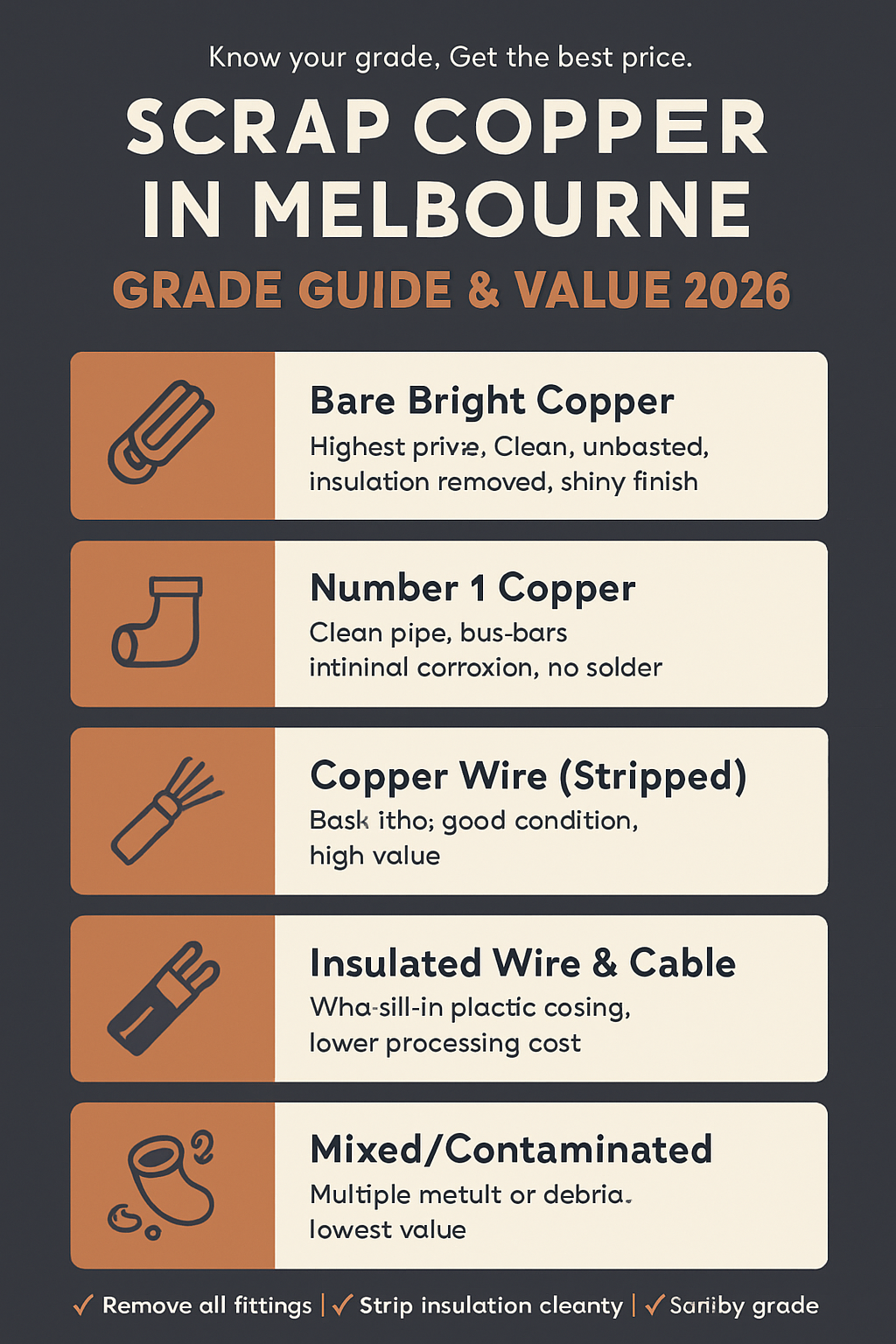
Not all copper is treated the same at the yard. Grades are assessed based on purity, cleanliness, and the presence of coatings, solder, fittings, or other metals. Here is what you are likely to have and how it is typically classified.
Bare Bright Copper
This is the top grade. Bare bright copper is uncoated, unalloyed wire or cable with all insulation removed and no solder, paint, or corrosion present. It needs to look genuinely clean and shiny to qualify. If you have stripped electrical cable back to bare wire and it looks like it just came off a roll, you are probably in bare bright territory, and you should be paid accordingly.
Number 1 Copper
Number 1 copper covers clean, uncoated copper pipe, bus bars (thick copper bars used in switchboards and electrical panels), and clippings with no excessive corrosion, paint, or solder. Most clean plumbing pipe with fittings removed will fall here. It sits just below bare bright in value and represents the bulk of what experienced tradies bring in after a renovation or upgrade job.
Number 2 Copper
This grade covers pipe and wire with some solder, minor coating, light paint, or fittings still attached. It is still worth selling but commands a lower rate because it requires more processing at the smelter. A lot of copper coming off older building sites will land in this category, which is not a problem as long as you know what to expect on pricing.
Copper Wire and Cable
Wire and cable is assessed differently depending on whether the insulation has been removed. Stripped wire in good condition can qualify as bare bright or Number 1. Wire still in its plastic or rubber casing is priced as insulated copper, which is lower to account for the extra processing required. The gap between stripped and unstripped can be substantial on larger volumes.
Copper Pipe and Fittings
Copper pipe from plumbing and HVAC work is widely accepted. The grade depends on condition. Clean pipe without solder fetches better rates than pipe with fittings attached or heavy oxidation throughout. Taking five minutes to cut off fittings before you arrive is almost always worth it.
Mixed and Contaminated Copper
Mixed loads that include copper alongside other metals, plastic, insulation, or general debris are graded conservatively and priced down accordingly. This is where preparation makes the biggest practical difference. A bit of sorting before you arrive can shift your entire load into a higher price bracket.
Scrap Copper Prices Per Kilo in Melbourne: What to Expect in 2026
Price Ranges by Grade and Condition
Copper scrap prices in Melbourne vary significantly based on grade and how clean the material is. The ranges below reflect current yard rates at established Melbourne recyclers as of September 2026, cross-referenced against LME copper benchmark pricing, and are consistent with what our team assesses daily across different grades. They represent realistic expectations, not best-case scenarios.
- Bare bright copper: $15 to $17+ per kg for top-quality clean material
- Number 1 copper (clean pipe, clean wire): $13 to $16 per kg
- Number 2 copper (soldered, lightly coated): $10 to $14 per kg
- Dirty copper (fittings, contamination, mixed): $3 to $11 per kg
- Insulated copper wire: Priced individually, depending on insulation type and copper content
The top end of each range applies to material that genuinely meets the grade criteria. These are not guaranteed numbers regardless of condition, and rates move with global commodity markets, so always confirm current pricing directly with your recycler before driving in.
What Drives Copper Prices Up or Down?
Copper is a globally traded commodity. Its price on the London Metal Exchange (LME) flows through to what you are offered at the local yard. When global construction activity is strong, infrastructure spending rises, or supply from major mining regions is disrupted, copper prices tend to climb. Economic slowdowns that reduce industrial demand pull prices in the other direction.
Locally, the condition and volume of supply in Melbourne also plays a role. A recycler processing higher volumes of clean, sorted copper has better margins and can pay more competitive rates. A load heavy with contamination adds processing costs that ultimately come off your payout, which is why preparation is worth the effort every time.
Why Your Price May Differ from Online Quotes
Published rates are guides, not guarantees. What you are offered in person depends on what your load looks like when it is weighed and assessed: the grade of the copper, how clean it is, whether it has been sorted, and the current spot price on that day. Always check current rates directly with your recycler before coming in, particularly if you are bringing a significant volume. A quick phone call costs nothing and avoids surprises.
How to Prepare Your Copper Load to Get the Best Price
Sorting Your Copper by Grade
Sorting takes time, but it pays for itself. If everything is thrown together, bare wire, soldered pipe, fittings, and insulated cable all in the same bin, the recycler has to grade the whole lot conservatively. That means your cleanest copper could end up priced the same as your worst material, which is a straightforward way to lose money you have already earned on the job.
Use separate containers or bags from the point of collection: bare wire in one pile, clean pipe in another, insulated cable separate, and mixed or soldered material in its own group. That separation allows each grade to be assessed and priced on its own merits. A few labelled bins in the back of the ute is genuinely all it takes to keep grades distinct across a full job, and the payoff at the yard is usually visible.
For a practical look at how this works across different metals, our guide on how to sort your scrap metal to get the best price walks through the full process in detail.
Cleaning Copper to Increase Its Value
Cutting off brass fittings where practical, removing steel bolts or brackets, and clearing any plastic or rubber still attached to pipe or wire is worth doing before you arrive. You do not need to spend hours scrubbing everything, but the less contamination in your load, the less downgrading you will face at the scales. Small effort, real difference.
Removing Insulation from Copper Wire
Stripping wire before drop-off is one of the most impactful things you can do if you have large volumes. Insulated copper wire is consistently priced lower than stripped wire because the insulation adds dead weight and processing cost. For a commercial electrician clearing a large site, stripping wire before arriving can meaningfully increase the total payout on a job that is already done.
For small volumes, the labour may not be worth it. If you are unsure whether stripping your specific load makes financial sense, ask the recycler before you commit the time. It is a quick conversation that can save you unnecessary work, or help you realise you have been leaving money on the table.
Separating Copper from Other Metals
Copper mixed with aluminium, steel, or brass gets graded differently than pure copper. Wherever possible, keep metals separated: aluminium off-cuts in one pile, copper in another, steel in a third. You will be paid the correct rate for each metal rather than a blended rate that does not work in your favour for any of them.
What to Look for in a Scrap Copper Buyer in Melbourne
Accurate Weighing and Transparent Pricing
Any reputable recycler should weigh your load on calibrated scales and clearly explain how each component has been graded and priced. You should be able to see the weight, understand the grade assigned, and know the rate applied before you accept any offer. If a recycler is not clear about how they arrived at the number on your docket, that is worth paying close attention to.
Convenient Drop-Off or Collection Options
For small to medium loads, most tradies and businesses will drop off directly at the yard. For larger volumes, such as demolition sites, factory clearouts, or regular commercial scrap, collection or scheduled pickup can be a practical option worth asking about. A good recycler will work around your schedule rather than making the process harder than it needs to be.
Same-Day Payment and a Straightforward Process
Same-day cash or electronic payment is a standard expectation at established recyclers in Melbourne. A straightforward process, arrive, weigh in, get paid, is what makes a recycler worth using consistently, particularly if you are generating copper scrap on a regular basis and want a reliable outlet you can count on.
Common Mistakes That Cost You Money When Selling Scrap Copper
Mixing Grades Together
Mixed loads lose value because the whole lot gets assessed at the lowest present grade. Even a relatively clean load can be knocked down in price if there is enough contamination mixed through it. Keep grades separated from the moment you are collecting on-site, and the difference at the scales will usually justify the effort involved.
Selling Dirty or Insulated Copper Without Asking About Options
Before you accept an offer on a dirty or insulated load, ask what it would be worth stripped or cleaned. Sometimes the effort is minimal and the price difference is meaningful. Other times the labour is simply not worth it. Either way, it is worth asking before you commit, because you will not know unless you do.
Not Knowing the Current Market Rate Before You Arrive
Arriving with no idea of current copper prices puts you at a disadvantage. You do not need to know the LME price to the cent, but having a general sense of current Melbourne rates means you can recognise a fair offer when you see one. A quick phone call before you drive in takes thirty seconds and can make a real difference on a large load.
For more context on what shapes the market, our article on what affects scrap metal prices in Melbourne is worth reading if you sell scrap on a regular basis.
Industries and Tradies That Benefit Most from Copper Recycling
Electricians and Solar Installers
Electricians generate significant copper scrap through old cabling, switchboard off-cuts, conduit, and residential and commercial upgrade work. Solar installers deal with DC cable, MC4 connectors, and earthing wire. Both trades accumulate copper quickly, and regular drop-offs or scheduled collections can represent meaningful additional income across the course of a year when added up properly.
Plumbers and HVAC Technicians
Plumbing and HVAC work produces consistent copper pipe scrap from bathroom and kitchen renovations, hot water system replacements, and air conditioning installs. Clean pipe commands a good rate. Keeping it separate from mixed metal waste from day one of a job makes the recycling process noticeably more profitable by the time you reach the yard.
Demolition and Construction Companies
Demolition sites can produce large volumes of mixed copper: wiring, pipe, cable, fittings, and architectural copper from older buildings. The bigger the volume, the more important it is to sort on-site rather than at the yard. A basic sorting system during strip-out saves time and money at every step, and for a large commercial demolition that difference can run into hundreds of dollars across a single job.
Small Businesses and Property Managers
Property managers overseeing older commercial or industrial buildings often come across copper during maintenance and refurbishment work. Even modest quantities of clean copper from an HVAC upgrade or electrical rewire are worth collecting and selling rather than going into a general waste bin. It adds up faster than most people expect, and the effort involved is minimal once you have a routine in place.
Visit our copper recycling service page to see how Johny Metal Recycling works with businesses and tradies across Melbourne.
Frequently Asked Questions About Selling Scrap Copper in Melbourne
How much is scrap copper worth per kilo in Melbourne right now?
Prices vary significantly depending on grade and condition. Clean bare bright or Number 1 copper commands the highest rates, while mixed or contaminated loads fetch considerably less. As of September 2026, scrap copper prices in Melbourne generally range from around $3 per kg for heavily mixed or insulated material up to $17 or more per kg for clean, high-grade copper, based on current LME benchmarks and local yard assessments. Contact Johny Metal Recycling directly for current pricing, as rates move with global commodity markets.
What is the difference between clean and dirty copper scrap?
Clean copper is bare and uncoated, with no attached fittings, solder, paint, insulation, or other metals mixed in. Dirty copper still has plastic insulation, solder joints, fittings, or other contaminants attached. Clean copper attracts a significantly higher rate per kilo because it requires less processing at the smelter. Stripping insulation from wire before dropping off your load can noticeably improve your payout, particularly on larger commercial volumes.
Can I sell copper pipe and old electrical wire as scrap?
Yes, both are accepted. Copper pipe is typically valued as Number 1 or Number 2 depending on whether it has solder or fittings attached. Electrical wire with insulation is assessed separately and priced lower, but stripping it to bare wire increases its grade and value. Bring whatever volume you have, as larger, well-sorted loads are easier to process and may improve your overall rate.
Do I need to strip the insulation off copper wire before selling it?
You are not required to, but doing so can increase your payout substantially on larger loads. Insulated copper wire is processed at a lower grade because the insulation adds weight and requires extra handling. If you have significant volumes, the effort to strip wire is usually worth it financially. Ask Johny Metal Recycling before you commit the labour, as they can advise based on the type and volume you have on hand.
How do I know I am getting a fair price for my scrap copper?
A reputable recycler will weigh your load on-site using calibrated scales and explain clearly how each grade is priced. Having a rough understanding of current copper commodity prices before you arrive helps you assess what you are being offered. Presenting a sorted, clean load also gives you a stronger position and avoids bulk downgrading. Johny Metal Recycling operates with transparent pricing, so ask questions if anything is unclear.
What quantities of copper do I need to bring in to sell?
There is generally no minimum. Even small quantities of copper are accepted. Larger and better-organised loads tend to be processed more efficiently and may attract more favourable pricing. Tradies and businesses with regular scrap volumes can often arrange consistent collection or drop-off schedules. Get in touch with Johny Metal Recycling to discuss your situation regardless of load size.
Get the Best Price for Your Scrap Copper with Johny Metal Recycling
Copper is consistently one of the most valuable metals you can bring into a scrap yard, but how much you walk away with depends on how well you prepare your load and who you choose to deal with. Preparation does not need to be complicated. Sort by grade, strip wire where practical, remove obvious contaminants, and call ahead for current rates. The effort is modest and the difference in payout is often significant enough to make it a habit worth building into every job.
At Johny Metal Recycling, our team has over 20 years of experience buying all grades of scrap copper from Melbourne tradies, businesses, and demolition crews. Every load is weighed accurately on calibrated scales, priced transparently by grade against current LME benchmarks, and paid on the spot. Whether you are dropping off a ute-load of stripped cable or organising a collection from a commercial site, we make the process as straightforward as possible.
Ready to sell your scrap copper? Contact Johny Metal Recycling today for current pricing and to arrange your drop-off or collection.
Visit jmrecycling.com.au or get in touch with our team directly.