
Written by the Johny Metal Recycling team | About us | Published July 2025
If your car is written off, unregistered, too expensive to fix, or simply at the end of its life, a car wrecker is usually the fastest and most practical way to turn it into cash. Melbourne’s wrecking industry is busy and competitive, and it’s not always easy to know who you’re dealing with or whether the offer you’re getting is fair.
This guide walks you through everything you need to know before you make a call: how the process works from quote to collection, what drives your payout up or down, the different types of auto wreckers operating across Melbourne, and the warning signs that tell you to look elsewhere. Whether you’ve got a rusted hatchback sitting on the driveway or a late-model vehicle written off in an accident, going in prepared makes a real difference.
What Does a Car Wrecker Actually Do?
The Difference Between a Wrecker, a Scrap Yard, and a Cash-for-Cars Buyer
These terms get used interchangeably all the time, but they mean different things. Understanding the distinction helps you work out which type of operation you’re actually dealing with.
A car wrecker, sometimes called an auto wrecker or auto dismantler, buys end-of-life or damaged vehicles, strips them for usable parts, and sells those parts on the secondhand market. Whatever can’t be sold as parts gets crushed and sent to a metal recycler.
A scrap yard focuses more on raw material value, primarily the weight and grade of scrap metal in the vehicle. Scrap yards are generally less interested in pulling individual components and more interested in total tonnage.
A cash-for-cars buyer may or may not do any wrecking on-site. Some are essentially brokers who buy vehicles and on-sell them to wreckers or exporters. Others are full wrecking operations that use a cash-for-cars service as their customer-facing entry point. Knowing which type you’re dealing with helps you understand whether the price reflects parts value, scrap metal value, or something in between.
How Wreckers Make Money, and Why That Matters for Your Payout
Wreckers make their money on the difference between what they pay you and what they recover by selling parts and scrap metal. A wrecker who can pull and sell your engine, gearbox, panels, lights, and interior components individually will recover significantly more than one who simply crushes the shell.
That matters for your payout because a wrecker with strong parts demand for your make and model can afford to offer you more upfront. If they know they can move 15 separate components from your vehicle at a healthy margin, there’s more room in the deal for you. Understanding how scrap metal prices affect your car’s value helps you set realistic expectations before you start ringing around.
Full-Service Versus Self-Serve Wrecking Yards in Melbourne
Melbourne has both models. Full-service yards dismantle vehicles themselves and sell pre-removed parts over the counter or online. Self-serve yards, sometimes called pull-a-part or U-Pull operations, let customers walk the yard, find what they need, and remove it themselves. That suits buyers who have the tools and mechanical knowledge to do it.
If you’re selling your car, both types will buy it. The distinction matters more if you’re shopping for used car parts rather than selling a vehicle.
How the Car Wrecking Process Works, Step by Step
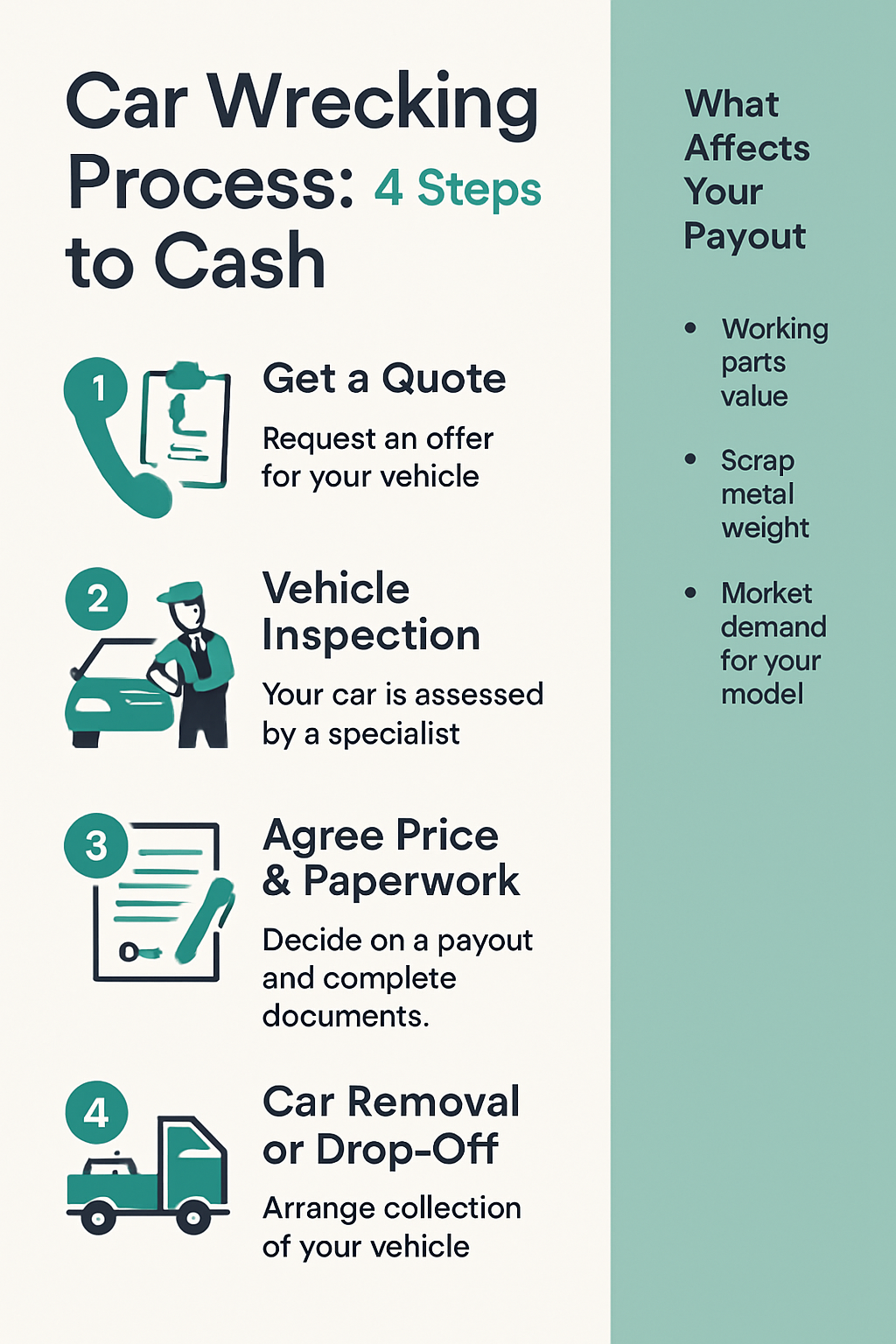
Step 1: Getting a Quote
The process starts with a quote. Most Melbourne wreckers offer three ways to get one: phone, an online form, or email. You’ll need your vehicle’s make, model, year, approximate kilometres, general condition, and whether it’s registered or unregistered.
Be straightforward about the condition. Describing a car as “good” when it has a seized engine or significant structural damage will only cause problems when the wrecker inspects it and revises the offer downward. Being accurate upfront means you’ll get a reliable number you can actually compare against other quotes.
Step 2: Vehicle Inspection and Valuation
For lower-value vehicles, many wreckers will quote over the phone based on what you’ve described. For higher-value cars or those with uncertain condition, they may inspect the vehicle before locking in a price, either at your property if they offer removal, or at their yard.
The inspection typically covers what’s salvageable: working parts, panels in reasonable condition, tyres, battery, and catalytic converter, as well as the weight and grade of scrap metal the vehicle will yield. Professional dismantling is designed to maximise recovery from every vehicle, which is why the inspection tends to be thorough rather than a quick glance.
Step 3: Agreeing on a Price and Paperwork
Once you accept an offer, the paperwork needs to be sorted. In Victoria, if your vehicle is still registered, you’re required to notify VicRoads of the transfer. The specific requirements are outlined on the VicRoads website. You’ll also need proof of ownership and valid ID.
If there’s finance owing on the vehicle, you must disclose it. The debt will generally need to be settled before the sale can proceed. Check whether your vehicle has any encumbrances on the PPSR (Personal Property Securities Register) before you start the process.
Step 4: Car Removal or Drop-Off
Many Melbourne wreckers offer free car removal as part of the service, particularly for non-driveable vehicles. This saves you organising a separate tow truck. Some operations do charge a removal fee, which comes off your payout, so always confirm this before agreeing. A $100 removal charge can meaningfully affect the net amount you receive on the day.
Step 5: Getting Paid
Payment is typically made on the day of collection, either in cash or by bank transfer. Confirm the payment method before the wrecker turns up. Reputable operations are upfront about this. If anyone suggests paying by cheque from an unfamiliar business, or is vague about when you’ll actually receive your money, that’s a good reason to ask more questions before you hand over the keys.
What Will a Car Wrecker in Melbourne Actually Pay You?
Typical Payout Ranges for Scrap and End-of-Life Vehicles
Payouts vary considerably depending on condition, make, and what the scrap market is doing at the time. For a genuinely end-of-life vehicle, think high kilometres, major mechanical failure, or significant accident damage, you’re generally looking at anywhere from $150 to around $1,000. Vehicles in better condition or with high-demand parts can attract substantially more.
We’ve handled end-of-life vehicles right across Melbourne, from rusted-out Commodores in the outer suburbs to flood-damaged SUVs from the inner north. The single biggest variable we see is make and model, not just condition. A popular model with strong parts demand will nearly always return more than a rare or obscure vehicle in better shape, regardless of how well it’s been maintained.
Scrap steel prices in Australia track international commodity benchmarks and fluctuate through the year. Those movements directly affect what wreckers can offer for heavily damaged vehicles that have limited parts value. The same car can attract meaningfully different offers depending on where the market sits at the time you sell.
Factors That Push Your Price Up
Low kilometres matter a lot. A low-km engine and gearbox are worth considerably more to a wrecker than a high-km equivalent. Popular makes and models with large ownership bases across Australia attract stronger offers because parts demand is consistently higher.
Other factors that help include intact and working components, undamaged panels, good tyres, a functioning battery, and a full service history that suggests the parts have been well maintained and are worth pulling and reselling.
Factors That Push Your Price Down
Severe structural, fire, or flood damage will significantly reduce what you’re offered. Missing major components, such as a pulled engine or absent gearbox, reduce the value too. High-kilometre drivetrain readings, heavily modified or non-original parts, and rust throughout the body all work against you when the wrecker is calculating what they can actually recover.
How Your Car’s Make and Model Affects the Offer
This is one of the most significant factors, and one many car owners overlook. Wreckers often have stronger demand for certain makes, and some specialise by brand entirely. A specialist wrecker for your make will often pay more because they have an established buyer base for those specific components.
If you’re selling a Toyota HiLux, a Holden Commodore, or a Ford Ranger, vehicles with enormous ownership bases across Australia, you’ll generally attract stronger offers than someone selling an obscure European model with limited local parts demand.
Types of Car Wreckers Operating in Melbourne
Regional and Multi-Location Wrecking Operations
Some of Melbourne’s more established wreckers run multiple locations across the metro area and into regional Victoria. That scale gives them larger vehicle throughput, a wider parts inventory, and the buying power to offer more competitive prices. If you’re not tied to a particular suburb, comparing quotes from operations in different parts of the city is time well spent.
Brand-Specialist Wreckers
Brand-specific wreckers exist throughout Melbourne, covering everything from Japanese makes to European models. If your vehicle is a less common brand, a specialist will often pay more because they actively seek out that model to supply their existing customer base. A general wrecker buying the same car may not have the same parts outlet and will price accordingly.
Self-Serve Wrecking Yards
Self-serve operations typically run across large sites, sometimes several acres, with hundreds of vehicles for customers to pull parts from themselves. For sellers, dropping a car into a large, active yard tends to be a straightforward and quick experience.
Online Parts Dealers With Wrecking Operations
A growing number of Melbourne wreckers sell parts nationally rather than just locally. A wrecker with a strong online parts business may be able to offer you more because they’re not limited to Melbourne buyers. When there’s a national market for the components pulled from your vehicle, there’s more room to move on the price they offer you.
How to Choose the Right Car Wrecker in Melbourne
Get at Least Three Quotes Before You Commit
This is the most effective thing you can do. Melbourne has dozens of active wrecking operations, and prices for the same vehicle can vary by hundreds of dollars depending on who’s buying, what they currently need, and where the scrap market sits. Don’t accept the first offer. It takes maybe 20 minutes to ring around and compare, and that effort can easily be worth $300 to $500 in your pocket.
Check Whether Free Car Removal Is Included
Free removal is common but not guaranteed. Removal fees typically sit somewhere between $50 and $150 and come off your payout, so this affects your net figure. Always ask before you agree to anything.
Verify They’re Licensed and Compliant
In Victoria, auto dismantlers and vehicle recyclers need to operate under appropriate business licences and comply with EPA requirements around fluid disposal and vehicle storage. Ask whether they’re a licensed operation. A legitimate business will have no hesitation answering that question, and any reluctance is worth noting.
Read Reviews and Check Their Parts Reputation
A wrecker’s reputation with buyers of used parts tells you something useful about how they run their business. If they’re selling accurately described, well-tested parts and have consistently good reviews, it usually means they operate professionally. That tends to translate to a fairer and more reliable selling experience as well.
Ask About Payment Method and Timing
Cash on pickup or bank transfer? Same day or a few days later? Reputable wreckers pay promptly and will tell you exactly how it works before they arrive. Vague answers about payment terms are worth noting before you hand over your keys.
Red Flags to Watch Out For When Dealing With Melbourne Wreckers
Not every operation in this industry is professional, and it pays to know what to watch for before you agree to anything.
Price drops on the day are probably the most common issue we hear about. You agreed on $800 over the phone, but when the truck arrives, suddenly there’s a problem and the offer drops to $400. This is a known tactic used by some less reputable operators. If a wrecker drops their price significantly on pickup without a legitimate and clearly explained reason, you’re well within your rights to walk away.
No written confirmation of the offer is another concern. Always get the agreed price in writing before the vehicle is collected. A text message or email is fine and gives you something to refer back to if there’s a dispute later.
Pressure to decide immediately is a reason to be cautious. A legitimate wrecker will give you time to compare quotes. High-pressure tactics that rush you into a decision are a warning sign worth taking seriously.
No verifiable business details should give you pause. Every legitimate wrecker should have a business name, an ABN, a physical address, and a contactable phone number. If you can’t confirm who you’re dealing with, don’t proceed.
Anyone asking you to transfer money before they collect the car should be avoided entirely. This applies particularly to online marketplace scams. Payment flows one way in this transaction: from the wrecker to you.
What Happens to Your Car After It’s Wrecked?
Parts Salvage and Resale
Once your vehicle arrives at the yard, dismantling begins. Usable components, including engine, gearbox, alternator, starter motor, body panels, lights, seats, doors, windows, and wheels, are removed, tested, catalogued, and listed for sale. Active wrecking yards turn over stock regularly as new vehicles come in, and parts make their way to mechanics, panel beaters, DIY car owners, and repairers across Melbourne and beyond.
Metal Recycling and Environmental Responsibility
What can’t be sold as parts doesn’t go to landfill. Fluids including oil, coolant, brake fluid, and fuel are drained and disposed of in line with EPA requirements. The steel shell is crushed and sent to a metal recycler, where it’s processed back into raw steel for manufacturing. Our guide to the metal recycling process gives you a clearer picture of why selling to a wrecker is genuinely the most environmentally responsible way to dispose of a scrap car in Melbourne.
Non-ferrous metals are separated and recycled individually. Aluminium, copper wiring, and the platinum-group metals in the catalytic converter, including platinum, palladium, and rhodium, all carry a higher per-kilogram value than steel. It’s one reason your catalytic converter is worth more than most people realise, and why wreckers pay close attention to whether it’s still fitted to the vehicle.
Why Johny Metal Recycling Is a Smart Choice for Melbourne Car Owners
At Johny Metal Recycling, we buy end-of-life, damaged, and unwanted vehicles across Melbourne. We price every vehicle based on genuine parts and scrap metal value, not inflated quotes designed to drop on the day of pickup. We’ve seen enough of that in this industry to know how damaging it is for sellers who trusted a number over the phone, only to receive a very different figure when the truck arrived.
Our car removal service in Melbourne is free, and we handle the process from quote to collection efficiently and without fuss. You’ll know exactly what you’re getting paid before we arrive, we take care of the paperwork, and payment is made on the spot without delays or conditions attached.
There are no surprise price drops, no vague payment timelines, and no pressure to decide before you’re ready. If you want to understand how we’ve arrived at a price for your vehicle, we’ll explain it clearly. That’s how we’ve built the reputation we have across Melbourne, and it’s the standard we hold ourselves to on every job.
Getting a quote takes a few minutes. Contact us with your vehicle details and we’ll give you a straight, honest number you can compare with anyone else.
Conclusion: Getting the Most From Your Unwanted Car
Selling a car to a wrecker in Melbourne doesn’t need to be complicated, but going in prepared makes a genuine difference to the outcome. Know roughly what your vehicle is worth, get multiple quotes, ask the right questions about removal and payment, and only deal with licensed, reputable businesses.
The difference between accepting the first offer you receive and comparing three or four quotes can easily be several hundred dollars. A few phone calls is all it takes to make sure you’re not leaving money on the table.
Read our guide on preparing your car for pickup to make sure the handover goes smoothly and you get the best result on the day.
If you’re ready to move your vehicle on and want a fair price without the run-around, get in touch with Johny Metal Recycling today. We’ll give you an honest quote, handle the pickup, and make the whole process as straightforward as it should be.
Frequently Asked Questions
How much will a car wrecker in Melbourne pay for my car?
Payouts depend on the vehicle’s make, model, age, condition, and where scrap metal prices currently sit. End-of-life or heavily damaged vehicles typically fetch somewhere between $150 and $1,000 or more, depending on parts value. Vehicles with high-demand parts, lower kilometres, or a popular make can attract significantly higher offers. Getting multiple quotes is the best way to understand your vehicle’s actual market value before committing.
Do Melbourne car wreckers offer free car removal?
Many do include free removal as part of their cash-for-cars service, particularly for vehicles that can’t be driven. Some operations charge a removal fee, usually deducted from your payout, so it’s worth confirming this upfront before you agree to anything. Full-service wreckers tend to be more likely to offer complimentary pickup than self-serve yards.
Is it better to sell my car to a wrecker or privately?
Selling privately can yield a better price if the car is still roadworthy and in reasonable condition. For vehicles that are written off, severely damaged, unregistered, or have failed a rego inspection, a wrecker is usually the most practical and fastest option. The wrecker handles paperwork, removal, and payment in a single transaction, which is far less hassle than managing a private sale yourself.
What documents do I need to sell my car to a wrecker in Melbourne?
You’ll generally need proof of ownership, such as the registration certificate or title, along with valid ID. If the car is still registered, you may need to complete a transfer of registration with VicRoads. The wrecker will usually guide you through any Victorian-specific paperwork requirements.
Can I sell a car to a wrecker if it has finance owing on it?
Generally, no, not without settling the debt with the lender first. Some wreckers can help facilitate a payout process, but you must disclose any encumbrances upfront. Check the PPSR (Personal Property Securities Register) to confirm your vehicle’s finance status before you start.
What’s the difference between a self-serve and a full-service car wrecker?
A self-serve wrecker lets customers enter the yard and remove parts themselves, which reduces the cost of used parts but requires mechanical knowledge and tools. A full-service wrecker has staff who dismantle vehicles and sell pre-removed parts, usually at a slightly higher price point. If you’re selling your car, both types will buy it. The distinction matters most if you’re shopping for secondhand components rather than selling a vehicle.
Published by the Johny Metal Recycling team, July 2025