
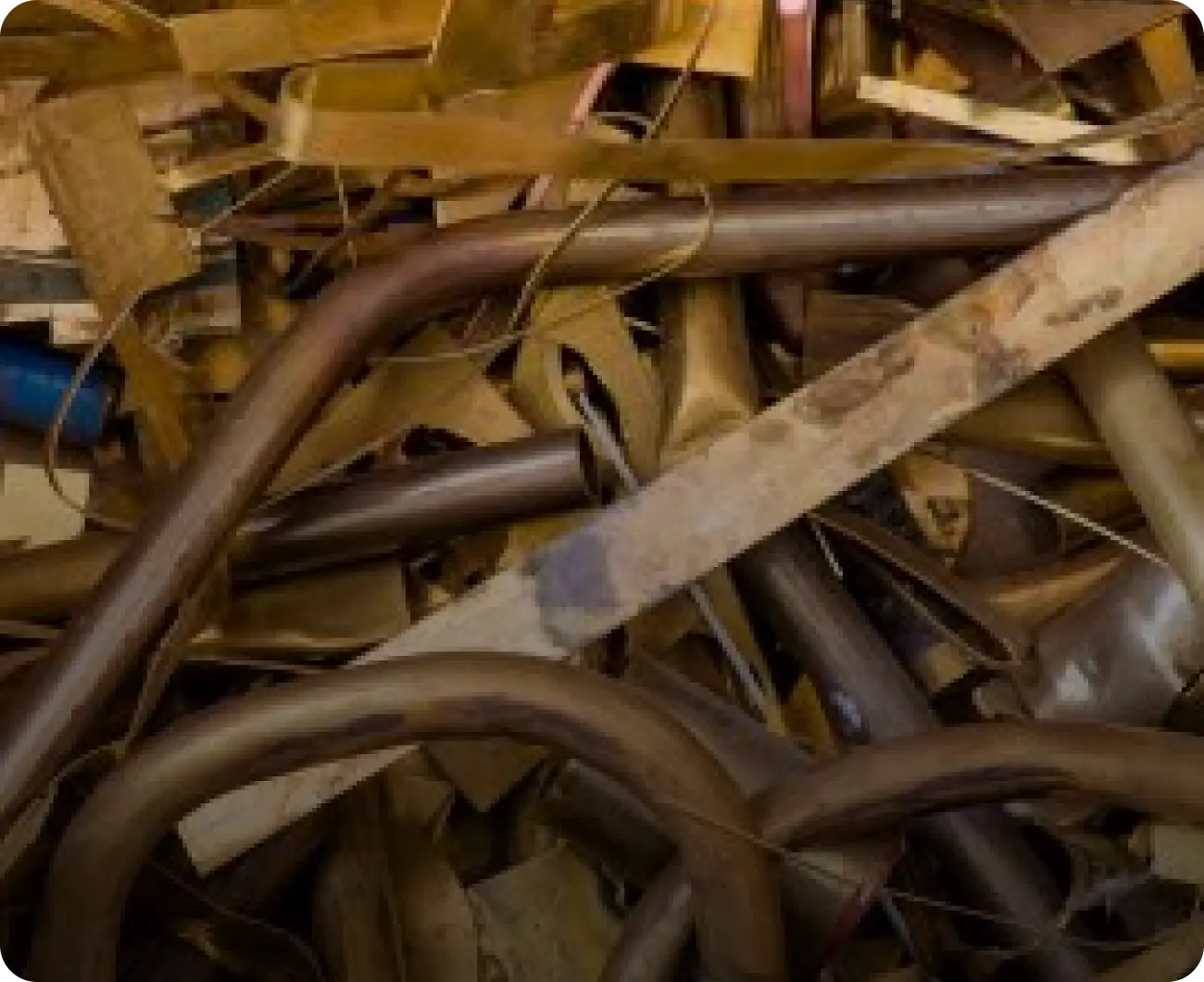
Two metals, both yellowish, both non-magnetic, both turning up in the same bucket off the same plumbing job. One pays nearly double the other, and plenty of people hand over the good one at the lower rate without realising.
Published Melbourne rates in August 2026 had copper running $7.00 to $12.50 a kilo and brass $4.20 to $7.20. So a 20 kg load sorted properly against the same 20 kg tipped in as mixed brass is a difference of real money, for about ten minutes of work.
Why brass pays less
Brass is copper with zinc in it, usually 60 to 70% copper and the balance zinc, with traces of lead or tin. So when you sell brass, you’re being paid for the copper inside it, minus the zinc, minus the cost of separating and re-alloying it.
That’s the whole explanation. Brass isn’t a lesser metal; it’s a diluted one.
It also means brass rates ride on the copper market. Copper was trading around US$6.37 a pound on 16 September 2026, up close to 40% on the year, and brass rates have lifted behind it without ever closing the gap.
Telling them apart in ten seconds
Colour is the fastest tell, once you’ve seen the two side by side. Copper is pink-orange, a bit salmon. Brass is yellow-gold. Old copper goes brown or green with oxidation, which throws people, so scratch a clean edge and look at the fresh metal underneath.
Weight helps on larger pieces. Copper is denser and noticeably heavier than brass of the same size.
A magnet won’t separate them, since neither is magnetic. What it will do is catch plated steel pretending to be either.
A file or a knife on a hidden edge settles chrome-plated tapware. Most bathroom fittings are solid brass under the finish, and a few are plated zinc casting, which is worth nearly nothing. If the scratch shows grey rather than yellow, walk away from the idea that it’s brass.
The mistake that costs the most
Here it is, and it’s the reason this comparison matters at all.
Copper pipe with brass fittings still on it does not get paid as copper. It gets graded down, often to a mixed or low-grade rate, because the yard has to deal with the brass. A pipe run out of a bathroom with elbows, valves and tap bodies still attached can drop from copper money to something closer to brass money across the whole load.
Cut the fittings off. A pipe cutter or a hacksaw, one pass at each joint, and you’ve split the load into clean copper at the top rate and brass fittings at the brass rate. On 30 kg of stripped pipework, that’s often fifty to a hundred dollars for half an hour.
The same logic runs the other way. Brass fittings with copper tails still soldered on are fine to sell as brass, but if there’s enough copper there, take it off.
Where each metal actually comes from
Copper shows up as water pipe, hot water systems, roofing and flashing on older buildings, bus bar out of switchboards, motor windings, and stripped cable. Bare bright, the clean uncoated wire and pipe with no fittings or solder, is the top grade and was published at $10.50 to $12.50 a kilo in Melbourne in August 2026.
Brass shows up as tap bodies, gate and ball valves, P-traps, door and window hardware, decorative fittings, marine gear and machining turnings. Red brass and gunmetal, the darker, heavier stuff out of water meters and industrial valves, is the top of that ladder.
The grade ladders, side by side
| Copper | Indicative | Brass | Indicative |
| Bare bright | $10.50 – $12.50/kg | Red brass/gunmetal | $5.50 – $7.50/kg |
| Clean heavy copper | $7.00 – $11.00/kg | Clean yellow brass | $5.00 – $7.00/kg |
| Insulated cable | $2.50 – $7.00/kg | Plumbing brass | $4.00 – $6.00/kg |
| Mixed or contaminated | lower again | Turnings, mixed, iron | $2.20 – $4.00/kg |
Ranges published by Melbourne yards through 2026. They move daily, so ring for a current rate rather than planning around a table.
Notice that the bottom of the copper ladder overlaps the middle of the brass ladder. That’s the practical point: badly presented copper can be worth less than well-presented brass. Grade and cleanliness beat the metal itself more often than people expect.
When it isn’t worth separating
Being honest about it, there’s a threshold below which this is fiddling.
A handful of mixed fittings in a bucket, five kilos all up, isn’t worth an hour with a hacksaw. The difference might be fifteen dollars. Sell it as mixed and get on with your day.
Where it pays is volume and clean runs. A bathroom or kitchen strip-out, a hot water system changeover, a commercial plumbing job, a machine shop’s turnings. Anything where you’ve got ten kilos or more of one thing and the separation is a straight cut rather than picking through a pile.
Plumbers doing this weekly are usually the ones who benefit most, because the sorting habit costs them nothing once it’s built into how they load the ute.
Before you sell
Ask which grade you’re being quoted on, for both metals. A single “brass and copper” number is not a quote.
Ask whether solder counts against you. Small amounts on pipe ends are normal and usually tolerated. Heavy solder or lead-loaded joints can pull the grade down.
And expect to show ID. Copper is the most stolen metal in the country, and any yard operating properly will record the transaction.
Johnny Metal Recycling buys copper and brass in every grade above, across Melbourne.