
Free Scrap Pick-Up Available | We Accept a Minimum of 500 Kg of Scrap Metal
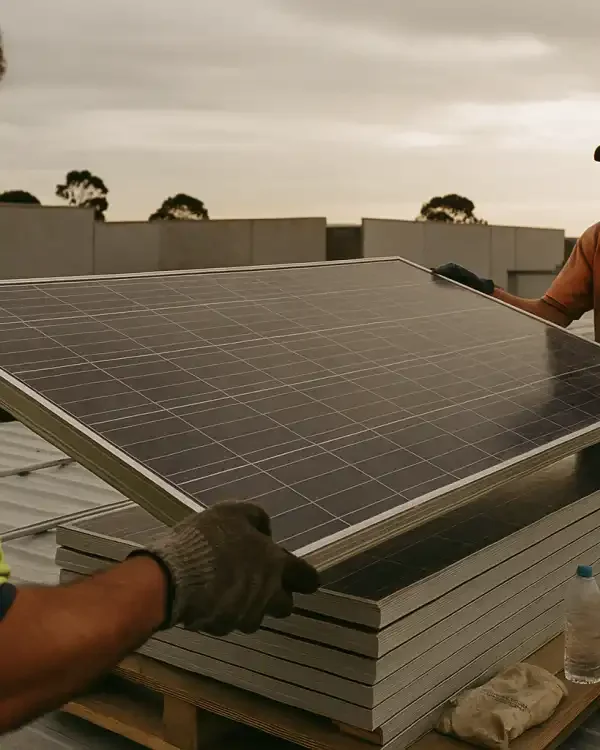
Melbourne’s first big wave of rooftop solar is reaching the end of its working life, and those dead panels are worth more than a skip. Solar panel scrap prices in Melbourne come down to three things: how many panels you have, what condition they’re in, and where they are.
Inside each one is silicon, aluminium and glass that can go back into new manufacturing. Johnny Metal Recycling takes anything from a single damaged panel to a full commercial array. Call 0449 894 456 with the count, condition and location, and we’ll get back to you with a price and a collection time.
Solar panel scrap prices work differently to copper or brass. There’s no per-kilo board rate, because the variables that matter aren’t really about weight.
Quantity. A pallet of panels and a single cracked module off a carport are different jobs. Volume moves the solar panel scrap price more here than with any other material JMR handles.
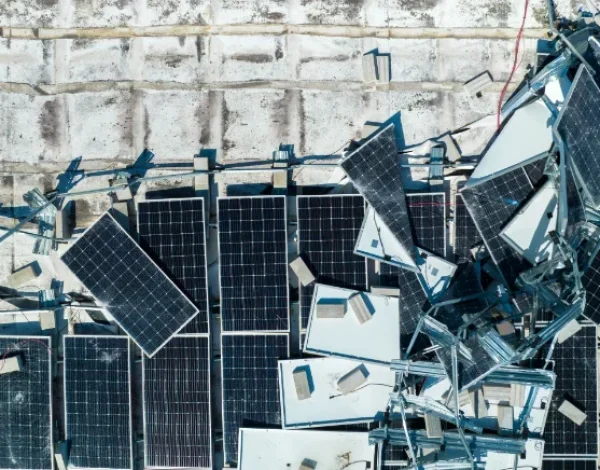
Condition. Intact, cracked, delaminated or storm-damaged. It affects how the panel has to be handled and transported, and that feeds straight into the solar panel scrap price you’re quoted.
Frames and hardware. Aluminium framing is the most readily recoverable part of a panel, so it carries weight in any solar panel scrap price. Panels arriving with rails, clamps and mounting hardware still attached are a different proposition to bare modules.
Access and location. Ground level on a pallet is simple. Fourth-floor plant room, or spread across a farm, is not.
Because those variables move so much, solar panel scrap prices in Melbourne are quoted per job rather than off a rate card. Describe what you’ve got on the phone and Johnny Metal Recycling will give you a figure and confirm the terms before anything moves.
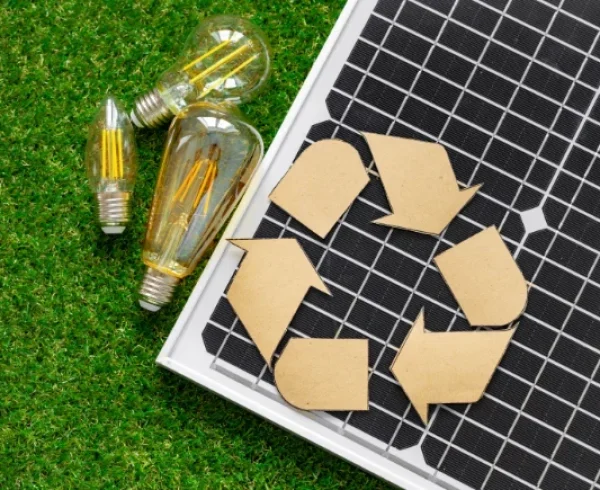
This is why panels shouldn’t be treated as rubbish.
Aluminium. The frame, and the part that recovers most easily. It’s the same material JMR handles daily on the aluminium side of the yard.
Glass. The bulk of a panel by weight, and reprocessable.
Silicon. The cells themselves, recoverable and reusable in new manufacturing.
There’s also a small amount of copper in the wiring and junction box. None of it belongs in landfill, and all of it can be reused in new manufacturing processes.
Residential rooftop panels from replacements and upgrades · commercial and industrial array modules · decommissioned solar farm panels · storm and hail-damaged panels · cracked and delaminated modules · warranty return and faulty stock · panels with frames and mounting hardware attached · loose modules on pallets · panels from re-roofing and demolition jobs.
Condition isn’t a barrier. Broken, cracked and non-functioning panels are handled the same way as intact ones, and they’re quoted on the same basis — the solar panel scrap price reflects the job rather than whether the module still generates.
Two reasons, and the first one is just practical.
Whatever the solar panel scrap price on your load turns out to be, a skip is the wrong answer. A panel is roughly two square metres of glass in an aluminium frame. Put a pallet of them in a general skip and you’ve filled it with something that will be pulled out and charged back to you, because a mixed waste stream can’t process them.
The second reason is that everything useful in a panel — the aluminium, the glass, the silicon, the copper in the junction box — is recoverable and goes back into new products. Burying it wastes material that has already been mined, refined and manufactured once.
If you’re an installer removing panels as part of a replacement job, having a recycling route sorted before the truck arrives is generally easier than working it out afterwards with a full ute.
If you’ve got panels to move, there are really three routes.
General waste. The worst option, and usually the most expensive once a skip gets rejected or charged back. Panels are bulky, mostly glass, and a mixed waste stream can’t do anything useful with them.
Leave them with the installer. Some solar companies take the old panels away as part of a replacement. Worth asking, though plenty don’t, which is how panels end up leaning against a shed for two years.
A recycler. Solar panel disposal Melbourne-wide through a proper recycler means the aluminium, glass and silicon actually get recovered. That’s what Johnny Metal Recycling does with them.
Solar panel recycling prices and terms vary depending on who you talk to and what you’ve got, which is why JMR quotes per job rather than advertising a rate. If you want to sell solar panels in Melbourne or simply get them off site properly, the first step is the same — describe the load and get a quote.
No surprises at either end. What’s agreed on the quote is what applies.
Terms confirmed upfront. Whatever the quote says is what applies. Nothing changes after collection.
Any condition, any quantity. One cracked panel or a decommissioned array. JMR handles both and quotes a solar panel scrap price on either.
Transparent handling. Loads are assessed and weighed on verified digital scales, and you see how the figure was reached.
Over six years, licensed. Johnny Metal Recycling has been operating for more than six years as a licensed scrap metal buyer under Victorian regulations.
A solar panel scrap price you can plan around. Quoted per job, confirmed before collection, and the aluminium, glass and silicon go back into new manufacturing rather than into the ground.
Johnny Metal Recycling handles solar panel recycling and quotes solar panel scrap prices from our Braeside yard, covering the south-east and bayside, the eastern and northern corridors, and out west. Collection runs seven days a week with no weekend surcharge.
Solar panel scrap prices in Melbourne are going to matter to more people over the next few years, because solar panel disposal in Melbourne is going to get busier. Systems installed through the first rooftop boom are now reaching replacement age, and the volume coming off roofs is growing every year. Having a proper recycling route for them — rather than a skip — is the difference between material going back into manufacturing and material going into the ground.
Whether you want to sell solar panels in Melbourne or just get them off site properly, ring Johnny Metal Recycling on 0449 894 456 with three details: how many panels, what condition, and where they are. That’s enough for JMR to come back with a quote and a collection time.
Or send photos and a count through the contact form and we’ll get back to you with a figure and confirm the terms before anything is arranged.
With over 6 years of experience, we are trusted scrap car buyers in Melbourne, offering competitive cash for old cars Melbourne residents rely on. Our team specialises in car removal and car recycling Melbourne, ensuring unwanted and scrap vehicles are removed safely and recycled responsibly to support a cleaner and more sustainable future.
Get the best competitive prices for your aluminium scrap, maximizing your earnings with every sale.
Receive immediate payment on-spot for your aluminium scrap—fast, hassle-free, and reliable service.
When you recycle with JMR, you’re making an eco-friendly choice that helps preserve our planet.
Turn your aluminium scrap into cash quickly and easily, helping both you and the planet.
Experience guaranteed service with our dedicated team committed to efficient, reliable recycling solutions.
Precise on-site weighing ensures you’re paid accurately and fairly for every scrap of aluminium.

Solar panel scrap prices are quoted per job rather than at a per-kilo rate, because quantity, condition, frames and access all move the figure. Call JMR on 0449 894 456 with those details and you’ll get a quote with the terms confirmed before anything is arranged.
No. One panel or a decommissioned array — JMR handles both, and the quote reflects the job.
You don’t have to. Mention on the phone whether rails and clamps are still attached, because it affects how the load is handled and quoted.
They’re processed so the aluminium frame, glass and silicon cells are recovered and returned to new manufacturing rather than landfilled.
Usually within one to two business days of the quote being agreed.