
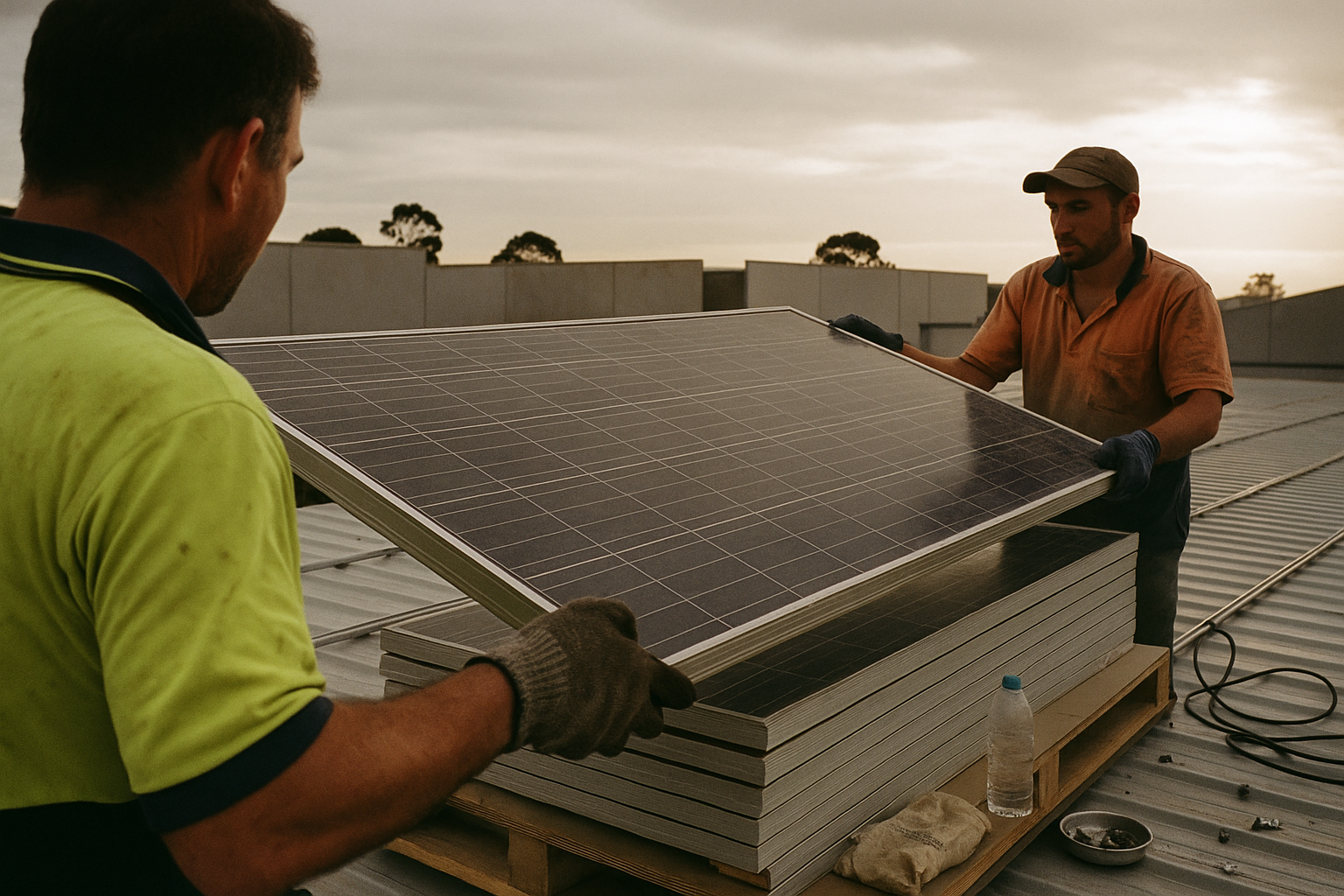
Published by the Johny Metal Recycling team, October 2026.
Your solar system is coming down, and a stack of glass and aluminium panels is sitting on the loading dock. A skip bin looks like the easy answer. In Victoria, it is usually the wrong one.
This guide covers solar panel recycling in Melbourne for businesses and property owners with old, replaced or damaged panels. You will see your options, what disposal can cost and how much of a panel can be recovered. You will also learn how to arrange it without nasty surprises. We also explain where a metal recycler fits in, because frames, cabling and racking are all valuable scrap metal.
Why you cannot just bin old solar panels in Victoria
Solar panels are treated like electronic waste, and that changes how you are meant to dispose of them. One industry guide we reviewed says that sending solar panels and electronic waste to landfill is illegal in Melbourne and Victoria. That guide is not a government source, so please don’t treat it as the final word. Check Solar Victoria’s end of life guidance for the current rules before you book anything.
The practical takeaway is simple. Do not put panels in a general waste skip, and do not leave them out for a council hard rubbish collection.
What the landfill rules mean for your roof or warehouse
For a business, the risk sits with whoever controls the site. If a roofer or electrician quietly tosses your old panels into a skip, you may still be the one asked where they ended up.
Ask every contractor, in writing, how the old panels will be handled. If the answer is “we’ll take care of it”, follow up. Ask where the panels are going and who is receiving them.
What is actually inside a solar panel
A typical panel is made up of four main materials:
- Glass on the front, which makes up most of the weight.
- An aluminium frame around the edge.
- Silicon cells that generate the power.
- Copper wiring and connectors in the junction box and leads.
Most of these can be recovered, so dumping them is wasteful as well as a compliance problem. The aluminium and copper in particular carry real scrap value.
Why this catches out so many businesses during a system upgrade
Upgrades tend to be planned around the new system, not the old one. The quote covers new panels, inverters and installation, while removal gets a single line or nothing at all.
Then install day arrives, and the old panels come off the roof and need to go somewhere straight away. Businesses that sort out disposal before the installer turns up avoid storing panels on site. Storage is where breakage and safety problems usually start.
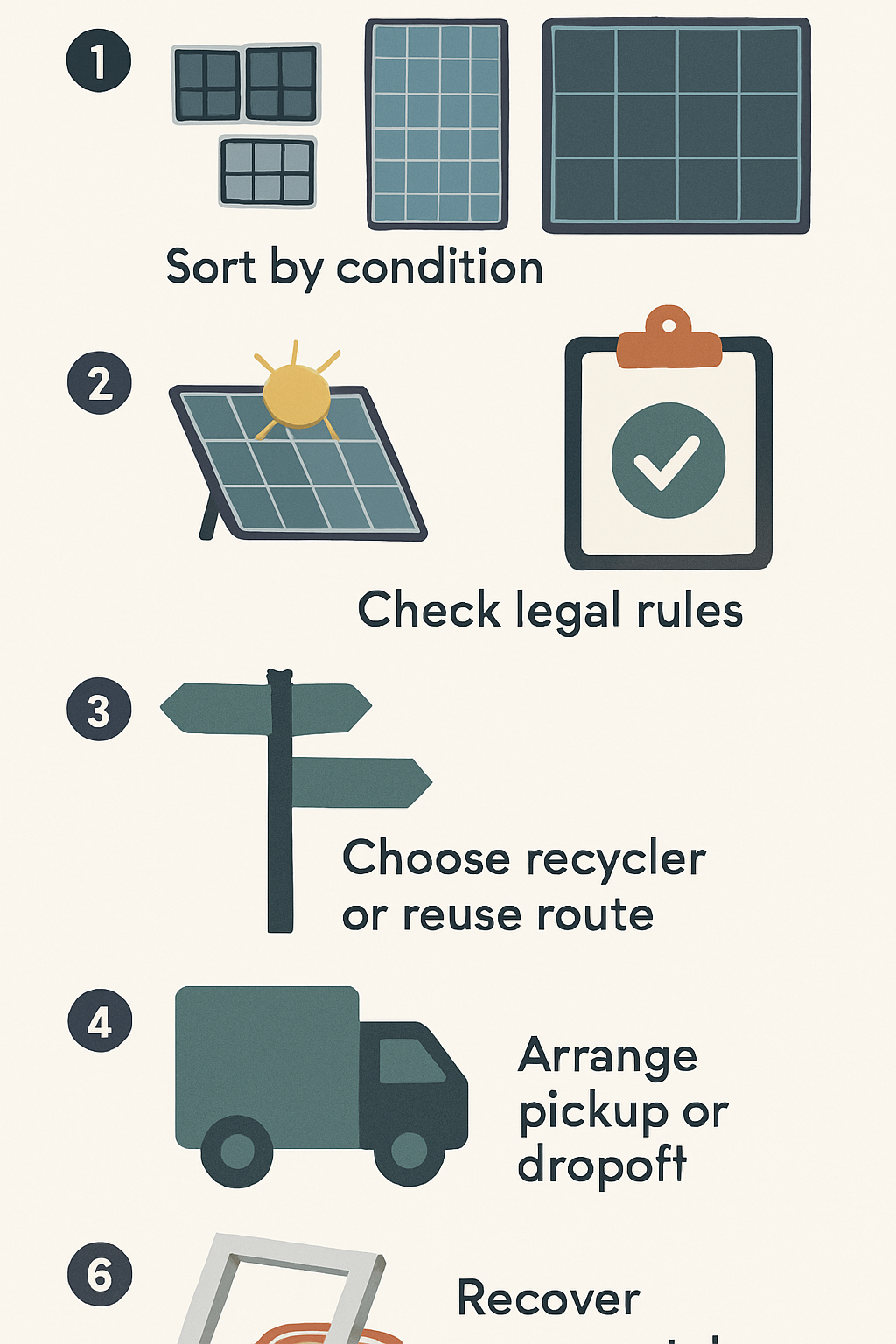
Start by working out what condition your panels are in
Condition decides almost everything that follows. It affects who will take the panels, whether they can be reused, how they should be moved and what it may cost. Spend ten minutes sorting your panels into the groups below.
Still working but being replaced
Plenty of panels that still perform get replaced because the business wants a bigger system or newer technology. These are your best candidates for reuse or resale, and they deserve a separate conversation. Note the brand, model and wattage from the label on the back.
Cracked, hail damaged or storm damaged
Damaged panels can still be recycled, but they need more care. Broken glass can cut, and a cracked panel in the sun can still produce electricity. Photograph the damage before anything is moved, especially if an insurance claim is involved.
Faulty or past their useful life
Some panels have simply stopped performing. Others have delaminated, which means the layers have started to separate, or the cells have browned. These usually go to material recovery rather than reuse. Hold on to any inspection reports or installer notes, because they help a recycler understand what they are receiving.
A safety note on handling broken panels
Use a licensed installer to remove panels, particularly damaged ones. Do not try to strip frames or cables yourself, and do not heap broken panels in a pile. Stacked glass shifts, and exposed wiring is a shock risk. Until collection, store panels flat or upright on a stable surface, dry and out of the way.
Your real options in Melbourne: reuse, recycle or recover the metals
There is no single correct answer here. The right choice depends on how many panels you have, what condition they are in and how fast you need them gone.
When reuse or resale makes sense for panels that still perform
If your panels work and are fairly recent, it is worth exploring reuse before recycling. Reuse and upcycling are often described alongside material recovery, which suggests a market exists for working panels.
Expect buyers to check output and condition first. Older or mixed batches may be turned away, so keep recycling as your backup plan.
Specialist solar recyclers and what they do
Specialist solar recyclers take the whole panel and separate the glass, aluminium, silicon and metals. Solar Victoria notes that Victoria has several reputable recyclers that reprocess panels, and its guidance points readers to them.
For most businesses, this is the main route for panels that cannot be reused. Some recyclers focus on household volumes, while others work with installers, businesses and solar farms. Ask whether your volume suits them. This matters most for commercial jobs, where a single removal can involve dozens or hundreds of panels.
Pickup or drop off: how to choose
This is the decision people most often get wrong.
- Drop off can suit a small number of undamaged panels, provided you have a suitable vehicle and someone to load and unload safely.
- Pickup suits larger quantities, rooftop removals and damaged panels.
Ask about loading access, forklift or pallet requirements and any minimum quantities. A truck that arrives at a locked gate, or a site with no pallets, wastes everyone’s time.
Where a metal recycler fits in
A metal recycler is not a replacement for a specialist solar recycler. Whole panels still need someone who can handle the glass and cells. But a solar upgrade usually leaves other metal behind, and that is where Johny Metal Recycling comes in.
- Aluminium frames: if the frames are removed separately, this is clean, valuable aluminium.
- Copper cabling: old DC cabling and connectors contain copper that is worth keeping out of general waste.
- Steel racking and mounts: rails, brackets and footings are typically steel or iron. Our page on steel and iron components explains how that material is handled.
This is the simplest way to recover scrap metal from solar panels and the system around them. Before you assume any metal yard can take a particular item, ask exactly what it accepts. Also ask how the metal is sorted and weighed, and what paperwork you get back.
One tip from the scrap side of the fence: clean, separated loads are easier to sort and weigh. Keep aluminium, copper and steel in their own piles. Then send us your list, and we will tell you what we can take and what should go to a specialist.
How much of a solar panel can actually be recovered
Recovery is one of the biggest selling points in this industry. It is also one of the easiest to exaggerate.
What Solar Victoria says about recovery of up to 90%
Solar Victoria’s end of life guidance says specialist recyclers can recover up to 90% of a solar panel for reuse. That is a government source and a good baseline to keep in mind.
The wording matters. “Up to” means the result depends on the panel type, its condition and the process used.
Why you should ask any recycler how they measure their recovery claims
Some recyclers claim higher rates than 90%. That may be true under their own method, but the number can mean quite different things. A figure might count material by weight, or include glass sent to lower value uses. It might also count material that is processed rather than reused.
Ask three questions:
- Is the figure by weight or by material value?
- What happens to the glass and silicon?
- Can you see documentation showing where each material goes?
A good recycler will answer clearly. A vague answer tells you something too.
What solar panel recycling costs and how to avoid surprises
Cost is where many business owners feel least certain, mainly because there is no public price list.
Typical per panel fee estimates and why they are only a guide
The industry guide we reviewed cites a disposal cost of roughly $15 to $40 per panel. Treat that as a rough estimate only. It is not a quote, and it does not come from a recycler or a government source.
What changes the price
- Panel count: larger volumes can change the rate per panel.
- Condition: damaged panels need more careful handling.
- Access: a ground level pallet bay is far easier than a roof or a tight laneway.
- Pickup versus drop off: collection adds transport and labour.
Why you should always get a written quote
A written quote should list every fee. That includes per panel charges, pickup or transport, labour, and pallet or packaging costs. It should also show any extras for damaged panels. If you are comparing two recyclers, make sure you are comparing the same scope.
Also ask what paperwork comes with the job. That leads into record keeping, covered below.
Three common business situations and what to do in each
These three examples are hypothetical. They are not specific jobs we have done, but they reflect the kinds of situations businesses often face.
A warehouse or factory replacing an ageing rooftop system
Picture a manufacturer in Melbourne’s south east upgrading to a larger system. The installer removes the old array over two days.
What to do: ask for removal and recycling to be written into the install quote. Book a pickup for the day removal finishes, so panels are not left sitting around. Ask whether racking, cabling and frames will be separated and sent for metal recycling, which recovers scrap value and cuts waste.
A small business with a handful of storm damaged panels
Say a cafe owner has six panels damaged by hail. The insurer has approved the claim and the panels need to come off.
What to do: photograph everything before removal, then have a licensed installer take the panels down. Tell the recycler the panels are cracked when you book, and keep the claim documents with your recycling records. Six panels might suit a drop off if they are packed safely. With broken glass, a pickup is often the safer choice.
A property manager clearing a site before sale or demolition
Now imagine a property manager handling a commercial building where the rooftop solar has to come off before demolition.
What to do: treat it as a clearance job and start early. Work out the panel count and the roof access. Check whether there is other metal on site, such as steel, copper and aluminium. If the site also has old motors or other scrap, one coordinated clearance is usually tidier than several separate jobs. Start with our home page to see what we handle.
Where national solar panel recycling is heading in 2026
The National Solar Panel Recycling Pilot and its proposed mid 2026 start
The Australian Government’s National Solar Panel Recycling Pilot is designed to collect and recycle solar panels. The Department of Climate Change, Energy, the Environment and Water page, dated 24 April 2026, says the pilot was proposed to start in mid 2026.
We have not confirmed its current status, so we won’t guess. Check that department page before you rely on it, because pilots can shift in scope, location and timing.
Why the system is still a patchwork of private recyclers today
The Clean Energy Council says a national approach to recycling solar panels is being developed with federal and state governments, industry and business. That tells us the system is still a patchwork.
For now, most recycling runs through private operators, each with its own coverage, fees and conditions. That is why asking questions and getting a written quote matter so much.
A simple checklist for arranging solar panel recycling
What to gather before you call
- Number of panels and their approximate size
- Condition: working, cracked, faulty or storm damaged
- Site address, and whether the panels are on a roof, on the ground or in a warehouse
- Access details: gates, loading dock, forklift, pallets
- Any paperwork: installer documents, insurance claim, inspection notes
- Whether frames, cabling or racking are also coming off
Questions to ask any recycler before you book
- Do you take damaged panels, and is there an extra charge?
- Do you offer pickup, drop off or both?
- Is there a minimum quantity?
- What is the total cost, in writing?
- What happens to the glass, silicon and metals?
- What paperwork will I receive?
Keeping records for your business
Keep the quote, the booking confirmation, any pickup or receiving documentation and proof of recycling. If there was an insurance claim, file that paperwork with them. If your site is later sold, audited or inspected, these records show the panels did not go to landfill.
Frequently asked questions
Is it illegal to put solar panels in landfill in Melbourne?
One industry guide states that sending solar panels and electronic waste to landfill is illegal in Melbourne and Victoria. Check Solar Victoria’s end of life guidance to confirm the current rules. The practical answer is to book a recycler rather than use a skip or general waste bin.
How much does it cost to recycle a solar panel in Melbourne?
The same guide cites roughly $15 to $40 per panel, but treat that as an estimate only. The final price depends on volume, condition, access and whether you drop off or book a pickup. Get a written quote that lists all fees before you agree to anything.
What happens to solar panels once they are recycled?
Solar Victoria says specialist recyclers can recover up to 90% of a panel for reuse. The main materials are glass, the aluminium frame, silicon, copper and other metals. Some companies publish higher recovery claims, so ask how the figure is measured.
Can I recycle damaged or cracked solar panels?
Yes, but broken panels need careful handling because of the glass and the electrical risk. Have a licensed installer remove them, and tell the recycler about the damage when you book. Keep any insurance paperwork with your recycling records.
Should I choose pickup or drop off for old solar panels?
Drop off can suit a small number of undamaged panels if you have a suitable vehicle. Pickup suits larger quantities, rooftop removals and damaged panels. Ask about access, loading and any minimum quantities.
Is there a national solar panel recycling scheme?
The National Solar Panel Recycling Pilot was proposed to start in mid 2026, according to the department’s page dated 24 April 2026. We have not confirmed its current status, so check that page before relying on it. The Clean Energy Council says a national approach is still being developed, so for now most recycling runs through private operators.
What can a scrap metal recycler do with solar panel components?
Aluminium frames, copper cabling and steel mounting racks are all metals with recycling value. Whole panels, with their glass and cells, generally need a specialist solar recycler. Send us your list and we will confirm what we can accept.
Next steps: get your old panels sorted the right way
Old panels are not a problem to leave until the last minute. Sort them by condition, choose between reuse and recycling, get a written quote and keep your records.
If your job also involves aluminium frames, copper cabling or steel racking, talk to Johny Metal Recycling. Tell us what is coming off your site, roughly how much and where it is. We will confirm what we can take and what needs a specialist solar recycler. Visit jmrecycling.com.au to get in touch today.