
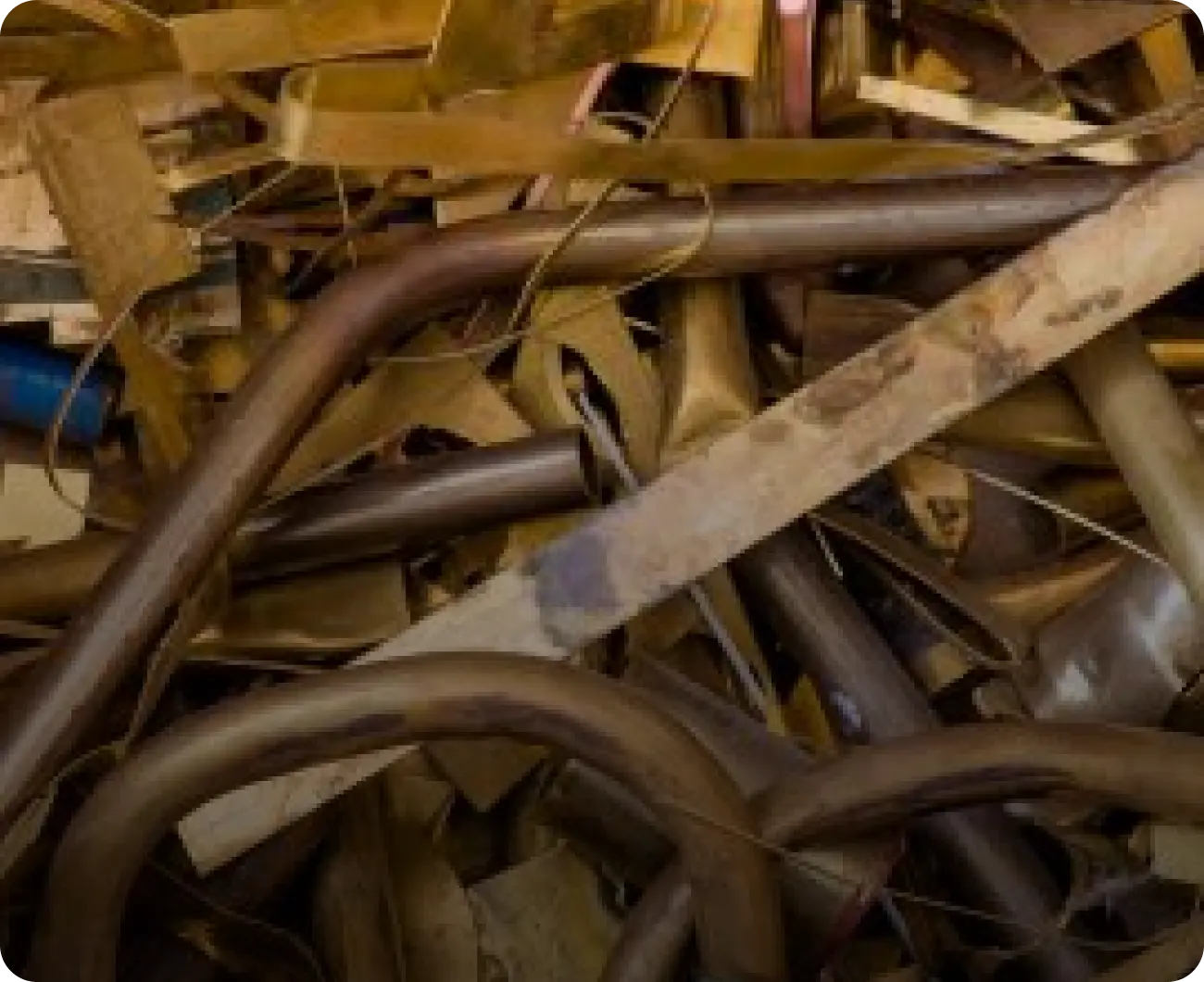
Brass is the metal most often thrown away by accident. It hides under chrome plating, it comes bolted to steel and rubber, and it usually turns up in small pieces that don’t look worth the trouble. Then someone weighs a bucket of old tap bodies and gets more for it than the aluminium window frames sitting next to it.
Kilo for kilo, brass runs at roughly three times what aluminium fetches. Worth knowing before the bathroom strip-out goes in the skip.
First, make sure it’s brass
Brass is copper and zinc. Bronze is copper and tin, sits redder and browner, and is usually worth a little more. Yards often lump them together under the brass umbrella, but the good ones price gunmetal separately.
Two quick tests settle most arguments.
Hold a magnet to it. Brass and bronze are both non-magnetic. If the magnet grabs, you’re holding plated steel and the value drops away to scrap steel rates.
Then scratch an out-of-sight edge with a file or a knife. Plenty of bathroom and kitchen tapware is solid brass under a chrome or brushed-nickel finish, and that yellow flash under the plating is the whole difference between a few cents and several dollars a kilo. Old tap bodies, gate valves, door hardware and window locks are the usual suspects.
Brass tracks copper, and copper has had a year
Brass is roughly 60 to 70% copper by weight, so its price rides on the copper market. On 16 September 2026, copper traded at about US$6.37 a pound, close to 40% higher than the same time last year. That’s a big move, and brass rates have followed it up at a discount.
The discount exists because brass has to be sorted, melted and re-alloyed, and because the zinc content isn’t worth what the copper is. Still, when copper runs, brass runs behind it.
Grades and indicative Melbourne rates
Drawn from rates published by Melbourne and national yards between April and September 2026. Ballpark only. Ring for today’s rate before you count on any of it.
| Grade | Indicative range |
| Red brass and gunmetal | $5.50 – $7.50/kg |
| Clean yellow brass | $5.00 – $7.00/kg |
| Plumbing brass and mixed fittings | $4.00 – $6.00/kg |
| Brass turnings | $3.00 – $5.50/kg |
| Brass radiators | $3.00 – $5.00/kg |
| White brass (high zinc) | $3.00 – $3.50/kg |
| Mixed or irony brass | $2.20 – $4.00/kg |
Red brass and gunmetal is the top grade. Heavy valves, water meters, marine fittings, industrial stop cocks. Around 85% copper, deep reddish colour, noticeably heavier in the hand than yellow brass. Keep it in its own bucket.
Clean yellow brass is the bright golden material: taps, bathroom fittings, decorative hardware. Clean means free of plastic, rubber and steel.
Plumbing brass covers gate valves, ball valves, P-traps, elbows and tees, usually still carrying rubber washers and steel stems. Strip those out and the load moves up a band.
Turnings come off machine shops. They need to be dry and oil-free, or they get graded down hard.
White brass is high-zinc and pale. It looks like brass, pays like something else.
The lead-free changeover is putting old brass into skips
Since 1 September 2025, copper alloy plumbing products in contact with drinking water in Australia must have a weighted average lead content of no more than 0.25%, verified against NSF/ANSI 372 and covered by WaterMark. The transition ran for three years from September 2022. It covers taps, mixers, valves, water meters and heaters, along with braided hoses and some filtration gear.
The practical effect for anyone holding a bucket of old fittings: a lot of leaded brass is being pulled out of Melbourne walls right now, and some of it is going in the bin because people assume “non-compliant” means “worthless.”
It doesn’t. Leaded brass can’t go back into a drinking water fitting, but it’s still perfectly good scrap and it still carries brass money. The lead content doesn’t reduce what a yard pays. Don’t throw it out.
What quietly knocks the rate down
Steel stems, springs and screws left inside valve bodies. Rubber washers and O-rings. Ceramic cartridges in mixer taps. Plastic handles and levers. Solder residue on plumbing offcuts. Oil and coolant on turnings.
Chrome plating sits in its own category. Most yards take chromed brass without much fuss, though some will downgrade heavily plated material because the coating has to burn off.
Spent shell casings are a recognised brass grade, but they need to be deprimed and free of live primers. Ring the yard before you turn up with them, and know where your obligations sit under Victorian firearms rules.
Sorting red from yellow is the hour that pays
If you do one thing before selling, separate gunmetal and red brass from the yellow. It’s the widest price gap in the brass family, and it’s easy to pick once you’ve handled a few pieces. Red brass is darker and denser. Yellow is brighter and lighter.
After that, pull the obvious steel and rubber out of the plumbing fittings. A bucket of mixed fittings with steel stems still in them gets priced as mixed brass. The same bucket stripped gets priced as clean.
On a bathroom or a small commercial strip-out, that’s often forty minutes of work for a meaningful difference on the weighbridge. Ask which grade you’re being quoted on, ask whether the rate is picked up or delivered, and ask to see the weight.
Johnny Metal Recycling buys brass in every grade above, from a bucket of tap bodies to full plumbing and machine shop clean-outs, with collection across Melbourne.