

Published by Johny Metal Recycling | July 2026
Reviewed and updated July 2026. Johny Metal Recycling has been buying and dismantling vehicles across Melbourne for over a decade, processing hundreds of cars each year. This guide draws on that direct operational experience to explain exactly how wrecker pricing works.
If you’ve ever called a Melbourne car wrecker and received a quote that surprised you, whether higher or lower than you expected, you’re not alone. Most people assume there’s a straightforward book price for a wrecked car, the way there is for a used vehicle at a dealership. There isn’t. Car wreckers use a completely different pricing logic, and once you understand it, you can approach that conversation better prepared and potentially walk away with more money.
We hear the same questions constantly at Johny Metal Recycling: “Why did my neighbour get more for the same model?” or “Why did the offer change when the truck arrived?” This guide answers those questions directly. It breaks down exactly how Melbourne car wreckers calculate their offers, what pushes the number up, what drags it down, and what you can do about it before you even pick up the phone.
Why There’s No Single ‘Book Price’ for a Wrecked Car
Wreckers Think in Revenue Streams, Not One Lump Sum
A car wrecker isn’t buying your vehicle the way a private buyer would. They’re not paying for road feel or reliability. They’re buying the future income that vehicle can generate through parts sales, scrap metal recovery, and the efficiency of dismantling it.
When a wrecker looks at your car, they’re mentally splitting it into three buckets: what they can sell as used parts, what they can recover as raw scrap metal, and what it will cost them to collect the car and pull it apart. The cash offer you receive is what remains after all three calculations are stacked against each other. According to the Australian Bureau of Statistics, there are approximately 20.9 million registered motor vehicles on Australian roads, which means demand for used parts is consistently strong and wreckers are actively competing to acquire good stock.
Your Car’s Value Is the Sum of Its Parts, Literally
A functional engine, a clean set of doors, an undamaged dashboard: each of these has a resale value in the used parts market. A wrecker running a professional operation, whether they sell locally across Melbourne or ship parts to customers in Queensland or Western Australia, is constantly weighing what they already hold in stock against what their customers are ordering.
That means your car’s value isn’t fixed. It shifts depending on what the wrecker already has in their yard, what buyers across Australia are searching for, and what condition your specific components are actually in. That’s the foundation for everything else in this guide.
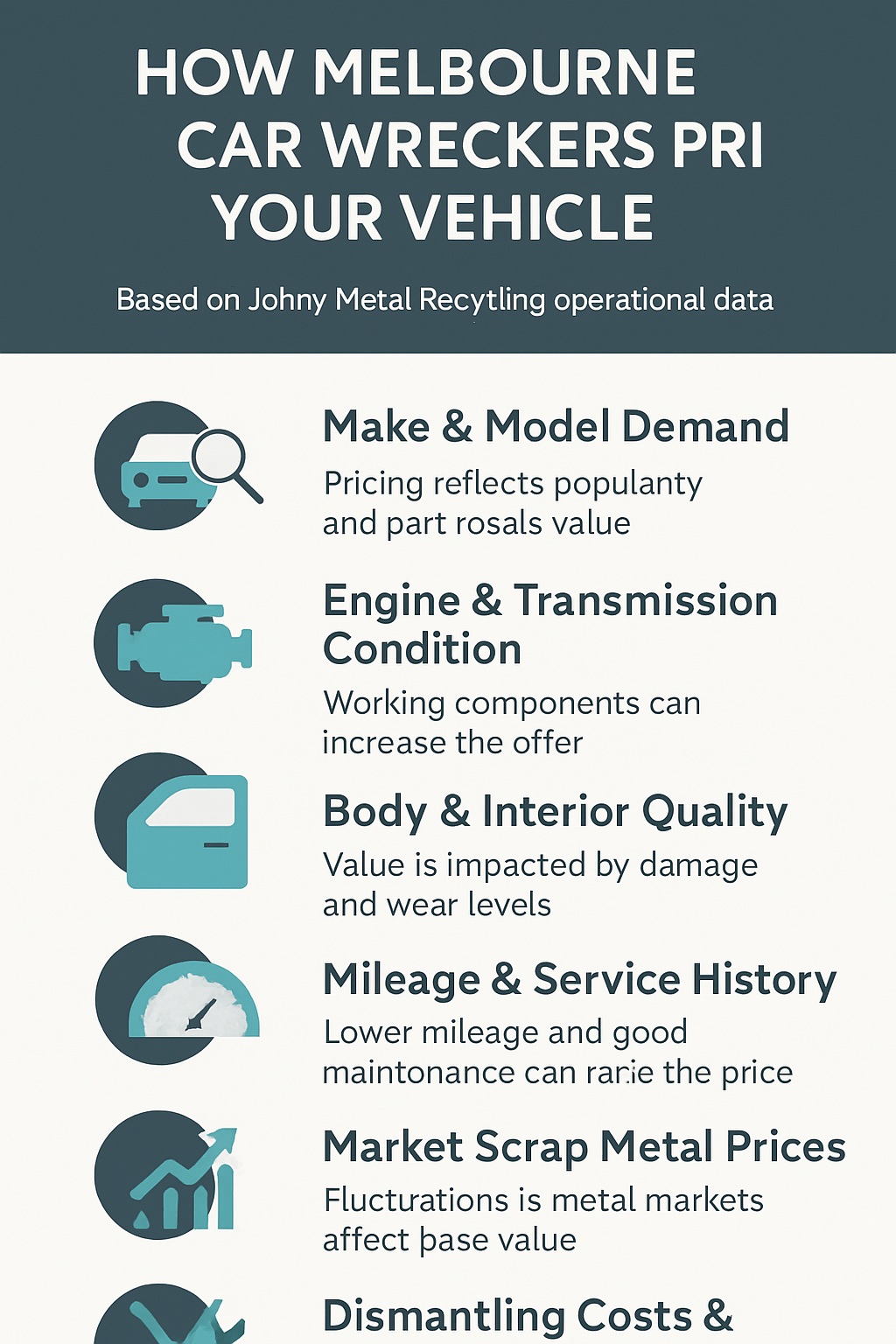
Factor 1: The Make, Model, and Year of Your Vehicle
High-Demand Models Fetch Better Offers
Not all cars are equal in a wrecker’s yard. A Toyota HiLux, Ford Ranger, or Toyota Camry has a well-established buyer base for used parts, both in Melbourne and across the country. Wreckers know parts from these vehicles will move quickly, so they’re willing to pay more to acquire them.
A rare or obscure import, on the other hand, may have a much smaller buyer pool. That reduces the wrecker’s confidence in turning those parts over quickly, which usually lowers the offer. We’ve quoted two cars of similar age and condition on the same day where the popular domestic model attracted nearly double the offer, simply because the parts were in active demand.
Why Specialist Wreckers Sometimes Pay More
Melbourne has a broad range of wrecking businesses, including specialists focused on specific makes: European marques, Japanese imports, American muscle, and so on. Specialist wreckers often have an established customer base actively searching for parts from those exact vehicles. If your car matches their niche, they may offer meaningfully more than a general yard would, because their ability to move those parts is stronger.
It’s genuinely worth calling around, particularly if your vehicle is a less common make or model. Sellers who take this extra step consistently end up better off.
Age and Parts Availability Play a Big Role
A vehicle from the late 2000s to mid-2010s typically sits in a sweet spot for wrecker valuations. It’s old enough that parts are no longer being manufactured in large volumes, but recent enough that plenty of registered vehicles on Australian roads still need them. Cars older than 20 to 25 years often attract lower offers because the pool of matching vehicles needing repairs has shrunk considerably and buyer enquiries for those parts have dried up.
Factor 2: The Condition of Key Components
Engine and Transmission Condition
These two components carry the most weight in any wrecker’s valuation. A running engine that starts cleanly and a transmission that shifts without grinding are both high-value items in the used parts market. A seized engine or a blown gearbox brings the offer down considerably, because those components may still carry some scrap value, but the resale price of a functional unit is substantially higher.
When you call for a quote, be honest about whether the engine starts and whether the car can drive or at least roll. Wreckers verify this on collection, and an inflated description just creates an awkward revision on the day. We’ve had cases where a seller described a car as “basically running” and the engine turned out to be locked solid. The revised offer was about 35% lower than the original quote, which was frustrating for everyone involved.
Body Panels, Interior, and Electrical Systems
Clean body panels, especially on popular models, are consistently in demand. Bonnets, doors, guards, and bumpers in good condition can be sold directly as used parts. Heavily dented or rust-affected panels often have minimal resale value and head straight to scrap.
Electrical systems are worth considering as well, particularly the ECU (the car’s main computer module), sensors, and wiring looms on newer vehicles. Air conditioning compressors, alternators, and starter motors all contribute to the overall valuation when they’re still in working order. Don’t assume that because the car doesn’t drive, the electrics are worthless.
OEM Parts Versus Aftermarket Replacements
This is a factor many sellers overlook entirely. Wreckers place a higher value on vehicles fitted with genuine OEM (Original Equipment Manufacturer) components because those parts have an established buyer market and meet the specifications customers expect. Aftermarket replacements are harder to sell in the used parts market and are often valued lower, or excluded from the assessment altogether.
The Australian Automotive Aftermarket Association (AAAA) notes that the distinction between OEM and aftermarket parts is a significant factor in parts pricing across the industry, which aligns directly with what we see in our own yard valuations. If your car has had major components replaced with genuine OEM parts, mention this when you call. It can genuinely shift the number in your favour.
Factor 3: Current Parts Demand and Yard Inventory
Supply and Demand Inside the Wrecker’s Yard
This is one of the most dynamic factors in wrecker pricing, and one that most sellers never consider. If a wrecker already has five cars of your exact make and model sitting in the yard, they’re well-stocked on parts for that vehicle. Bringing in another one offers diminishing returns, so the offer drops. Some wreckers update their inventory daily, meaning the pricing for your specific vehicle can shift from one week to the next.
National Parts Demand, Not Just Local Melbourne Buyers
Many Melbourne wreckers sell used parts to customers right across Australia, not just to local buyers. This means demand patterns from Queensland, Western Australia, or New South Wales directly influence how much a wrecker is willing to pay for your car. A model that’s popular nationally will attract a better offer even if local Melbourne demand alone wouldn’t justify it.
Why Rarer Vehicles Can Command Higher Offers
Counterintuitively, a less common vehicle can sometimes fetch a better offer, not in spite of its rarity, but because of it. If parts for that model are scarce in the market and a wrecker receives regular enquiries for them, a good-condition example becomes genuinely valuable to the yard. It’s worth asking directly whether the wrecker has active demand for your specific model before you accept a first offer.
Factor 4: Scrap Metal Weight When Parts Value Is Low
Steel and Aluminium Weight as a Residual Value Floor
When a vehicle has minimal salvageable parts, either because it’s heavily damaged, very old, or the parts simply aren’t in demand, its residual value falls back to raw scrap metal weight. Every car is fundamentally a collection of steel, aluminium, copper, and other metals. The price per tonne for those materials sets a floor below which no wrecker will go, and understanding that floor helps you assess whether a quote is fair.
SUVs and Utes Versus Small Hatchbacks
Raw metal weight matters here. A large SUV or a dual-cab ute contains significantly more steel and aluminium than a small hatchback. Even if both vehicles have minimal working parts, the heavier vehicle will attract a higher scrap-based offer simply because of raw metal volume. This is why you’ll generally see higher minimum offers quoted for larger vehicles, even when neither car has any useful parts left.
How Scrap Metal Prices Fluctuate
Scrap metal prices aren’t fixed. They move with global commodity markets, and steel and aluminium prices have seen meaningful fluctuations in recent years, driven by shifts in manufacturing demand, export volumes, and global supply chains. A car you quote in one month might attract a different base offer three months later if scrap prices have moved. If you’re not in a rush to sell, it’s worth keeping an eye on market conditions. Our article on scrap metal prices in Melbourne and what affects them covers the key market factors in plain terms.
Factor 5: Dismantling Difficulty and Labour Costs
Easier Dismantling Means a Better Quote
Labour is a real cost for any wrecking operation. A car that’s straightforward to dismantle, with accessible components, standard fixings, and a layout the mechanics know well, costs less to process than one requiring specialist tools or unusual techniques. That saving in labour cost can flow back to you as a better offer.
Damage That Makes Labour More Expensive
Fire damage, significant structural deformation from a serious accident, or severe corrosion all make dismantling harder and more time-consuming. Wreckers building their quote will account for the additional labour involved. This doesn’t mean badly damaged cars are worthless, since scrap metal value remains, but the labour component does reduce the net offer in a meaningful way.
Factor 6: Your Location and the Collection Distance
Free Car Removal Is Never Actually Free
Most Melbourne wreckers advertise free car removal, and it is genuinely free to you in the sense that you won’t receive a separate towing invoice. But the cost doesn’t disappear. It gets factored into the wrecker’s valuation, and the quoted cash amount is typically a net figure already adjusted to account for the cost of collecting your vehicle.
How Towing Costs Factor Into the Net Offer
A wrecker collecting a car from inner Melbourne, say Fitzroy, Richmond, or Footscray, faces relatively low towing costs. The same wrecker collecting from Pakenham, Werribee, or a regional Victorian location is spending more on fuel, driver time, and logistics. That additional cost reduces the net offer you receive, even if the car itself is identical in condition. We’ve seen this difference amount to $80 to $150 on a single collection run, which is meaningful when you’re comparing quotes.
Inner Suburbs Versus Outer Melbourne and Regional Victoria
If you’re in an outer suburb or a regional area, the practical impact on your offer can be noticeable. This is one reason why getting multiple quotes matters. A wrecker closer to your location may simply offer more because their collection costs are lower. Geographic coverage across Victoria is a genuine competitive factor in this industry, and it’s worth asking each wrecker you contact where their collection area is centred.
Factor 7: Whether the Car Has a Clear Title and Valid Paperwork
Why Paperwork Affects the Offer
A vehicle with clear ownership, no finance owing, and registration in your name is a straightforward transaction for a wrecker. A vehicle with outstanding finance or unclear ownership creates legal complexity that some wreckers won’t touch, and those that do will factor the additional risk and administrative effort into a lower offer.
What to Have Ready Before You Call
Before you contact a Melbourne car wrecker, locate your vehicle registration certificate or title, have your valid photo ID ready, and confirm whether any finance is still registered against the vehicle. You can check for PPSR (Personal Property Securities Register, the national database of security interests in personal property) encumbrances online before you sell. For transfer and disposal requirements specific to Victoria, VicRoads outlines the process for notifying them of a vehicle disposal, which protects you from any future liability once the car leaves your hands.
How to Get the Best Possible Offer From a Melbourne Car Wrecker
Be Accurate and Honest About the Vehicle’s Condition
This sounds obvious, but it makes a genuine difference. If you describe your car as running when it barely turns over, the wrecker will revise the offer when they arrive, and that revised number will be lower than what you would have received with an accurate description upfront. Honesty creates a smoother transaction and a more reliable quote, and it saves both parties the frustration of a last-minute renegotiation at your front door.
Know What Major Components Are Still Working
Before you call, do a quick mental inventory. Does the engine start? Does the transmission engage correctly? Are the air conditioning, alternator, and battery functional? Do you have a full set of tyres with reasonable tread? Can the car roll under its own weight, or does it need to be winched onto the truck? Having clear answers to these questions means the wrecker can give you a more accurate quote upfront, and you’re far less likely to face a revised offer on collection day.
For a broader look at whether selling to a wrecker is the right move for your situation, our article on selling your car privately versus selling to a wrecker in Melbourne lays out the practical comparison in detail.
Get More Than One Quote and Compare Apples With Apples
Get at least two or three quotes before you commit. More importantly, make sure each quote is on the same basis. Ask each wrecker directly: is this amount net of towing, or will towing be deducted separately? A quote of $400 net of towing is worth more than a quote of $550 with $200 in towing fees deducted on the day. Comparing gross versus net offers is the most common mistake sellers make when shopping around, and it catches people out more often than you’d expect.
What the Cash Quote Actually Means: Reading Between the Lines
Net Offer After Towing Versus Gross Before Towing
Reputable Melbourne wreckers who offer free car removal build the towing cost into the valuation. The number they give you should be what you receive on the day, with no further deductions. If a wrecker’s quote sounds exceptionally high compared to everyone else, it’s worth asking directly whether towing costs are included. A very high gross quote with separate towing fees charged later is not necessarily the better deal, and this tactic is unfortunately not uncommon.
Same-Day Payment and What to Expect at Pickup
Most professional car wreckers in Melbourne pay cash or bank transfer at the time of collection. You should receive payment before or at the moment they take the vehicle, not after they’ve assessed it back at the yard. Have your paperwork ready, make sure the vehicle is accessible for the tow truck, remove your personal belongings, and confirm the payment method in advance so there are no surprises on the day.
If you want to understand what happens to your vehicle once it leaves your property, our article on what happens to your car after it is wrecked walks through the recycling and parts resale process in plain terms.
Conclusion: Knowledge Is Money When Selling to a Car Wrecker
The cash offer you receive from a Melbourne car wrecker isn’t random or arbitrary. It’s the result of a structured assessment covering parts value, scrap metal weight, current yard inventory, dismantling costs, collection logistics, and the paperwork behind the vehicle. Every one of these factors can move the number in your favour, or against you, depending on your specific situation.
The sellers who get the best outcomes are the ones who understand this logic before they call. They describe their vehicle accurately, know which components are functional, ask the right questions about what’s included in the quote, and take the time to gather more than one offer before committing.
At Johny Metal Recycling, we provide straightforward, honest quotes based on a genuine assessment of your vehicle. No inflated numbers that get quietly revised at your front door, and no hidden towing fees deducted after the fact. If you’re ready to find out what your car is actually worth, get a fast, no-obligation quote from our team today.
Frequently Asked Questions
How do Melbourne car wreckers calculate the value of my car?
Wreckers assess three main revenue streams: the resale value of salvageable parts, the scrap metal weight of what cannot be reused, and the cost of collecting the vehicle. The final cash offer is a net figure accounting for all three. Make, model, year, condition, current parts demand, and your location in Melbourne all shift the number one way or the other.
Why did I get a lower offer than my neighbour for a similar car?
Even similar vehicles can attract different offers based on current yard inventory. If the wrecker already has several cars of your model, parts from your vehicle are less urgently needed and the offer reflects that. Condition differences, a running engine versus a seized one for example, significantly change the parts value. Location differences that affect the tow distance also reduce the net offer.
Does it matter if my car has aftermarket parts instead of OEM parts?
Yes, it does. Wreckers typically value vehicles with genuine OEM components more highly because there is an established market for those parts. Aftermarket replacements are harder to sell and are often valued lower or excluded from the assessment entirely. If your car has had major components replaced with genuine OEM parts, mention this when you call, as it can positively influence the offer.
Does the wrecker deduct towing costs from the cash offer?
Most Melbourne wreckers who advertise free car removal fold the towing cost into the valuation rather than charging it separately. The quoted cash amount should already be net of collection. If you’re located in an outer suburb or a regional Victorian area, higher towing costs may result in a slightly lower quoted price upfront, but you won’t receive a separate invoice.
Will I get more money if my car is heavier?
When a vehicle has minimal salvageable parts, its residual value falls back to scrap metal weight. Heavier vehicles like SUVs and utes generally attract higher scrap-based offers than lightweight hatchbacks, purely because of raw metal volume. Current scrap metal market prices also fluctuate, which can raise or lower the floor value of any vehicle heading to scrap.
What paperwork do I need to sell my car to a wrecker in Melbourne?
You’ll typically need proof of ownership, such as the vehicle registration certificate or title, along with valid photo ID. A clear title with no finance owing streamlines the transaction and can positively influence the offer. Check VicRoads for the specific requirements for notifying them of a vehicle disposal in Victoria before your appointment, to avoid any delays on the day.
How can I get the highest cash offer from a car wrecker?
Be accurate and honest about what is working and what is not. Know which major components are functional: does the engine start, does the transmission shift, is the air conditioning operational? Get at least two to three quotes, and confirm whether each quote is net of towing or gross before towing so you’re comparing offers on the same basis.