
Not all scrap is equal, and if you’ve ever tipped a mixed load at a yard and walked away wondering if you got a fair shake, the answer probably has less to do with the buyer and more to do with what was in the pile. The metal type — and how you’ve prepared it — has a bigger impact on your payout than most people realise.
At Johnny Metal Recycling (JMR) in Braeside, we buy everything from a few kilos of copper wire to full factory loads of mixed steel. Here’s a straight rundown of what pays the most right now, and why.
Copper — Nothing Comes Close
If you’ve got copper, you’ve got the most valuable scrap metal available. JMR is currently paying:
- Bright/clean copper: up to $11.80/kg
- Heavy copper: up to $11.20/kg
The reason copper commands this kind of price comes down to what it does that other metals can’t replicate cheaply. It conducts electricity better than almost anything, it doesn’t corrode easily, and it sits at the core of electrical infrastructure, plumbing, telecommunications, and renewable energy systems globally. Mining supply is finite and increasingly difficult to access, so recycled copper is in genuine demand from manufacturers who need it as a raw input.
Through 2026, copper has been on a strong run — JMR has seen rates rise around 18% this year. The combination of tighter global mine output and Victoria’s ongoing infrastructure pipeline (rail, energy, broadband) has kept local demand high. If you’ve been holding copper, now is a good time to move it.
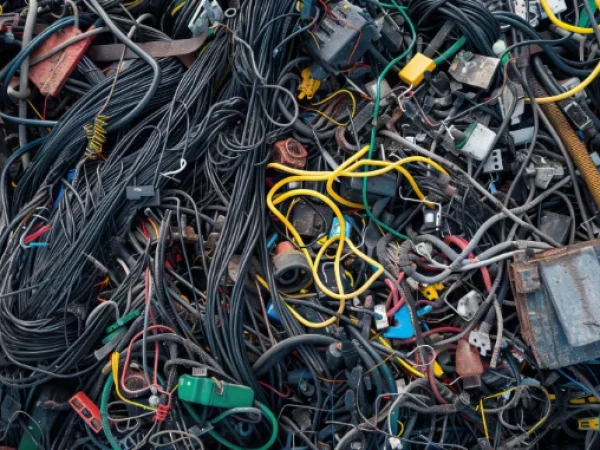
Where does copper scrap come from? Electrical wire and cable are the most common source — once you strip the insulation off, that’s bright copper. Plumbing pipe, copper guttering and roofing, old air conditioning units (the evaporator coils), electric motors, and transformers all yield copper in varying grades.
One practical note: stripping insulation from copper wire before you sell moves the material from a lower mixed grade to bright/clean — that difference can be worth $1–2 per kilogram on a decent-sized load; that adds up fast.
Brass — More Common Than People Expect
Brass sits well behind copper in raw price per kilo, but it shows up constantly in everyday renovation and plumbing work. JMR pays around $7.20/kg for mixed brass.
Most people are surprised by how much brass they accumulate without realising it. Old taps and faucets, gate valves, pressure fittings, plumbing connectors, door handles, locks — a full bathroom or kitchen strip-out can yield several kilograms without much effort. Radiator tanks, spent cartridge casings, and even old brass musical instruments all have value here.
Brass is a copper-zinc alloy, which is why it sits in a strong middle range — it’s not as pure as copper, but the copper content is real, and the market reflects that.
Stainless Steel — Worth Separating From Everything Else
Stainless pays $3.20–$4.10/kg at JMR, which makes it by far the most valuable scrap metal among the complete steel family. The reason is the alloy composition — stainless steel contains chromium and usually nickel, both of which have market value. Mild steel doesn’t.
This is the one mistake we see repeatedly at the yard: people throw stainless in with their general steel pile. The difference between stainless pricing and HMS steel pricing is roughly ten times per kilogram. Separating them takes a few minutes and can meaningfully change what you walk away with.
Stainless shows up in commercial kitchen gear, food processing and pharmaceutical equipment, industrial tanks and piping, exhaust systems, and household appliances. If it’s not rusting and isn’t magnetic (or only weakly magnetic), it’s likely stainless.
Aluminium — Light, But It Earns
Aluminium pays $1.80–$2.80/kg depending on the form and cleanliness. That might sound modest, but aluminium is everywhere, and it accumulates quickly — particularly in residential and construction work.
The environmental economics of aluminium recycling are actually remarkable. Recycling it uses roughly 95% less energy than producing virgin aluminium from bauxite ore. That’s why manufacturers actively seek recycled aluminium; it’s not just environmentally preferable, it’s genuinely cheaper to process.
Window frames and sliding doors are the most common residential source. Car wheels and rims, aluminium extrusions, roofing sheet, guttering, old ladders, marine hardware — all of it has value. Even crushed aluminium cans add up if you’re collecting them in volume.
Electric Motors
Electric motors are worth calling out separately because they’re often undervalued when sold as mixed metal. A motor contains copper windings wound around a steel core — meaning there’s a real spread between selling it as general scrap versus having it assessed properly.
JMR accepts electric motors directly. If you’ve got a significant quantity, it’s worth discussing how they’ll be graded before you sell.
Lead
Lead doesn’t come up in conversation as often as copper or brass, but it’s dense — genuinely dense — which means even modest quantities weigh a surprising amount. Old plumbing pipe from pre-1970s Melbourne homes, roofing flashings, car batteries, and fishing sinkers are the most common sources.
Because lead is a hazardous material, it needs to go through a licensed recycler. Don’t put it in general waste. JMR handles leads responsibly with proper processing.
Nickel Alloys and Speciality Metals
Most people don’t encounter these in everyday scrap, but if you’re working in industrial, aerospace, or specialist manufacturing environments, nickel-bearing superalloys and speciality metals can command very high per-kilogram prices — sometimes above copper. If you think you have something in this category, call JMR directly and describe what you’ve got.
Steel — Where Volume Does the Work
HMS (Heavy Melting Steel) pays $0.30–$0.42/kg, which sounds low until you’re standing next to a ute full of structural steel that weighs 800 kilograms. At that point, the low rate per kilo turns into a reasonable total payout quickly. Factory cleanouts, demolition sites, and construction offcuts generate steel in volumes where the math works fine even at these rates.
What Actually Hurts Your Price
A few things reliably drag your payout down:
Mixed loads, where everything’s thrown together, get graded at the lowest material present. Contamination — plastic coatings, rubber, oil, paint, dirt — forces a downgrade. Water adds weight without adding metal value. Heavy rust and corrosion can downgrade steel significantly.
None of it is hard to avoid with basic preparation. Sort by type. Strip what you can. Remove obvious non-metal attachments. Call JMR on 0449 894 456 for a current price before you load up — rates move, and it’s worth knowing what you’re walking in with.
Ready to Sell?
JMR offers same-day payment on the spot for all grades of scrap. Free mobile collection is available for loads of 500 kg or more across Melbourne and surrounding areas.
Phone: 0449 894 456
Email: johnnymetalrecycling@gmail.com
Address: 1/9 Breaside Drive, Braeside VIC 3195