

If you’ve got scrap metal sitting on-site — leftover steel from a renovation, old copper wiring, or industrial equipment that’s reached the end of its useful life — getting it collected is straightforward enough. But there’s a real difference between simply booking a pick-up and actually getting a decent return on what you hand over. The gap between those two outcomes usually comes down to preparation and knowing how the process works before you pick up the phone.
This guide covers everything worth knowing about scrap metal collection in Melbourne: how scheduling works, what happens on collection day, how prices are calculated, and the practical steps that can put more money in your pocket. Whether you’re a homeowner clearing out a cluttered garage, a tradie with a ute full of mixed metals, or a business managing regular commercial and industrial scrap, read this before you book.
At Johny Metal Recycling, we service Melbourne households, tradies, and industrial operators across the region, handling everything from small residential loads through to large-scale demolition scrap. The advice in this guide comes directly from that hands-on experience.
Published by Johny Metal Recycling | Updated July 2026
Why Scrap Metal Collection Makes Sense for Melbourne Businesses and Households
The Real Cost of Letting Scrap Pile Up On-Site
Scrap metal sitting idle is not a neutral situation. It takes up space, creates trip hazards, and depending on your site, can attract WorkSafe or council compliance issues. For businesses, unsorted metal waste near active work areas is a genuine liability. For households, it tends to be clutter that quietly accumulates over months until it becomes someone’s weekend project.
Beyond the practical headaches, leaving scrap metal sitting around means missing out on income you’re already entitled to. Copper, aluminium, and steel are all traded on global commodity markets, and their value doesn’t disappear just because the material is sitting in your yard.
Who Uses Scrap Metal Collection Services in Melbourne
Collection services are used across a wide range of customers. Residential customers often have white goods, old guttering, fencing, or small appliances to move on. Tradies and small contractors accumulate copper pipe, cable, and aluminium offcuts from job sites. Builders and demolition contractors deal in structural steel, rebar, and mixed commercial scrap. Manufacturers and industrial operators generate large volumes of process waste, end-of-life equipment, and scrap machinery.
Each scenario involves different volumes, different logistics, and different pricing considerations. Understanding how the process works is worth your time before you make that first call.
Environmental and Financial Reasons to Act Sooner Rather Than Later
Metal recycling keeps valuable raw materials in circulation and reduces the need for energy-intensive primary production. Sustainability Victoria identifies metals as a priority material stream under Victoria’s circular economy agenda because they can be recycled indefinitely without any loss of quality. That’s not a small detail: it means every kilogram of copper or aluminium you send to a recycler replaces the need to mine and process virgin ore.
Victoria’s recycling sector processed over 3.8 million tonnes of recovered material in a recent reporting year, with metals making up one of the highest-value streams by weight. On the financial side, commodity prices for metals like copper and aluminium move with global markets. Waiting to sell can mean selling at a lower price than you could have secured earlier, so if you have a significant volume of non-ferrous metal on hand, timing matters more than most people realise.
What Types of Scrap Metal Can Be Collected in Melbourne
Common Ferrous Metals Accepted for Pick-Up
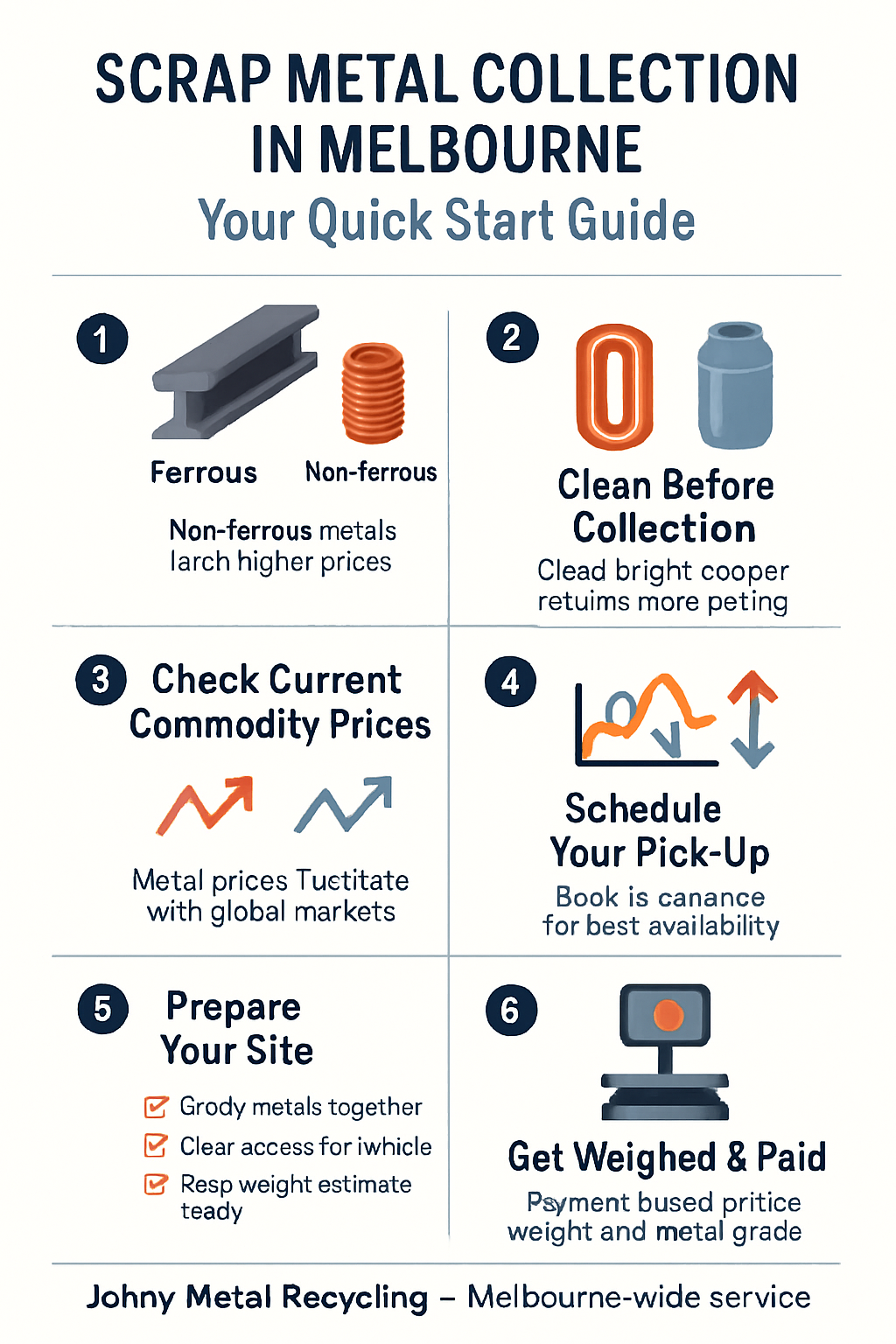
Ferrous metals contain iron and will attract a magnet. The most common examples collected in Melbourne include mild steel, cast iron, stainless steel, and structural steel from beams and posts. These materials are widely accepted and processed in large volumes. While ferrous metals generally fetch lower prices per kilogram than non-ferrous alternatives, the sheer volume involved in commercial and demolition contexts can still generate meaningful returns.
Non-Ferrous Metals and Why They Fetch Higher Prices
Non-ferrous metals — copper, aluminium, brass, lead, and zinc — are where the real value tends to sit. Copper is particularly sought after because of its electrical conductivity and broad industrial application. Aluminium is lightweight and valuable in larger quantities. Brass fittings, bronze components, and lead cable sheathing all attract strong pricing relative to their weight.
If you’re a plumber, electrician, or HVAC contractor, the copper and aluminium offcuts you generate on job sites are genuinely worth collecting and sorting properly before handing them over. The difference between presenting clean copper versus mixed or contaminated copper can significantly affect what you’re paid. Clean bright copper wire consistently returns more per kilogram than insulated or oxidised copper from the same job — sometimes the gap is large enough to justify the extra fifteen minutes of sorting on-site.
Industrial and Commercial Scrap: Machinery, Equipment, and Structural Steel
Industrial scrap collection operates at a different scale entirely. End-of-life manufacturing equipment, CNC machines, presses, conveyors, electric motors, and structural steel from construction and demolition sites all fall into this category. Collections of this type typically require heavier vehicles — flatbed trucks, crane-equipped vehicles, or excavators — and in many cases a site inspection is needed before a price can be confirmed.
For construction and demolition sites specifically, segregating your scrap from general waste early in the process makes a real difference. Mixing metal with timber, concrete, or other materials reduces its value and complicates the collection considerably.
What Collectors Generally Won’t Take and Why
Most reputable Melbourne scrap metal collectors won’t accept metal contaminated with hazardous materials. Asbestos-lagged pipe is a common example. Pressurised gas cylinders, refrigerants, and items containing PCBs or mercury typically require specialist disposal rather than standard recycling. If you’re unsure about anything on your site, ask before collection day — a reputable collector will tell you clearly what they can and cannot take.
How Scrap Metal Collection Scheduling Works in Melbourne
How to Request a Collection
Most Melbourne scrap metal collectors can be reached by phone or via an online enquiry form. Mobile-first scheduling is common in this industry — many collectors use a direct mobile number as the primary contact point, which means you’re often speaking with the person making the scheduling decisions. This speeds things up considerably. At Johny Metal Recycling, you can get in touch directly to discuss your load, confirm pricing, and lock in a collection time that suits your site.
What Information You Need Ready Before You Call
Before you make contact, have a rough idea of what metals you have, approximately how much by weight or volume if possible, where the scrap is located, and any access considerations specific to your site. You don’t need to be precise — collectors understand that most customers cannot accurately weigh their own scrap — but a reasonable description helps both parties plan the collection efficiently and avoids surprises on the day.
Typical Lead Times and Same-Day Collection Availability
For standard residential and commercial loads, many Melbourne collectors offer same-day or next-day collection. If your scrap is straightforward — a load of copper pipe, a pile of aluminium extrusions, a few tonnes of steel — scheduling is usually quick. Large-scale industrial collections involving heavy equipment or significant volumes may require a site inspection first, which can add a day or two to the lead time. Always confirm timing at the point of booking.
Residential Versus Commercial Scheduling Differences
Residential collections are generally simple: kerbside or driveway access, a single vehicle, and a short visit. Commercial collections often involve larger vehicles, stricter access requirements, and more detailed documentation. Industrial pick-ups may require coordination with site managers, risk assessments, and specific vehicle access windows. If you’re booking on behalf of a business, communicate your site’s operational hours and any access restrictions upfront so the collector can send the right vehicle and crew.
What Happens on Collection Day: A Step-by-Step Walkthrough
Access Requirements and Site Preparation
Before the collector arrives, make sure the scrap is accessible. For residential customers, clear driveway access or kerbside placement is usually all that’s needed. For commercial and industrial sites, ensure the material is positioned where a truck can load safely without obstructing other operations. If you have low overhead clearances, restricted entry points, or a security sign-in process, let the collector know when you book.
On-Site Assessment and Weighing: What to Expect
When the collector arrives, they’ll assess the metals present, check condition and grade, and weigh the load — either using a vehicle-mounted scale or back at the yard, depending on the operator’s setup. This is the basis on which your price is calculated, so it’s in your interest to have the metal sorted and clearly separated before they get there. A well-organised load is assessed more accurately and more quickly, which usually means a better result for you.
How Payment Is Calculated and When You Receive It
Payment is based on the weight and grade of the metals collected. Each metal type carries a current market price per kilogram, and your total payout is calculated by multiplying the weight by the applicable rate. Cash on the spot is widely available among Melbourne collectors and is common for residential and smaller commercial loads. Larger industrial transactions are often settled via bank transfer. Confirm the payment method when you book rather than on collection day.
Paperwork, Receipts, and Documentation
Always ask for a receipt or collection docket. This should detail the metals collected, the weight, the price per kilogram, and the total amount paid. For businesses, this documentation supports your waste management records and may be relevant for environmental reporting or contractor compliance. Keep copies on file.
How Scrap Metal Prices Are Calculated in Melbourne
The Role of Metal Type, Grade, and Condition
Price starts with metal type. Copper will always pay more per kilogram than steel. Within a given metal type, grade and condition matter considerably. Clean copper wire fetches more than oxidised or insulated copper. Bright aluminium extrusions pay more than painted or mixed aluminium. Stainless steel varies depending on grade, with 316 typically attracting a stronger rate than 304. The cleaner and more uniform your material, the closer you’ll get to the top of the pricing range.
How Global Commodity Prices Influence What You’re Paid
Scrap metal prices in Melbourne are tied directly to global commodity markets. The London Metal Exchange (LME) — the primary international pricing benchmark for non-ferrous metals — sets the reference point that local buyers use when pricing copper, aluminium, and brass. In 2026, LME copper has been trading in a broad range influenced by infrastructure investment across Southeast Asia and ongoing electrical grid upgrades in Europe. When global demand for copper rises, local prices follow. When manufacturing slows, prices can soften noticeably.
The price you’re offered today may differ meaningfully from what you’d receive in four weeks’ time. For large volumes of non-ferrous metal, keeping an eye on commodity price trends is worth doing. For more on what drives these movements, take a look at our article on what affects scrap metal prices in Australia.
Why Volume and Sorting Can Increase Your Return
Volume works in your favour in two ways. Larger loads generally attract better rates because they reduce the collector’s per-tonne handling cost. Sorted loads are also priced accurately — if everything is mixed together, the collector has to price to the lowest-value material in the batch to manage risk. Separating copper from aluminium from steel takes some effort upfront, but it consistently produces a better return. It’s one of those things that’s easy to skip and easy to regret.
Hidden Fees to Watch Out For and How to Avoid Them
Fee transparency is a known concern in this industry. Some operators charge for collection, handling, or processing without being upfront about it. Others quote a price that shifts after weighing due to undisclosed deductions. Before you confirm any collection, ask directly: Is pick-up free for my volume and location? Are there handling or processing fees? What deductions, if any, are made from the gross weight? A reputable collector will answer these questions without hesitation. Our guide on how to sort scrap metal for recycling also covers how proper preparation can remove a lot of the pricing uncertainty before the collector even arrives.
Practical Tips to Maximise Your Return on Scrap Metal
Sort and Separate Your Metals Before Collection Day
This is the single most effective thing you can do to increase your payout. Use separate bins, skips, or piles for different metal types. At minimum, keep ferrous and non-ferrous metals apart. If you can go further, separating copper from aluminium from brass will put you in a much stronger position when the collector arrives and the weighing begins.
Know Your Metals: A Basic Identification Guide
A magnet is your first tool. Ferrous metals like steel and cast iron will attract a magnet; non-ferrous metals won’t. From there: copper is reddish-brown, heavy, and typically found in pipe or wire form. Aluminium is lightweight, silver-grey, and common in window frames, extrusions, and sheeting. Brass is yellow-gold and usually found in fittings, taps, and valves. Stainless steel is silver, non-magnetic in most grades, and found in appliances, sinks, and food-processing equipment. Knowing your materials before the collector arrives means you’re not relying solely on their assessment.
Timing Your Collection Around Market Price Movements
If you have significant volumes of non-ferrous metal, it’s worth monitoring price trends before committing to a collection. Copper prices in particular can shift meaningfully over a matter of weeks. If you can hold material safely without it degrading or creating a site hazard, selling when prices are favourable makes financial sense. For smaller loads or ferrous-heavy material, the timing benefit is less significant and usually not worth the wait.
Bundling Regular Collections for Commercial Sites
If you run a business that generates scrap metal consistently — a manufacturing facility, a construction company, or a demolition contractor — talk to your collector about a scheduled arrangement. Regular, predictable collections are often priced more favourably than one-off pick-ups, and they remove the administrative overhead of booking each collection individually. This approach also helps with site organisation and waste management compliance. You can read more about how commercial scrap metal recycling in Melbourne works for ongoing operations.
Choosing the Right Scrap Metal Collector in Melbourne
Key Questions to Ask Before Booking
Before you commit to a collection, ask a few direct questions:
- Is pick-up free for my volume and location?
- How is weighing handled — on-site or at the yard?
- What is today’s rate for the metals I have?
- Are there any deductions or fees I should know about?
- What payment method do you offer, and when is it made?
- Are you licensed to collect and recycle scrap metal in Victoria?
Getting clear answers upfront prevents surprises on collection day and makes it easier to compare options honestly.
Signs of a Reputable, Transparent Collector
A trustworthy collector will give you clear prices, explain how weighing works, and provide documentation after the collection. They won’t pressure you to commit before you’ve had time to think it over. They’ll be upfront about what they can and cannot collect, and they’ll answer questions about fees directly, without deflection. Transparency across the entire process — from booking through to payment — is the clearest indicator of a professional operation.
Why Local and Established Matters for Reliability and Compliance
Local collectors who operate with an established presence in the Melbourne market are accountable in ways that transient operators simply aren’t. They’re subject to the Environment Protection Act 2017 (Vic) and the relevant EPA Victoria licensing requirements for waste transport and processing. Choosing an established Melbourne-based operator gives you recourse if something goes wrong and confidence that the material is being processed lawfully and responsibly.
Johny Metal Recycling operates under EPA Victoria’s waste transport and processing requirements, with an established presence serving residential, commercial, and industrial customers across Melbourne. That compliance foundation, combined with long-term relationships built with tradies, construction companies, and manufacturers across the region, is what gives clients confidence when handing over material with real commodity value attached.
Frequently Asked Questions About Scrap Metal Collection in Melbourne
Is scrap metal collection in Melbourne free?
Many collectors offer free pick-up, particularly for larger volumes of commercial or industrial scrap. For smaller residential loads, some collectors may apply a collection fee or adjust the price offered to account for transport costs. Always confirm upfront whether there are any collection or handling fees before you book.
How long does it take to schedule a scrap metal pick-up in Melbourne?
Lead times vary depending on volume, location, and the collector’s schedule. Many Melbourne collectors offer same-day or next-day collection for standard residential and commercial loads. Large-scale industrial collections involving heavy machinery or structural steel may require a site inspection first and could take a few days to organise.
Do I need to sort my scrap metal before collection?
Sorting isn’t always mandatory, but it almost always results in a better return. Mixed loads are typically valued at the lowest-grade metal in the batch. Separating copper, aluminium, and steel into distinct piles allows the collector to price each metal accurately, and that accuracy works in your favour.
How is payment made for scrap metal collection in Melbourne?
Cash on the spot is a common payment method among Melbourne scrap metal collectors. Some operators pay via bank transfer, particularly for larger commercial or industrial loads. Confirm the payment method and timing before your collection is locked in.
What access does the collector need to my property?
For residential pick-ups, clear driveway or kerbside access is usually sufficient. Commercial and industrial collections may require vehicle access for a ute, truck, or crane-equipped vehicle depending on the volume and type of scrap. Let the collector know about any access restrictions, low clearances, or site-specific requirements when you book.
Can I get scrap metal collected from a construction or demolition site?
Yes, and it’s a very common arrangement. Structural steel, copper wiring, aluminium framing, and cast iron are all typically accepted. Arrange the collection in advance and make sure the scrap is segregated from general waste so the assessment can be done accurately.
Ready to Book a Scrap Metal Collection in Melbourne?
Scrap metal sitting on-site is money sitting idle. Whether you have a single load to move or need a regular collection schedule for an ongoing operation, getting the process right from the start means a better return, less hassle, and cleaner records.
Johny Metal Recycling offers professional scrap metal collection across Melbourne for residential, commercial, and industrial customers. We’re transparent about pricing, upfront about fees, and experienced with everything from copper wire to structural steel — and we operate under EPA Victoria’s licensing requirements so you can be confident your material is handled responsibly.
Contact Johny Metal Recycling today to book your collection or get a quote. Tell us what you have, where you are, and we’ll take it from there.