
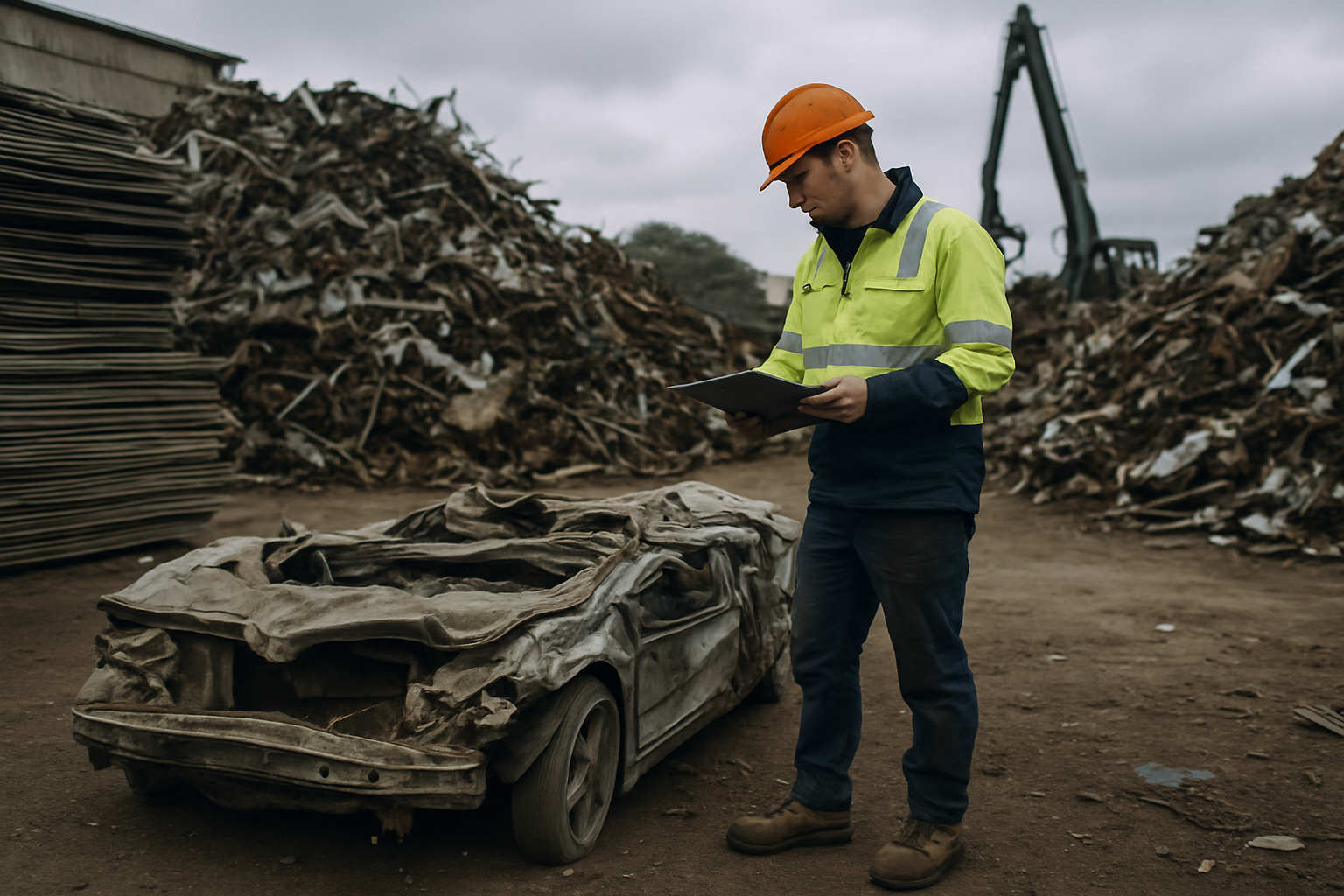
If you have an old, damaged, or non-running vehicle sitting on your property, it is probably worth more than you think. Getting rid of it does not have to be stressful. Whether you are a private seller clearing space on the driveway or a business operator looking to offload a fleet vehicle, selling a scrap car in Melbourne is a straightforward process once you know the steps involved.
The problem is that most people either undervalue what they have or rush the process and leave real money behind. Some end up dealing with unreliable buyers. Others get hit with fees that were never mentioned upfront. This guide walks you through every stage, from working out what your vehicle is actually worth to getting paid safely and notifying the relevant authorities. Follow these steps and you will avoid the common traps that catch sellers out every day.
Why Selling a Scrap Car in Melbourne Is Worth Doing Properly
A lot of people assume a scrap car is practically worthless. In our experience, that assumption costs them money. Even a completely non-running vehicle contains significant quantities of steel, aluminium, copper, and other metals that carry genuine market value. Accepting the first offer that comes your way, or worse, paying someone to take it off your hands, is rarely the right call.
The Real Value Sitting in a Scrap Vehicle
A standard passenger car contains roughly 900 kg of steel on average, alongside aluminium components, copper wiring, and a catalytic converter that holds platinum group metals. Scrap steel prices fluctuate with global demand according to the London Metal Exchange, so the timing of your sale can make a real difference to your return. Even an old hatchback with a dead engine can fetch a meaningful sum when current rates are favourable.
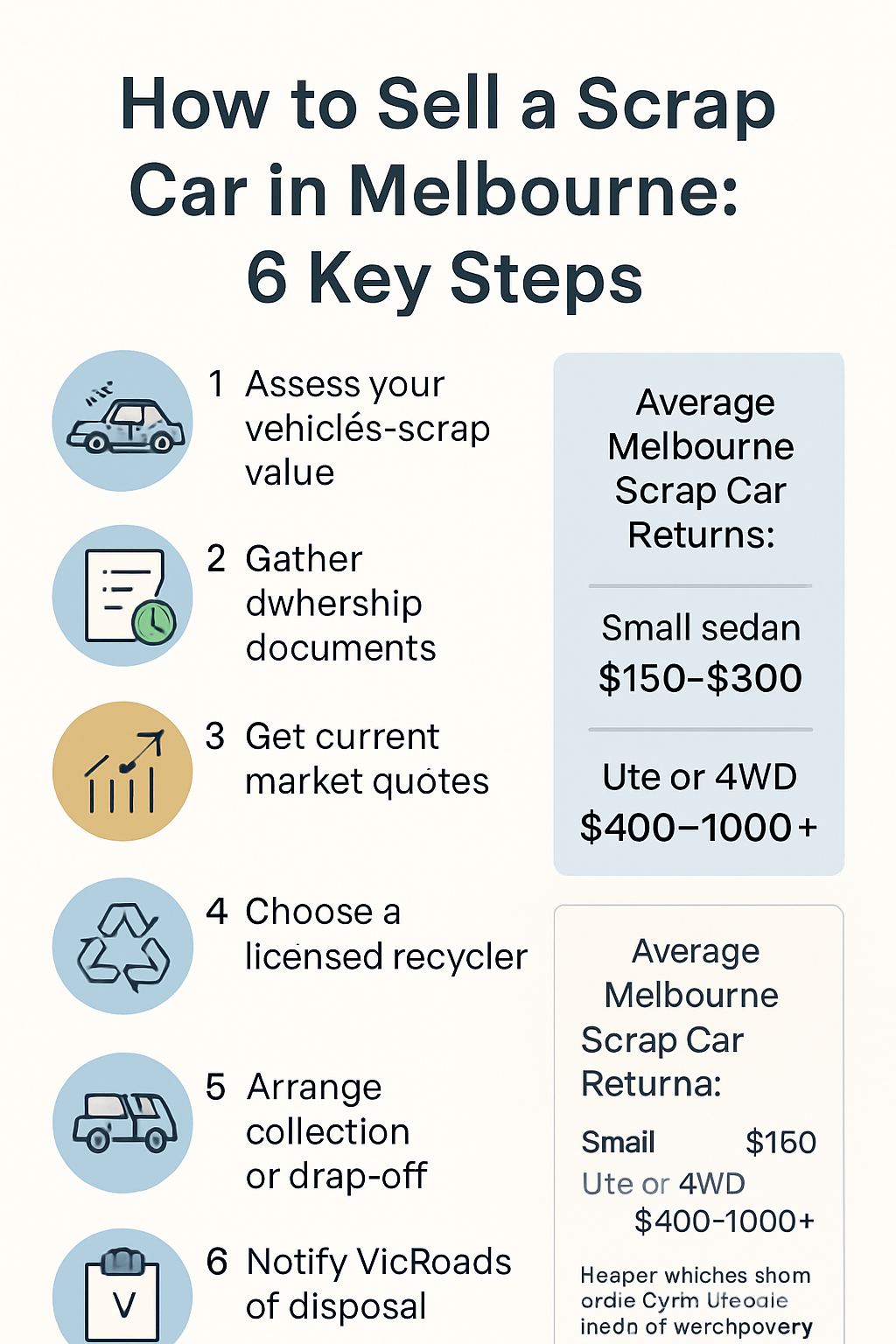
Based on scrap metal market conditions in Melbourne through mid-2025, end-of-life passenger vehicles have been returning roughly $150 to $500, while heavier vehicles such as utes, vans, and 4WDs have consistently attracted offers in the $400 to $1,000-plus range, depending on weight and condition. To give you a sense of what that looks like in practice: a Melbourne tradesperson we worked with recently cleared a 2008 Hilux with a seized engine and received $620, collected from his yard within 24 hours. These figures shift with commodity prices, which is why we base every quote on current market rates rather than fixed price lists.
Heavier vehicles naturally return more. A ute, van, or 4WD contains substantially more metal than a small sedan, so if you are sitting on one of those, it is well worth getting a proper quote before you make any decisions.
What Happens to Your Car After It Is Scrapped
A responsible recycler does not simply crush the car and move on. The process starts with draining all fluids, including engine oil, coolant, brake fluid, and fuel, in line with EPA Victoria requirements. Useable components such as engines, gearboxes, and body panels may be removed and resold. The remaining shell is then shredded, and the metals are sorted and baled for re-entry into the manufacturing supply chain.
This matters beyond your own transaction. Recycled steel requires significantly less energy to produce than virgin steel smelted from raw ore, so choosing a licensed recycler carries a genuine environmental benefit.
Step 1: Assess What You Actually Have
Before you contact a single buyer or request a quote, take a clear-eyed look at the vehicle.
Is Your Car Scrap or Salvage? Know the Difference
A scrap car is one where the cost of repair exceeds the vehicle’s market value, and the recoverable materials are worth more than the car as a whole. A salvage vehicle still has useable parts that could be resold, or it might be repairable and worth more to a private buyer willing to put in some work.
Knowing which category your vehicle falls into affects how you approach the sale. If the car has valuable mechanical parts in good condition, you may get a better return from a wrecker or by selling those parts separately. If it is truly end-of-life, with a rusted frame, blown engine, or major accident damage, selling it as scrap to a licensed metal recycler is usually your best and simplest path.
Factors That Affect Your Scrap Car’s Value in Melbourne
Several things influence what a scrap car is worth:
- Vehicle weight, since heavier vehicles contain more recoverable metal
- Make and model, as some vehicles have parts with higher secondhand demand
- Current scrap metal prices, which move with global commodity markets
- Condition of key components, because a working engine or intact catalytic converter adds value
- Completeness, as a vehicle already stripped of its parts is worth less per tonne
Step 2: Gather the Documents You Will Need
Getting your paperwork together before you approach buyers saves time and keeps the transaction straightforward.
Proof of Ownership and Registration in Victoria
In Victoria, you need to demonstrate legal ownership before selling a vehicle. The primary document is the Certificate of Title or current registration papers showing your name as the registered operator, along with photo identification.
When the sale is complete, you must notify VicRoads of the disposal through the VicRoads vehicle registration transfer and disposal process. Skipping this step means you remain the registered operator, which carries ongoing obligations and potential liability tied to the vehicle.
What to Do If You Have Lost the Title or Papers
If you no longer have the registration papers, you can apply for a replacement through VicRoads. You will need to verify your identity and demonstrate your connection to the vehicle. A licensed recycler can usually advise on what documentation they will accept and what to do if your paperwork is incomplete. Selling without proper proof of ownership can create legal complications, so it is worth resolving this before you approach buyers.
Step 3: Remove Your Personal Belongings and Salvageable Parts
This sounds obvious, but it is a step people regularly skip in the rush to get the car off the property.
Items to Check Before Handing Over the Vehicle
Go through the entire car carefully. Check the glovebox, centre console, under seats, and boot. Look for toll tags, which are linked to your account and will keep charging after the car is gone. Also remove registration labels, garage remotes, and any other personal items. Take your number plates too. In Victoria, plates stay with the owner unless you are transferring registration.
Should You Strip Parts Before Scrapping?
This depends on what parts the vehicle has and whether you have the time and skills to remove them. If the car has a relatively new battery, good tyres, or aftermarket accessories in working condition, these may be worth selling separately. If the parts are worn or unlikely to attract a buyer, it is generally not worth the effort. A licensed recycler will factor the value of reusable components into their offer anyway.
Step 4: Get Multiple Quotes and Know What to Look For
Never accept the first offer you receive. The scrap car market in Melbourne is competitive, and getting two or three quotes takes very little time but can make a meaningful difference to what you walk away with.
How to Compare Offers From Scrap Car Buyers in Melbourne
When comparing quotes, make sure you are comparing like for like. Ask each buyer:
- Whether the quoted price includes pick-up or whether there is a towing fee
- Whether the price is guaranteed after the vehicle is inspected, or whether it can change on the day
- How and when payment will be made
- Whether any fees are deducted from the final offer
Some buyers advertise instant online quotes as a starting point, but the actual offer can be adjusted once they inspect the vehicle. Get written confirmation of the final price before agreeing to anything.
Red Flags to Watch Out For When Dealing With Car Buyers
Be cautious of buyers who refuse to provide a written quote, ask you to sign paperwork before naming a price, offer to pay through unofficial channels, or cannot confirm they are a licensed operator. A legitimate scrap car buyer in Melbourne will have no hesitation providing written confirmation of their offer and their business credentials.
Step 5: Choose the Right Buyer, Recycler, Wrecker, or Cash-for-Cars Service
Not all scrap car buyers operate the same way, and the right choice depends on your vehicle’s condition and what matters most to you.
When a Licensed Metal Recycler Is Your Best Option
If your vehicle is genuinely end-of-life, structurally damaged, non-running, or too old to carry meaningful parts value, a licensed metal recycler is generally the most efficient and environmentally responsible choice. They handle everything from collection through to compliant disposal of fluids and hazardous materials, and they base pricing on real scrap metal market rates.
A licensed metal recycler handles every vehicle in full compliance with Victorian environmental regulations. They provide upfront quotes based on current market rates, with straightforward collection arrangements across Melbourne. Their team has processed thousands of end-of-life vehicles across the Melbourne metro area, so they know what a fair offer looks like and they stand behind theirs.
Understanding the Difference Between Wreckers and Recyclers
A wrecker primarily focuses on reselling useable parts. If your car has components with demand in the secondhand market, a wrecker may offer more, but the process takes longer and requires them to assess individual parts. A metal recycler focuses on processing the vehicle as a whole at end-of-life, which for most sellers means a faster, simpler, and more predictable outcome. For most people with a genuine scrap vehicle, the recycler route is the practical choice.
Step 6: Arrange Pick-Up or Drop-Off
Once you have accepted an offer, you need to work out how the vehicle gets to the recycler.
Free Car Removal Services in Melbourne: What to Expect
Many licensed buyers and recyclers in Melbourne offer free vehicle collection, particularly for non-running vehicles. This is standard practice, and you should not accept a quote that quietly deducts a towing fee unless that has been clearly disclosed from the start.
When arranging pick-up, confirm the date and time window, make sure someone is present to hand over the keys and documentation, and have your ID ready. The collection team should provide a receipt confirming the vehicle has been accepted.
Dropping Your Vehicle Off at a Recycling Yard
If the car is still drivable and you are close to the facility, dropping it off yourself is often the simpler option. Call ahead to confirm operating hours and what you need to bring. This avoids scheduling delays and often means you can get paid on the spot.
Step 7: Get Paid Safely and Confirm the Transaction
Do not hand over the keys until payment has been made or you have clear written confirmation of how and when it will be processed.
Accepted Payment Methods for Scrap Car Sales
Common payment methods include cash, bank transfer, and Osko. Electronic transfer is increasingly standard in this market. Avoid any arrangement where payment is promised to follow later without a written agreement confirming the terms. If you are accepting cash, count it before handing over the keys. If you are receiving a bank transfer, confirm it has landed in your account before completing the handover.
Getting a Receipt and Confirming Deregistration
Ask for a written receipt that includes the date, vehicle details such as make, model, and VIN (Vehicle Identification Number, a unique identifier stamped on every car), the amount paid, and the buyer’s business details. This is your proof of sale and protects you from any future liability relating to the vehicle.
Once the sale is complete, notify VicRoads of the disposal through the VicRoads online portal to formally end your obligations as the registered operator.
Special Considerations for Business Sellers and Fleet Operators
If you are disposing of more than one vehicle, there are some additional planning and compliance requirements to keep in mind.
Scrapping Multiple Vehicles at Once
Businesses disposing of a fleet lot are in a strong negotiating position. A licensed recycler will typically offer more favourable terms for bulk lots because it reduces their logistics costs. Provide accurate details on all vehicles upfront, including make, model, year, condition, and VIN, so the recycler can put together a consolidated quote efficiently.
Record-Keeping and Compliance for Businesses in Victoria
Businesses need to keep accurate records of vehicle disposals for accounting and compliance purposes. Each disposal should be documented with a receipt, the vehicle VIN, the date of disposal, and the name of the licensed recycler. If the vehicles were previously registered as business assets, their disposal will need to be reflected in your financial records and potentially reported to the ATO.
Environmental Obligations for Fleet Operators
Fleet operators have environmental obligations that go beyond simply offloading a vehicle. Under Victorian law, you cannot dispose of a vehicle in a manner that results in hazardous materials such as engine oil, coolant, or refrigerants being released into the environment. Using a licensed recycler who complies with EPA Victoria requirements is the most straightforward way to meet these obligations and protect your business from unnecessary risk.
Common Mistakes Melbourne Sellers Make When Scrapping a Car
Even straightforward transactions can go sideways when sellers make avoidable errors. These are the ones we see most often.
Accepting the first offer without comparing is probably the most common mistake. The scrap car market is competitive, and taking ten minutes to get a second or third quote regularly results in a meaningfully better outcome.
Forgetting to remove the toll tag catches people out more than you would expect. An E-Tag left in the car will keep charging on your account long after the car has been crushed.
Not notifying VicRoads is a legal obligation, not an optional step. Sellers who skip this can end up liable for parking fines or registration fees tied to the vehicle.
Handing over keys before payment is confirmed is a risk that is easy to avoid. Once the car is gone, recovering unpaid funds becomes significantly harder.
Dealing with unlicensed operators creates risks beyond the transaction itself. Unlicensed buyers may not handle fluids and hazardous materials correctly, which creates environmental exposure and potential legal risk for you as the former owner.
Stripping the car without researching part values can eat up hours of your time for very little return. Look up what those parts are actually selling for before you invest effort in dismantling the vehicle.
Why Using a Licensed Metal Recycler Matters for the Environment
Choosing a licensed recycler is not just about convenience. It is about making sure the vehicle is handled responsibly from start to finish.
How Responsible Recycling Reduces Landfill and Recovers Materials
A single passenger vehicle contains dozens of recyclable and reusable materials. When these are properly recovered, they reduce demand for virgin raw materials, lower the energy footprint of manufacturing, and keep hazardous substances out of landfill and waterways. Steel recovered from vehicles is one of the most recycled materials in the world, and Australian recyclers play a direct role in supplying that material back into the production chain.
Victoria’s Environmental Standards for Vehicle Disposal
Licensed recyclers in Victoria operate under a regulatory framework administered by EPA Victoria. This covers the safe handling and disposal of engine oils, coolants, brake fluids, battery acid, refrigerants, and other hazardous substances found in end-of-life vehicles. When you sell to a licensed operator, you can be confident those obligations are being met. Selling to an unlicensed buyer offers no such assurance, and if the vehicle’s fluids end up contaminating soil or waterways, the consequences can extend well beyond the original transaction.
Frequently Asked Questions About Selling a Scrap Car in Melbourne
How much can I get for a scrap car in Melbourne?
Scrap car prices vary based on vehicle weight, current scrap metal prices, make and model, and overall condition. Through mid-2025, passenger vehicles have generally returned $150 to $500, while heavier vehicles like utes, vans, and 4WDs have attracted $400 to $1,000 or more depending on weight and condition. These figures shift with commodity markets, which is why quotes should always be based on current rates. Getting multiple quotes gives you the best chance of a fair price.
Do I need the registration papers to sell a scrap car in Victoria?
In Victoria, you generally need proof of ownership, such as registration papers or a title showing your name, to sell a vehicle legally. If you have lost the paperwork, you can apply for a replacement through VicRoads. A licensed recycler will advise you on what documentation they require before purchase. Sorting this out before you approach buyers avoids complications down the track.
Can I sell a scrap car that is not registered in Victoria?
Yes, unregistered vehicles can still be sold for scrap. You will need to provide proof that you are the legal owner. The car does not need to be roadworthy to be accepted by a scrap metal recycler, and you should notify VicRoads of the disposal to avoid any ongoing registration obligations.
Do scrap car buyers in Melbourne offer free pick-up?
Many scrap car buyers and recyclers in Melbourne include free vehicle collection as a standard part of their service, particularly for non-running vehicles. Always confirm the pick-up terms before agreeing to a price, as some operators deduct a towing fee from the final offer.
What happens to my car after I sell it to a scrap metal recycler?
The vehicle is assessed and any useful components may be removed and resold. Fluids including oil, coolant, and fuel are drained and disposed of in accordance with EPA Victoria regulations. The remaining shell is crushed and shredded, with metals separated and baled for recycling. Those recovered metals re-enter the manufacturing supply chain, reducing the need to extract new raw materials.
Is it better to sell a scrap car privately or to a recycler?
For vehicles that are severely damaged, non-running, or have little resale value, selling to a licensed recycler is generally faster and simpler. Private sales require advertising, negotiation, and dealing with buyers who may expect a roadworthy vehicle. A recycler takes the car as-is and manages all the logistics. If the car has salvageable parts with genuine market value, stripping it first or approaching a wrecker may return more overall, but for most end-of-life vehicles a recycler is the practical choice.
How do I notify VicRoads after selling my car for scrap?
You need to notify VicRoads of the disposal through their online portal or complete the relevant forms at a VicRoads service centre. Failing to do this means you remain the registered operator and could be held liable for fines or obligations tied to the vehicle. Your licensed recycler may assist with this process or provide supporting documentation. Visit the VicRoads website for the correct forms and instructions.
Ready to Sell Your Scrap Car in Melbourne?
Selling a scrap car in Melbourne is a manageable process when you approach it with a bit of preparation. Assess the vehicle honestly, get your documents in order, compare a few quotes, and choose a licensed buyer who will handle the transaction and disposal correctly. Whether you have one vehicle or a fleet to clear, following each step protects your interests, maximises your return, and ensures the car is disposed of responsibly.
Do not leave a valuable asset rusting on the driveway. Visit Johny Metal Recycling today to get a quote or find out more about what we offer.
Published July 2025
